
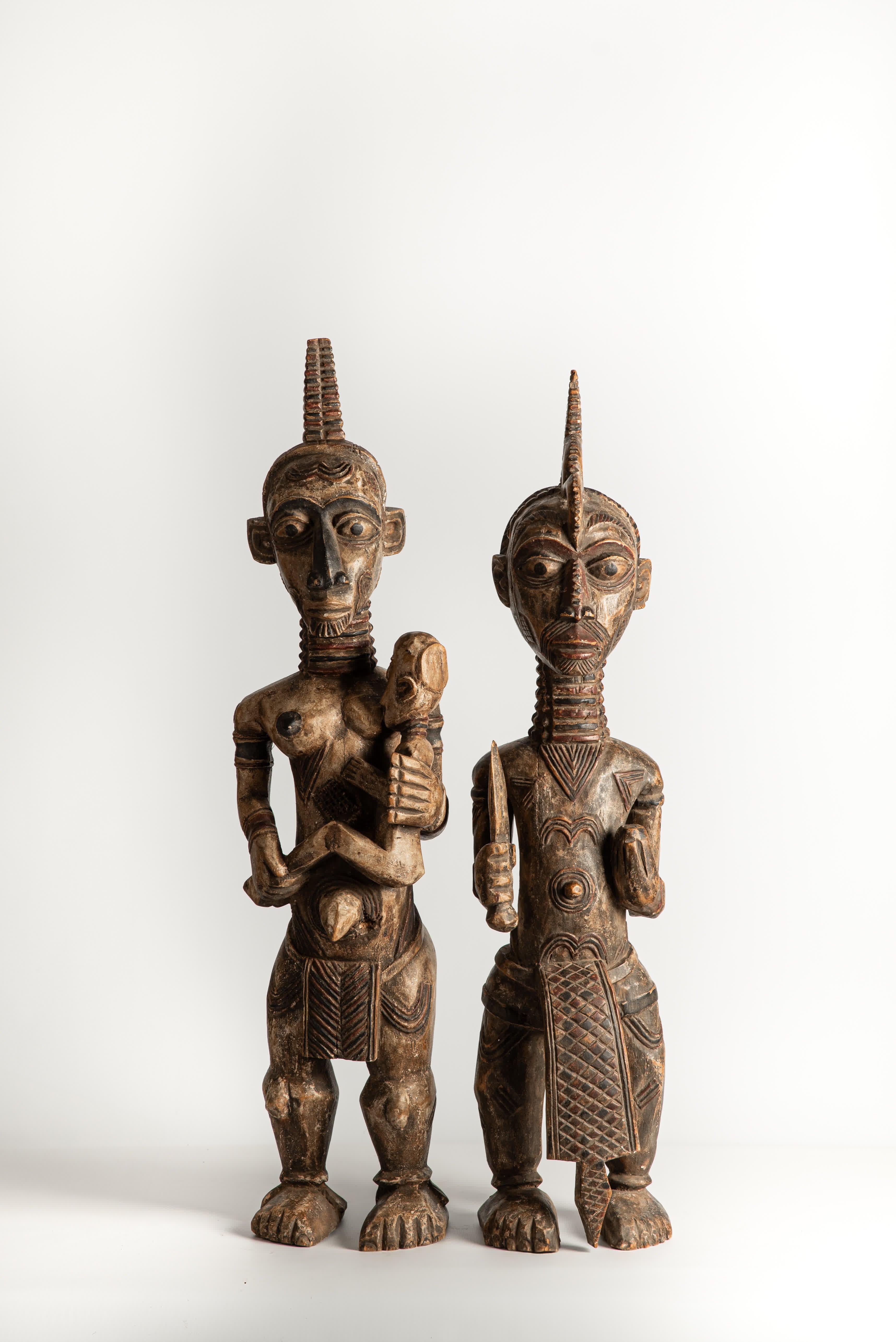
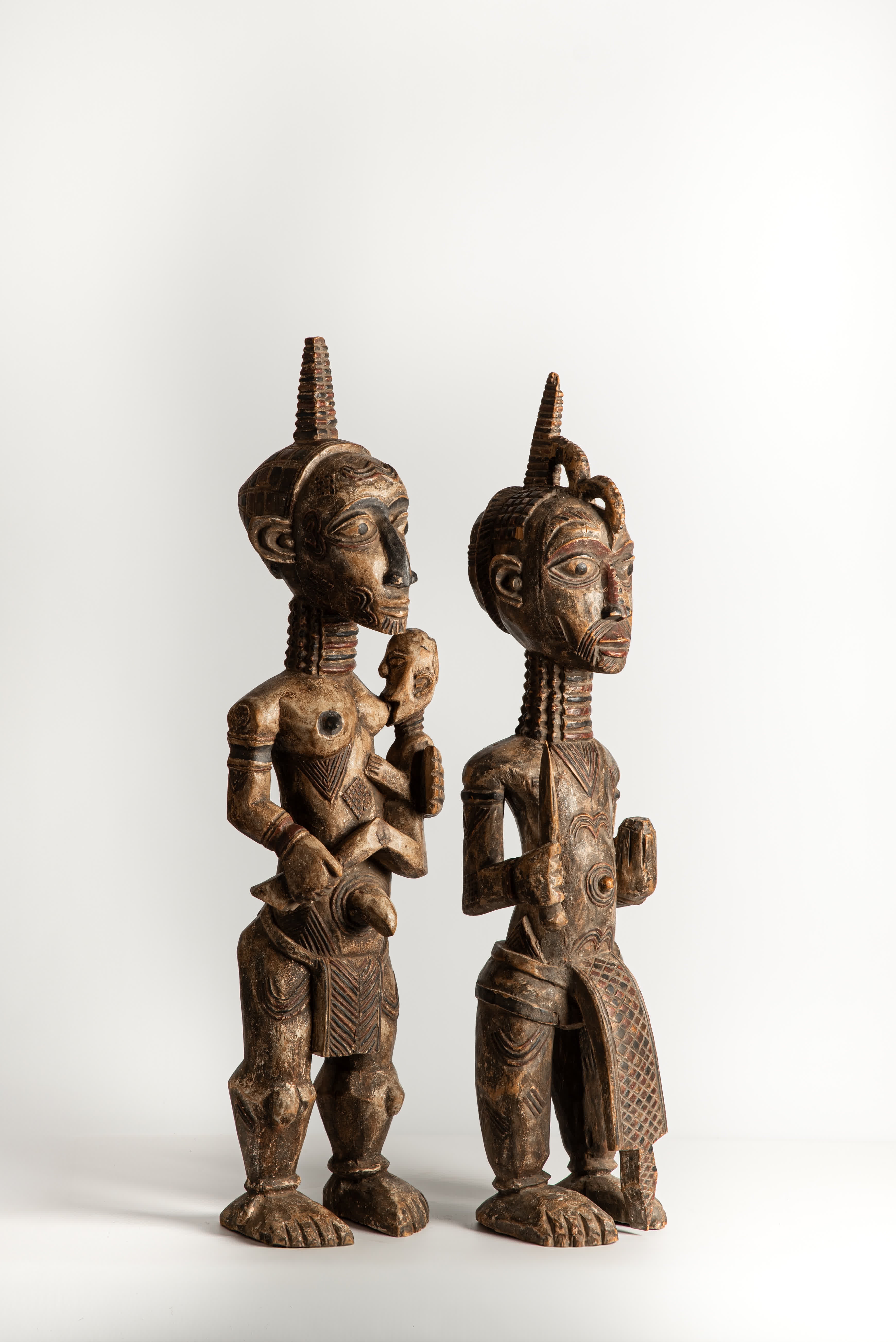
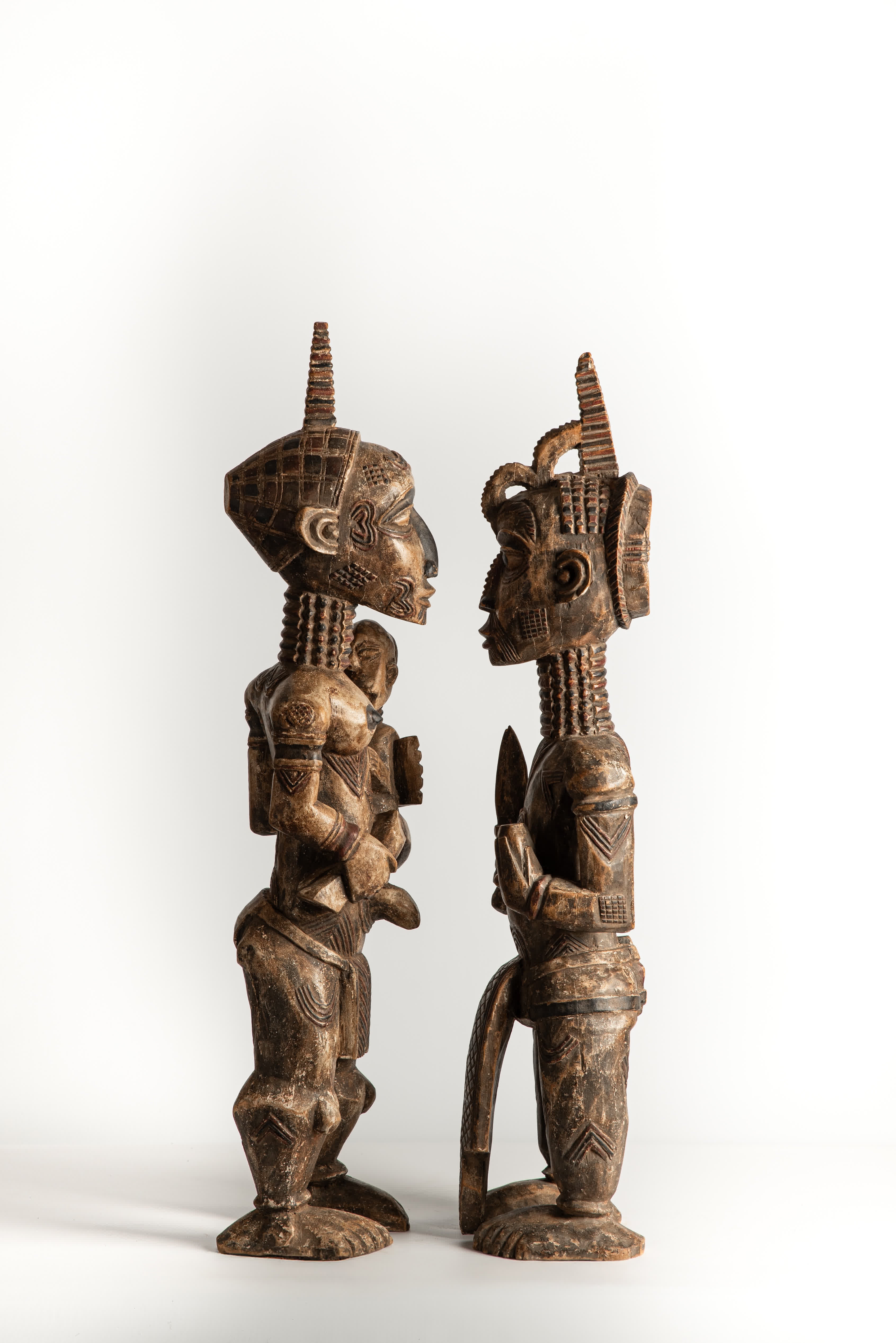

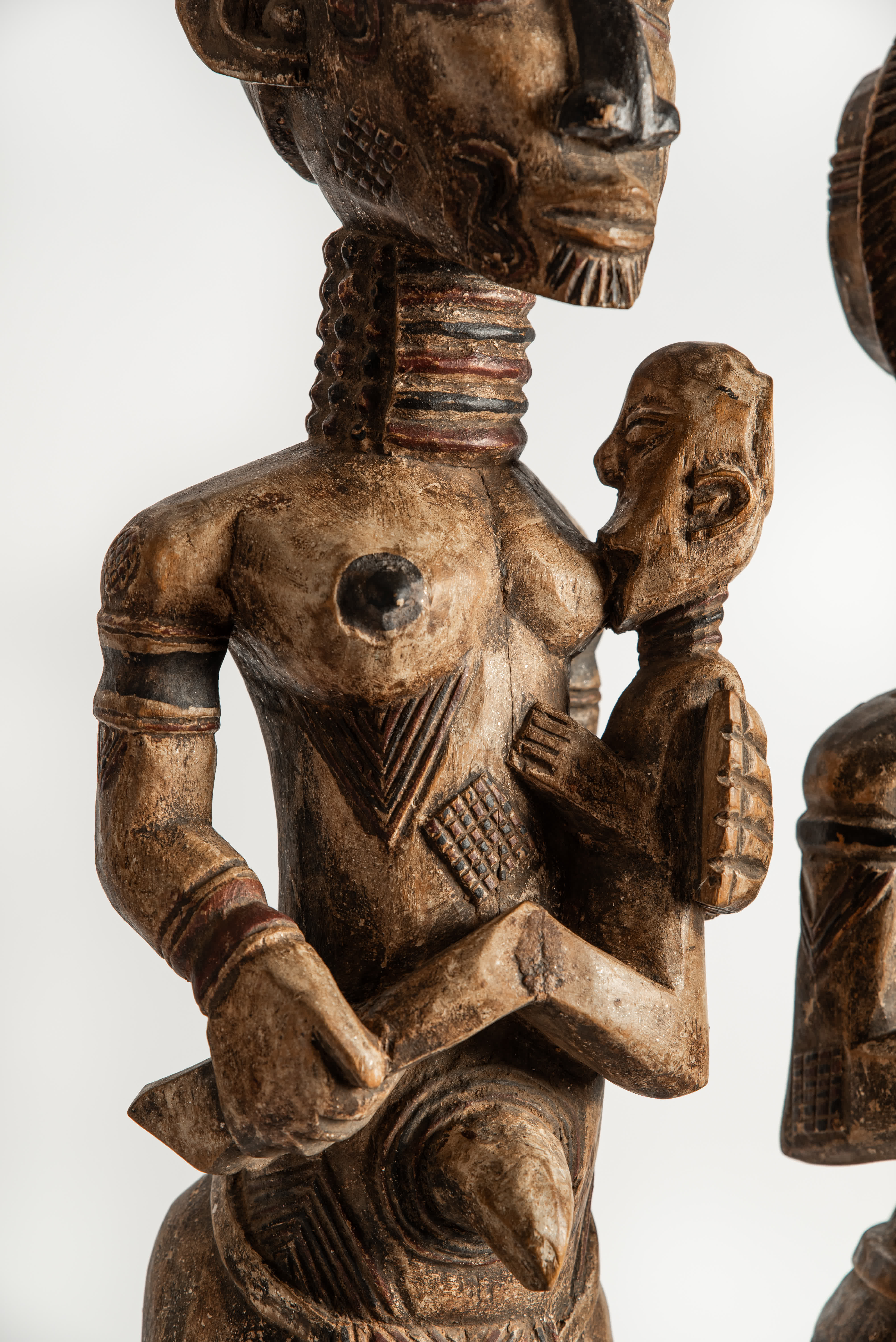
Paired Luluwa Couple Figures
Museum-grade artifact
20th century
Democratic Republic of Congo
Certificate of Authenticity
Luluwa — Democratic Republic of Congo
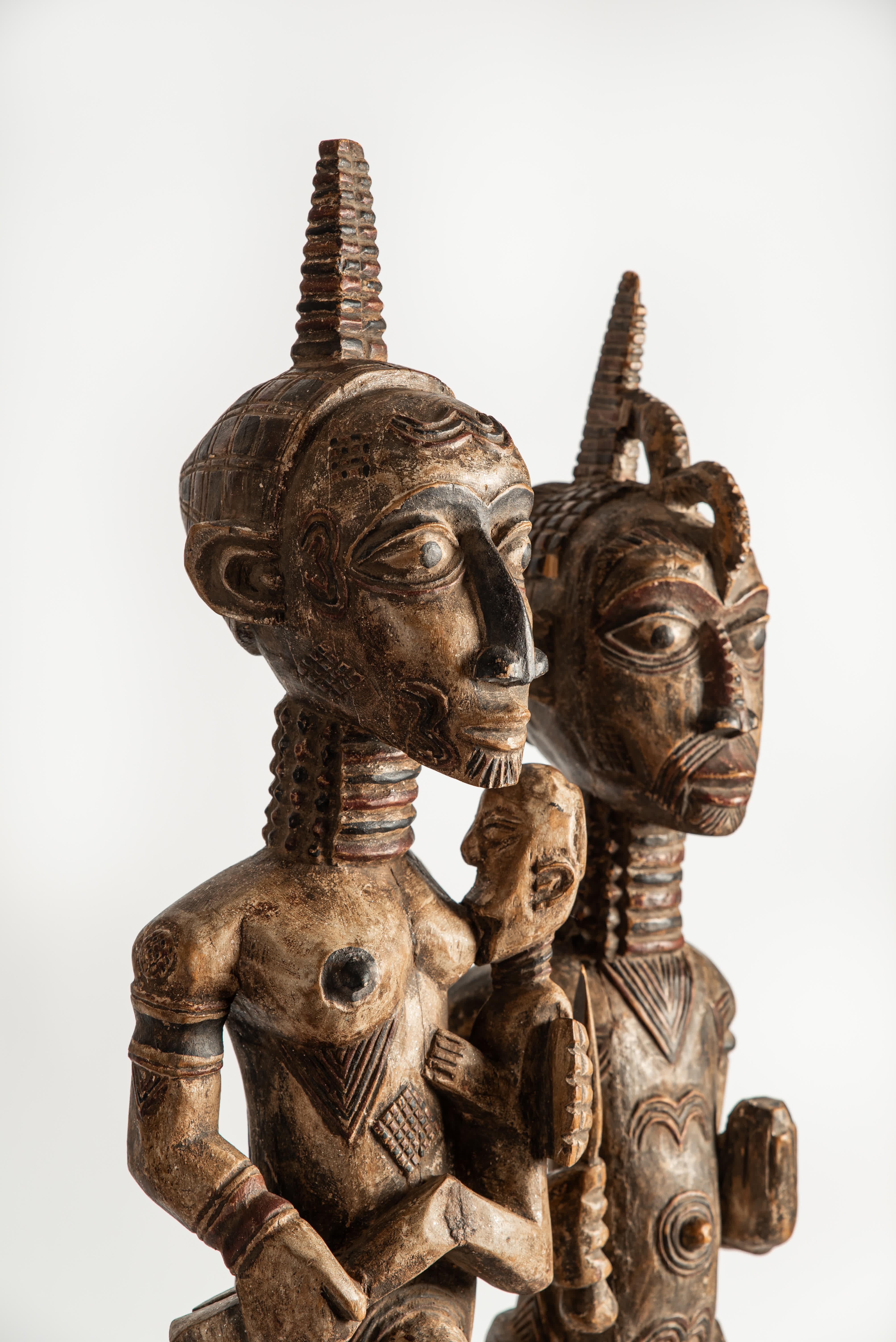
A paired composition of compact, structurally resolved standing figures, Luluwa.
Description
Each figure is constructed within a contained vertical system, volumes held close and articulated through controlled proportion rather than extension. The bodies are compact and frontal, with clearly defined limbs and a stable central axis.
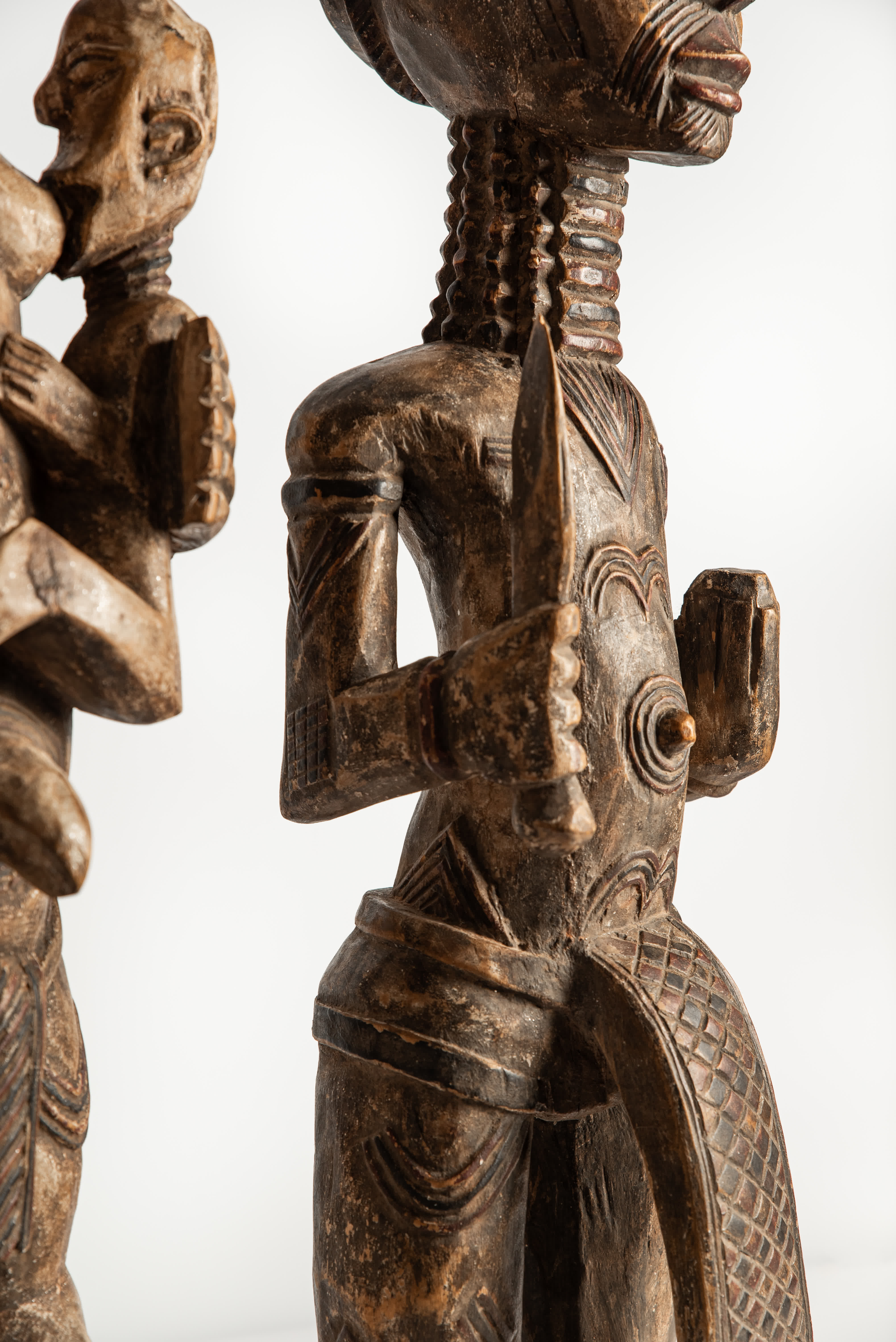
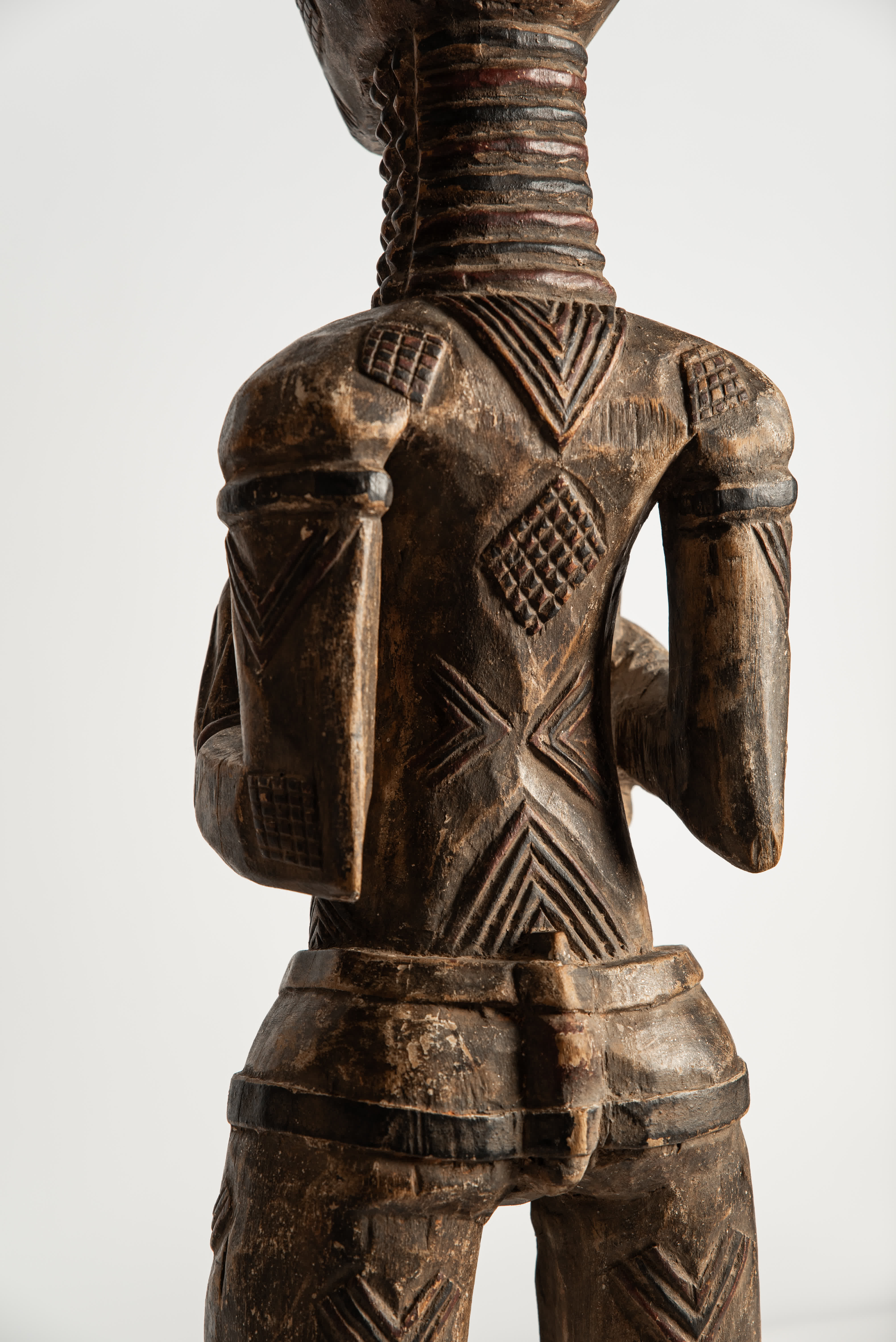
Surface is fully integrated with dense scarification, covering torso, limbs, and head. Motifs vary between the two figures — chevrons, cross-hatching, and diamond registers — yet remain structurally consistent, following and reinforcing the underlying volumes rather than interrupting them.
The female figure incorporates a secondary element: a child held at the torso, carved as a continuous extension of the primary form. The male figure introduces a contrasting gesture, holding a flat, rectangular implement forward, projecting slightly beyond the body plane and establishing a measured outward axis.
Heads are enlarged and set upon prominently ringed necks, forming a pronounced transition between torso and head. Facial features are defined through incision and low relief, with controlled expression and clarity of line. Coiffures distinguish the pair: one rising into a stepped vertical crest, the other more compact with a curved lateral projection.
The rear surfaces are equally resolved, with extensive scarification organised around a central axis, including X-forms and structured geometric fields.
Feet are broad and grounded, with individually defined toes anchoring each figure directly to the base. Despite variation in attribute and surface detail, the pair maintains cohesion through proportion, alignment, and shared structural logic.
Context
Luluwa sculpture is defined by the integration of surface and structure. Scarification is not applied ornament but a system that organises and stabilises form.
In paired figures, differentiation is achieved through attribute and surface variation, while proportion and stance remain controlled within a unified framework. The result is a composition in which dual presence is established without disruption of structural coherence.
Examples preserving full surface articulation across both figures, including rear detailing, remain uncommon.
Provenance
From the Felice Maffei Collection
Acquired in the Democratic Republic of Congo, 1981
Available on private enquiry.
Choose options
Interested or have questions about this piece? contact us
We are happy to walk you through the details, you can ask any question about provenance, context and authenticity.
We will get back to you in less than a day.

Protected Purchase