
Hemba Statue
Museum-grade artifact
19th–20th century
Democratic Republic of Congo
Certificate of Authenticity
Democratic Republic of Congo
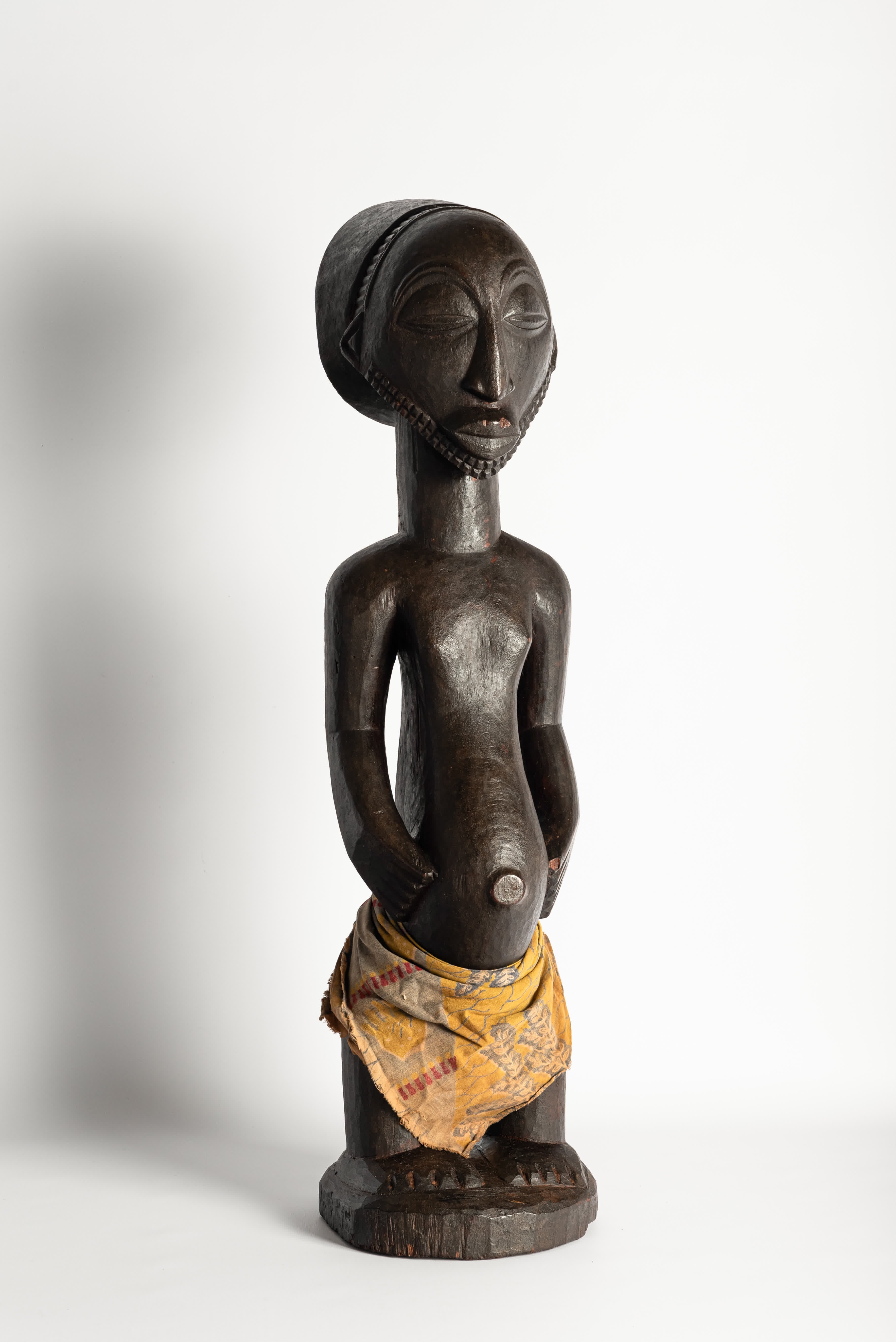
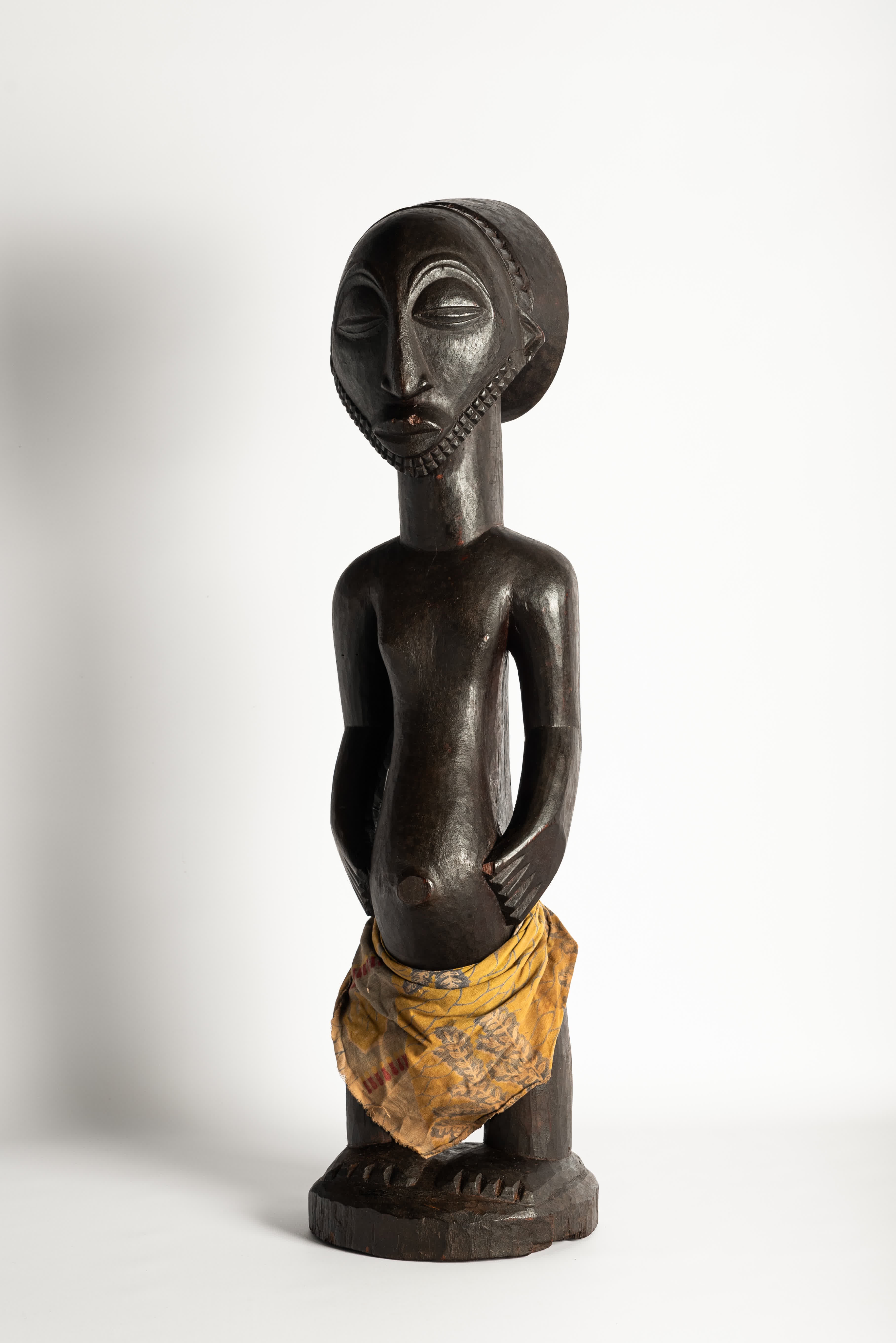
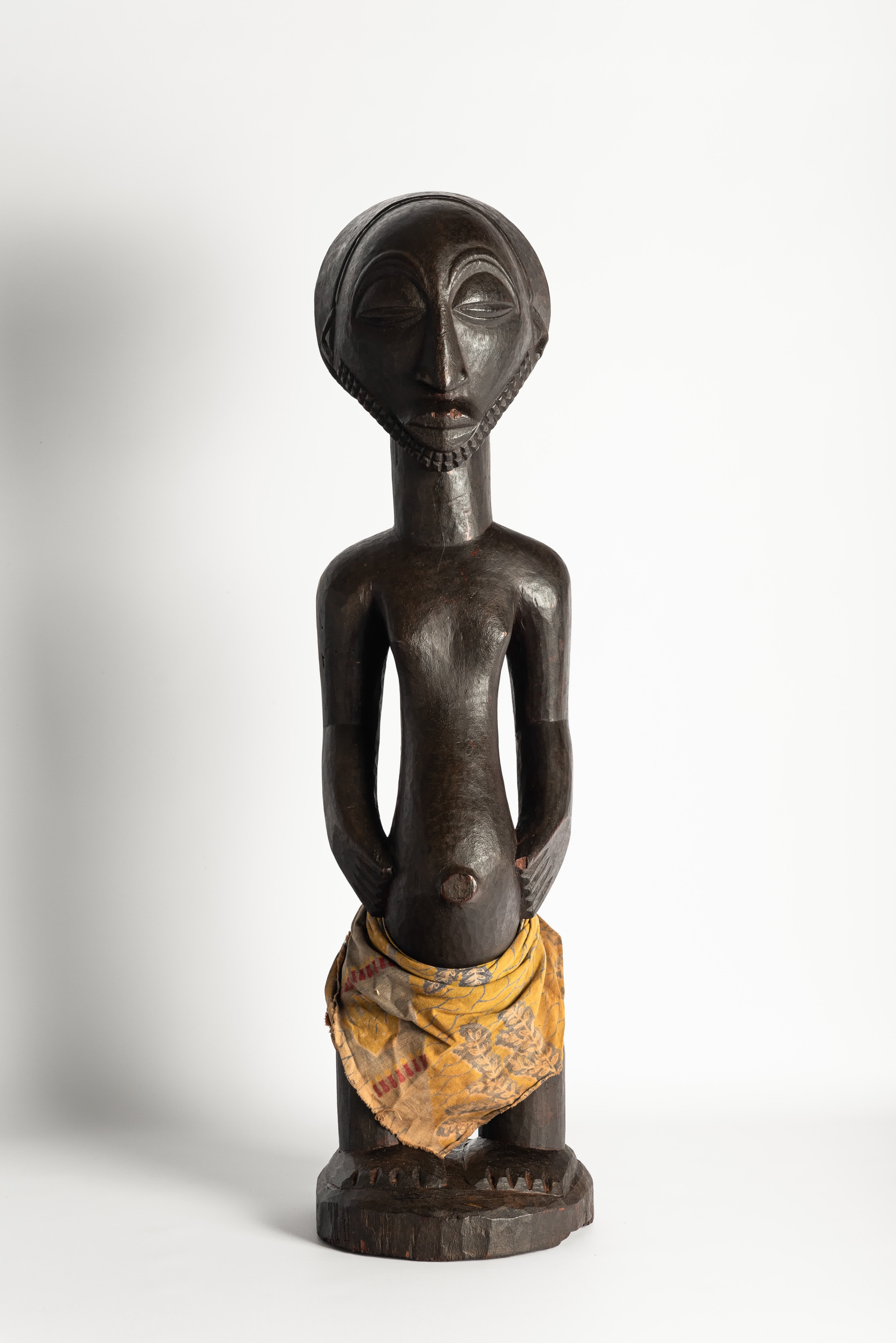
A standing male figure of compact, frontal authority, Hemba.
Description
The figure is composed in a contained, inwardly held structure, volumes gathered tightly around a central vertical axis. The body remains compact, with no extension beyond its own mass.
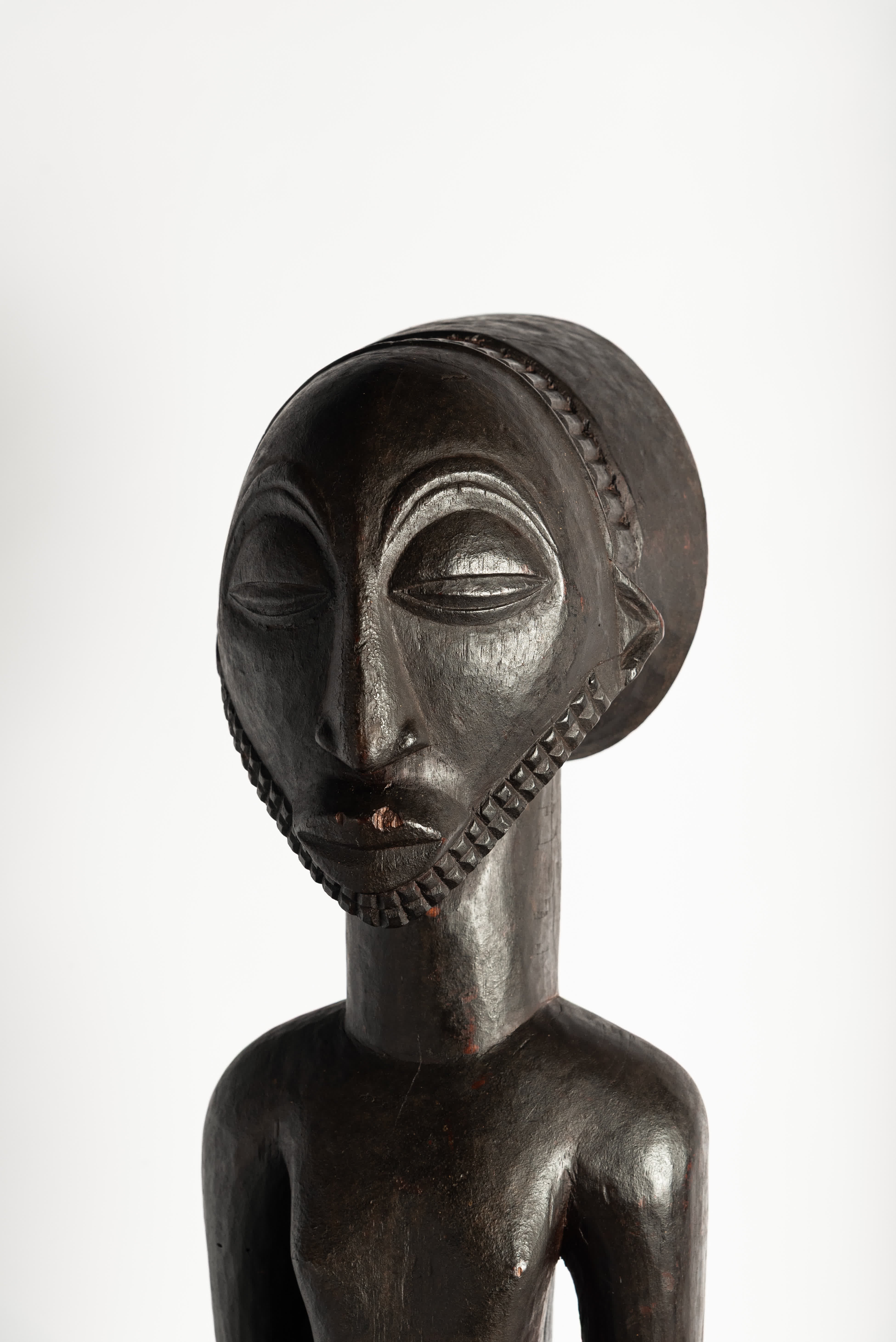
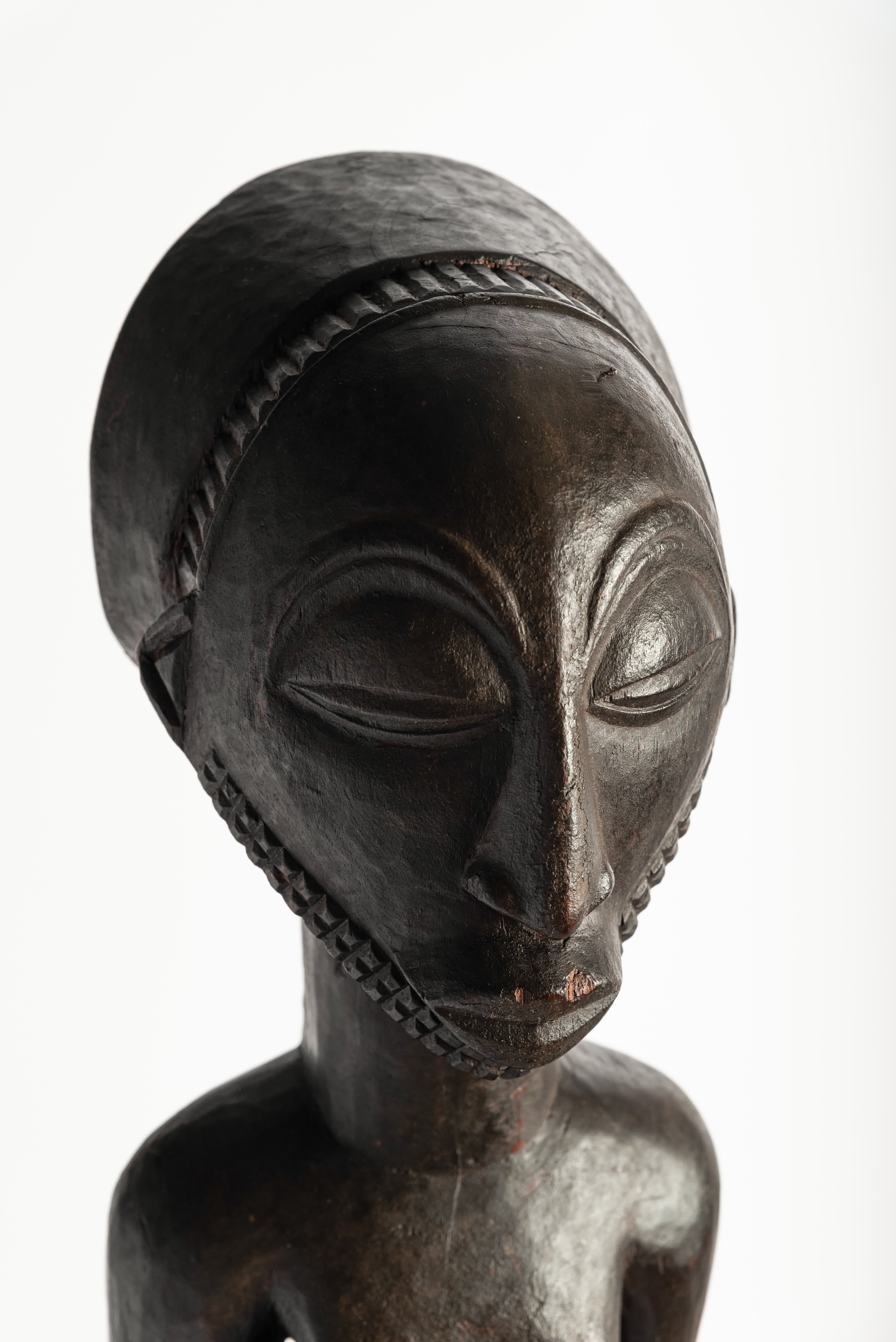
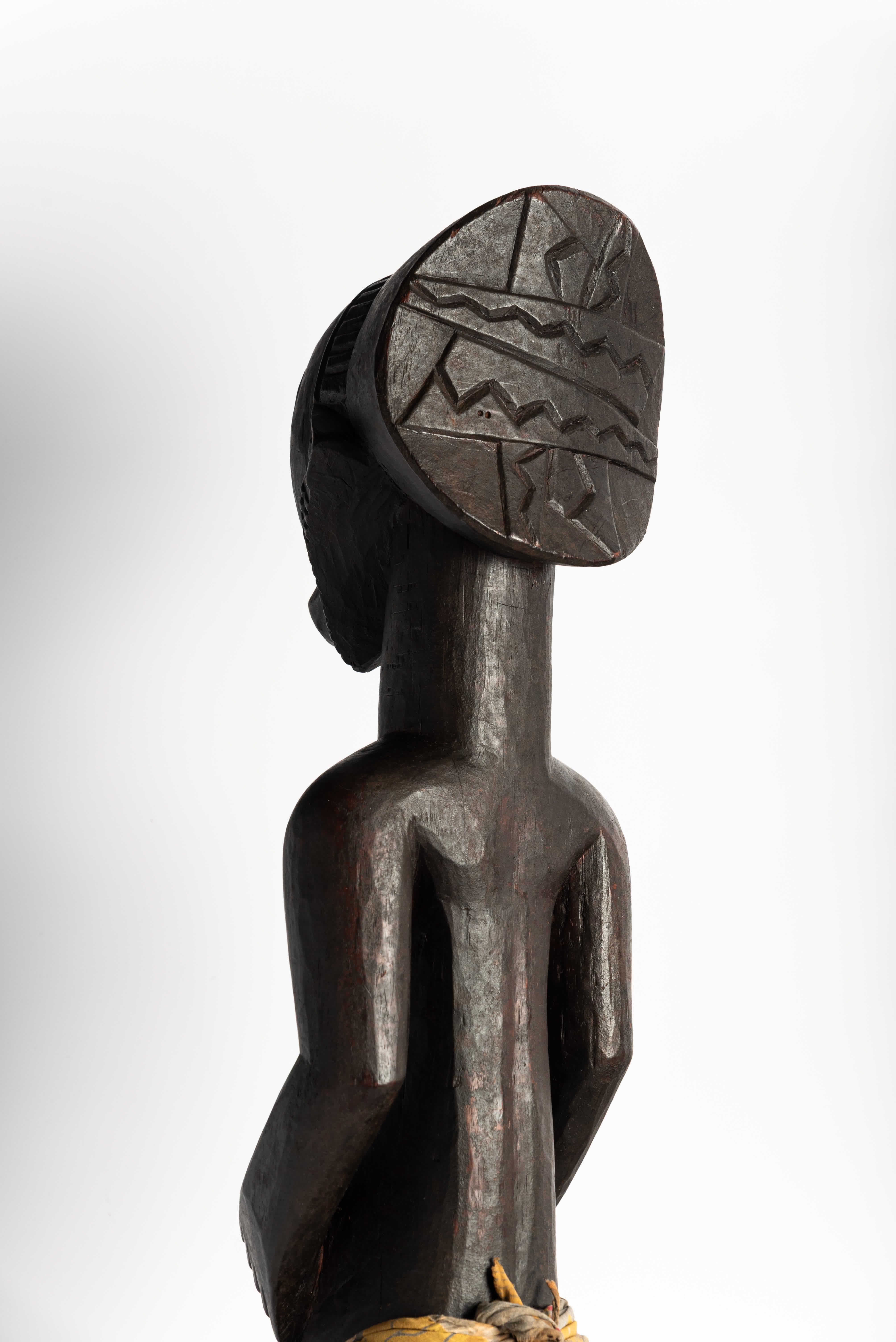
The head is proportionally large and set upon a ringed cylindrical neck. The face is oval and controlled: half-closed eyes beneath defined lids, a straight descending nose, and a slightly parted mouth. A continuous band of geometric scarification frames the jawline, enclosing the face within a clearly defined perimeter.
At the rear, the coiffure is resolved as a flattened disc, incised with ordered geometric registers. This element extends the head backward while maintaining the overall balance of the composition.
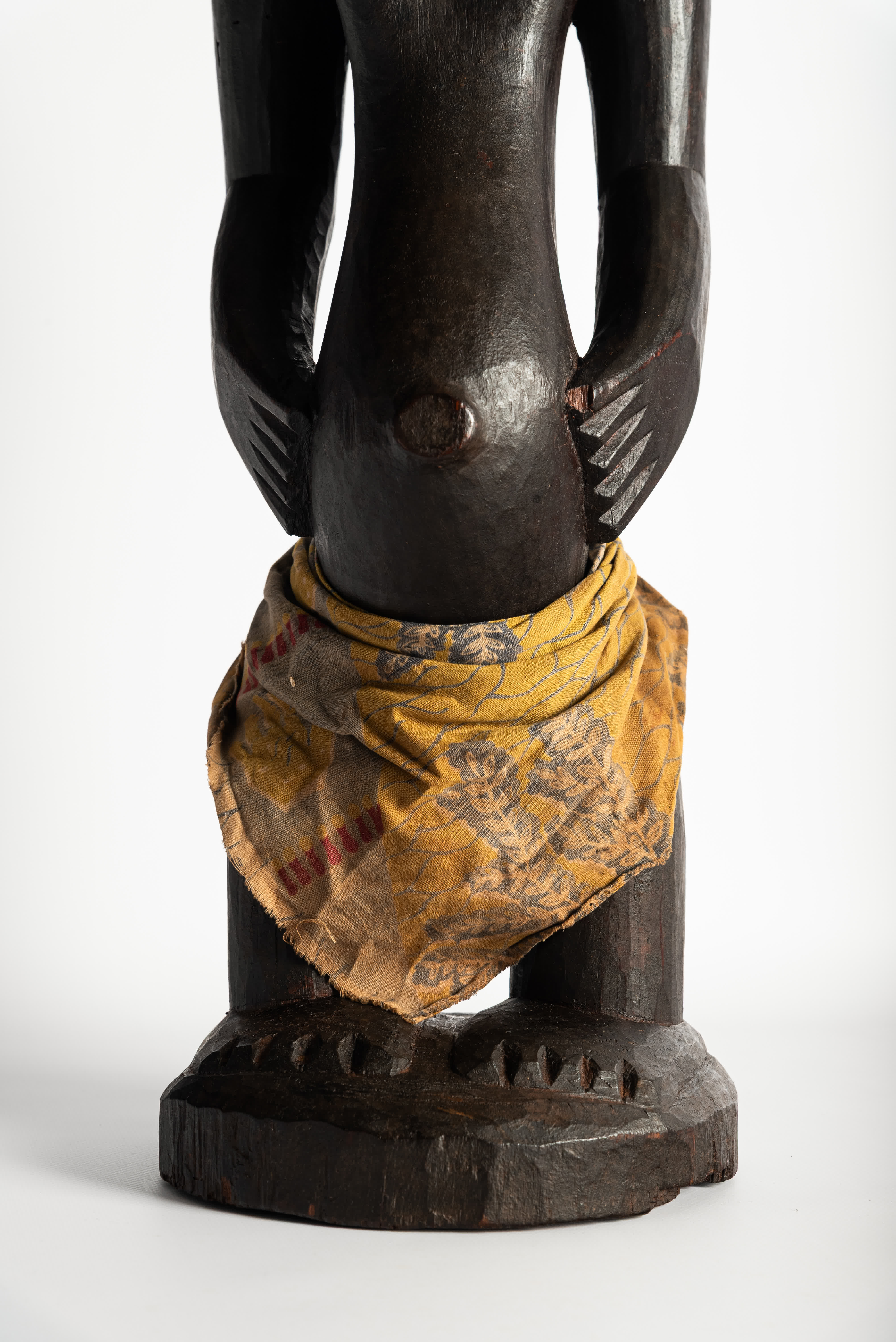
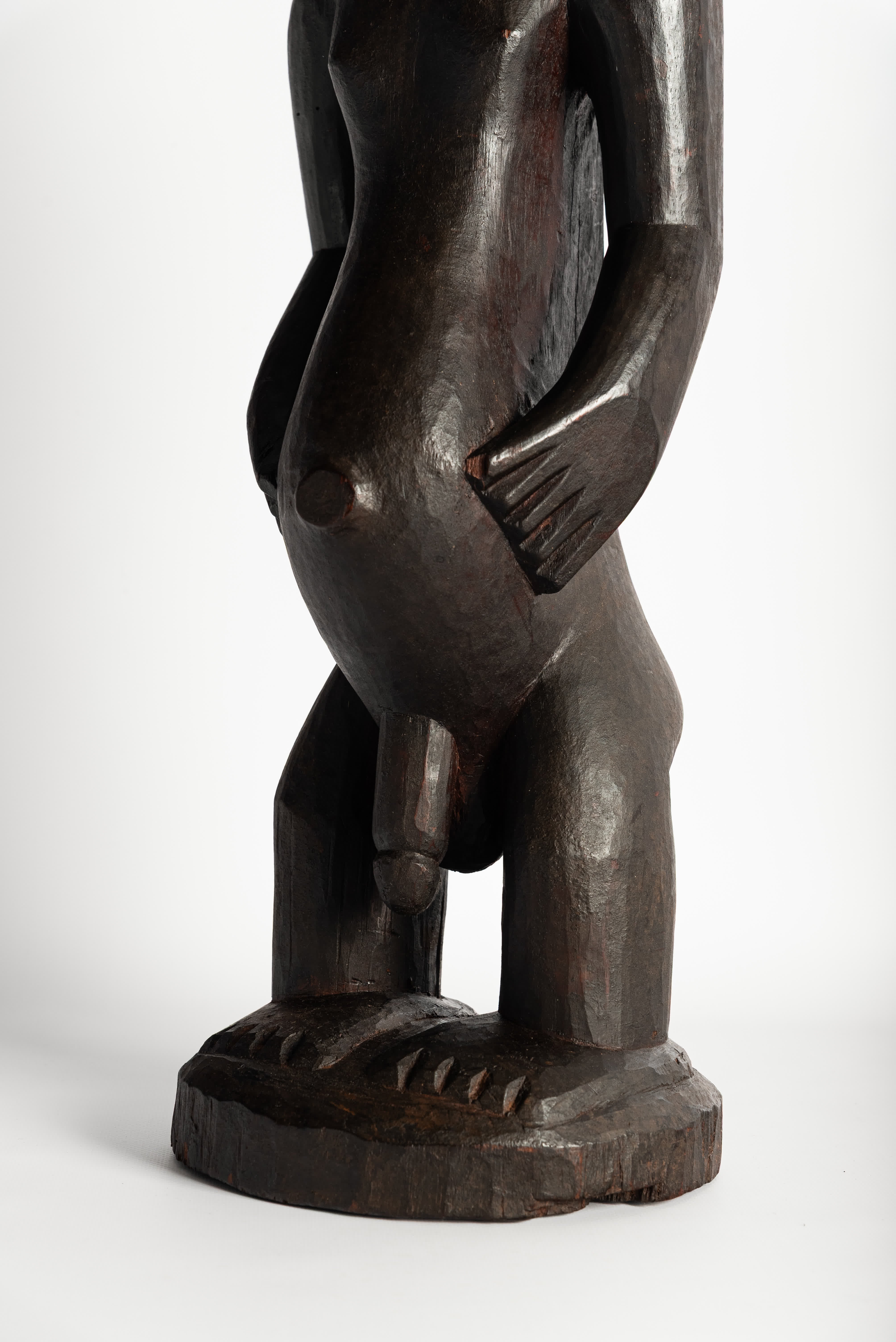
The torso is full and rounded, with a pronounced forward-projecting abdomen. Arms are drawn close to the body, the hands placed symmetrically at the lower abdomen, fixing the compositional centre. Fingers are individually indicated yet remain integrated within the larger form.
The legs are short and solid, positioned directly beneath the mass of the body. Broad feet with defined toes rest on a circular base, anchoring the figure and reinforcing its stability.
A textile wrap remains at the waist, introducing a secondary material element that contrasts with the carved surface while remaining subordinate to the structure.
Surface is dark and compact, with a developed patina. Wear is visible at projecting points, consistent with age and handling.
Context
Hemba figures are associated with ancestral representation, where emphasis is placed on composure, balance, and continuity.
Form is directed inward. Volume is contained rather than extended. The figure operates through stillness and structural clarity, prioritising presence over movement.
Examples retaining both defined carving and stable surface at this level remain uncommon.
Provenance
From the Felice Maffei Collection
Acquired in the Democratic Republic of Congo, 1985
Available on private enquiry.
Choose options
Interested or have questions about this piece? contact us
We are happy to walk you through the details, you can ask any question about provenance, context and authenticity.
We will get back to you in less than a day.

Protected Purchase