
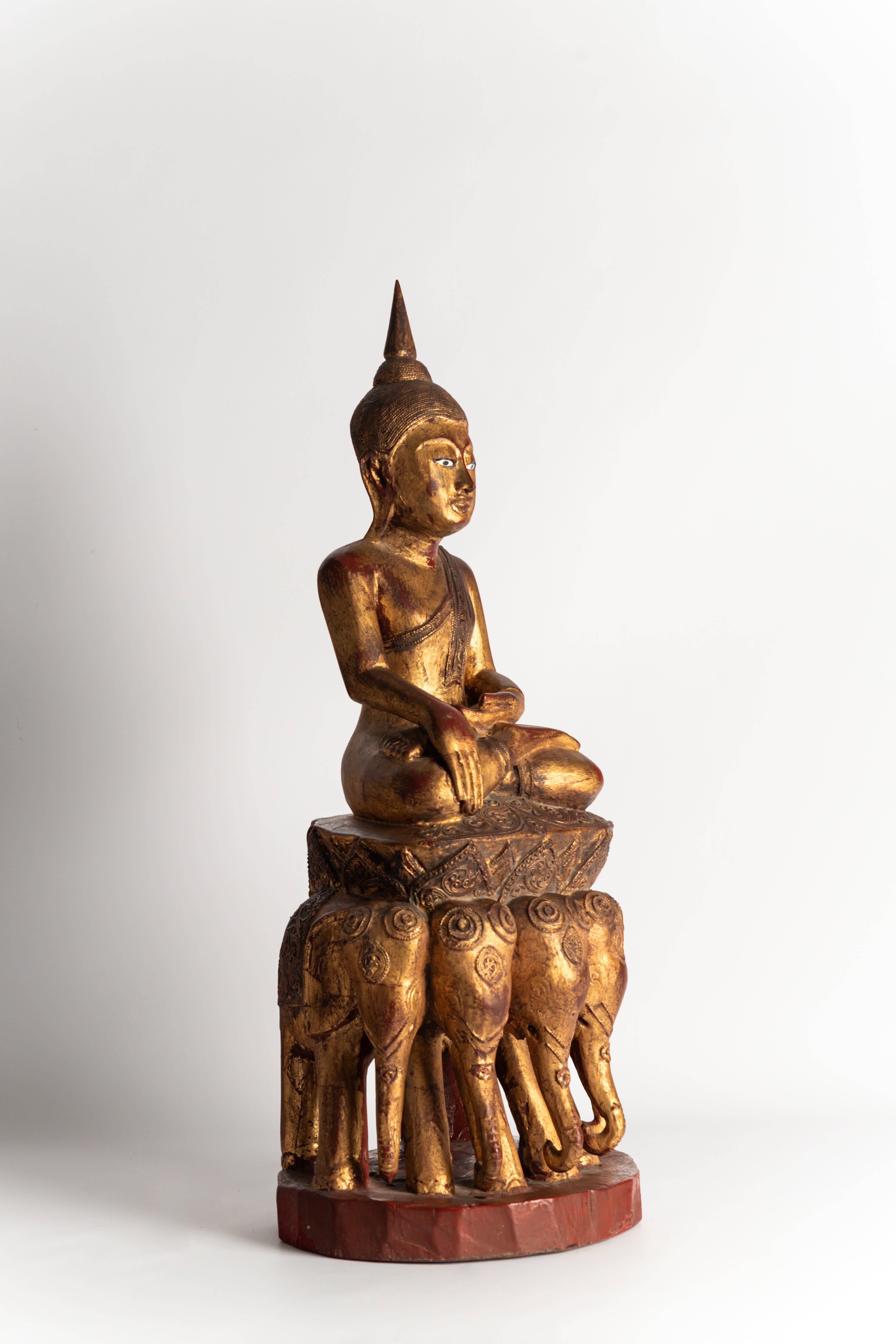
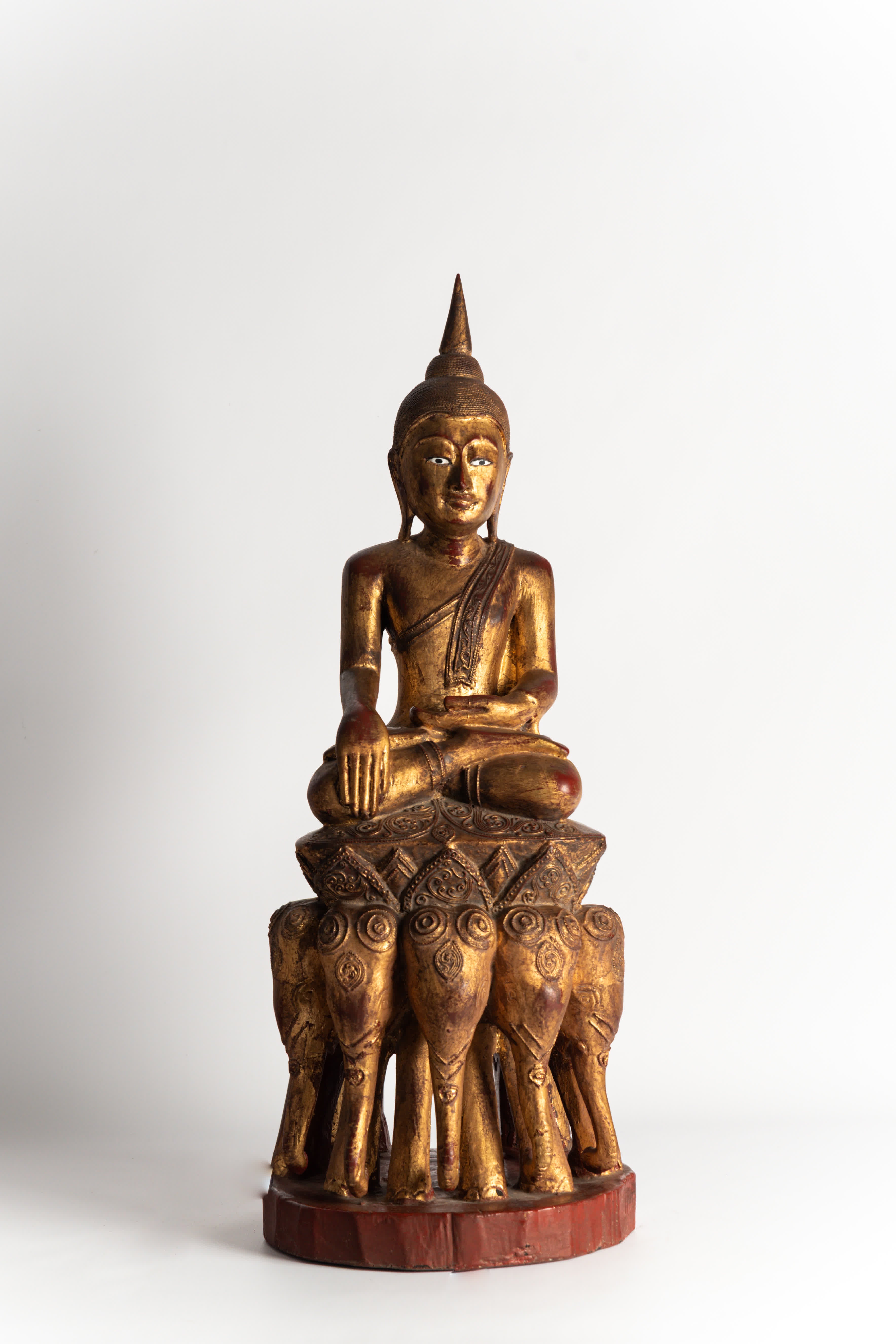
Devotional Buddha Seated on Five Elephants
Museum-grade artifact
Sukhothai–Ayutthaya period (c. 13th–15th century)
Thailand
Certificate of Authenticity
Buddhist — Thailand
A devotional image of centred stillness and layered support, Thai.
Description
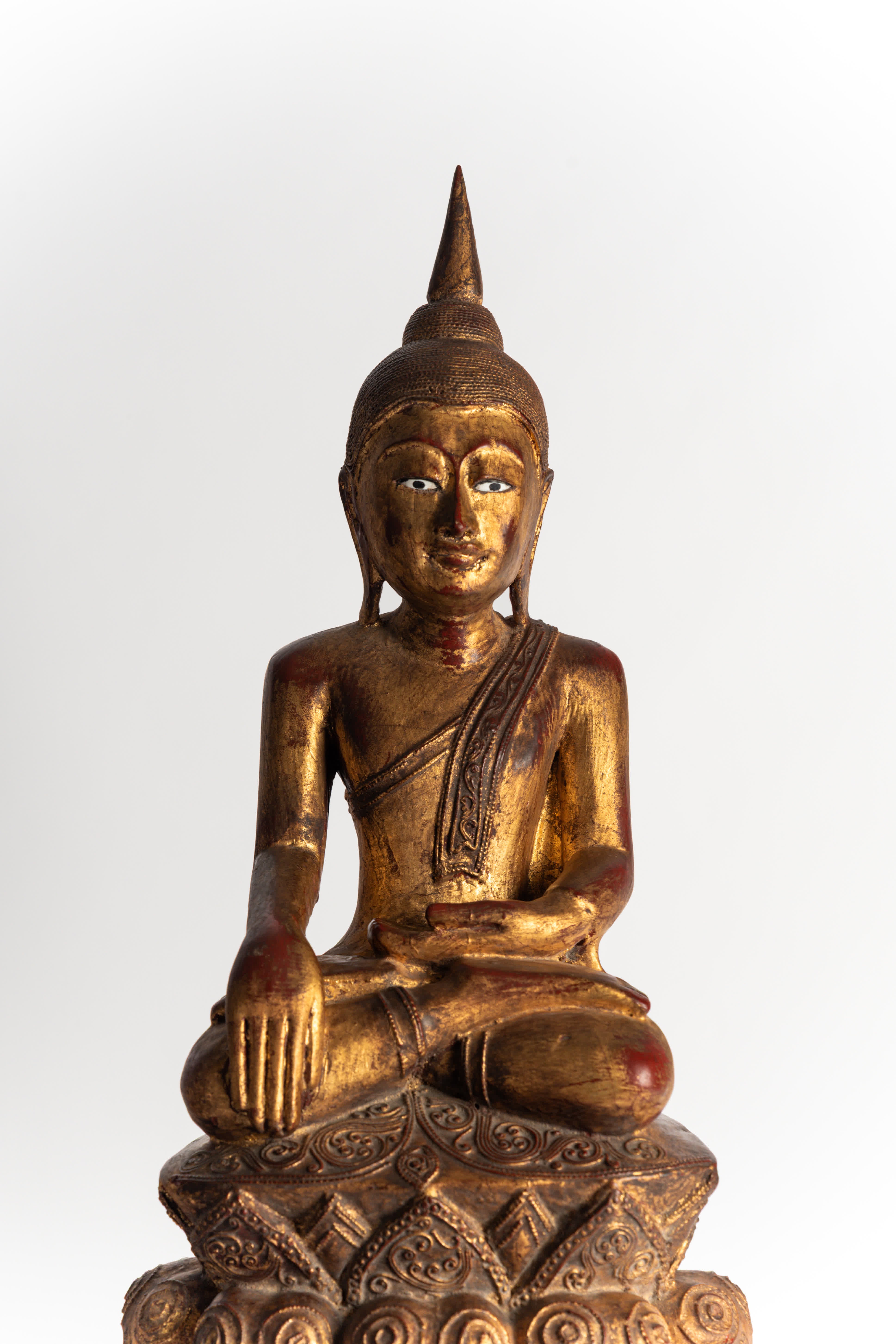
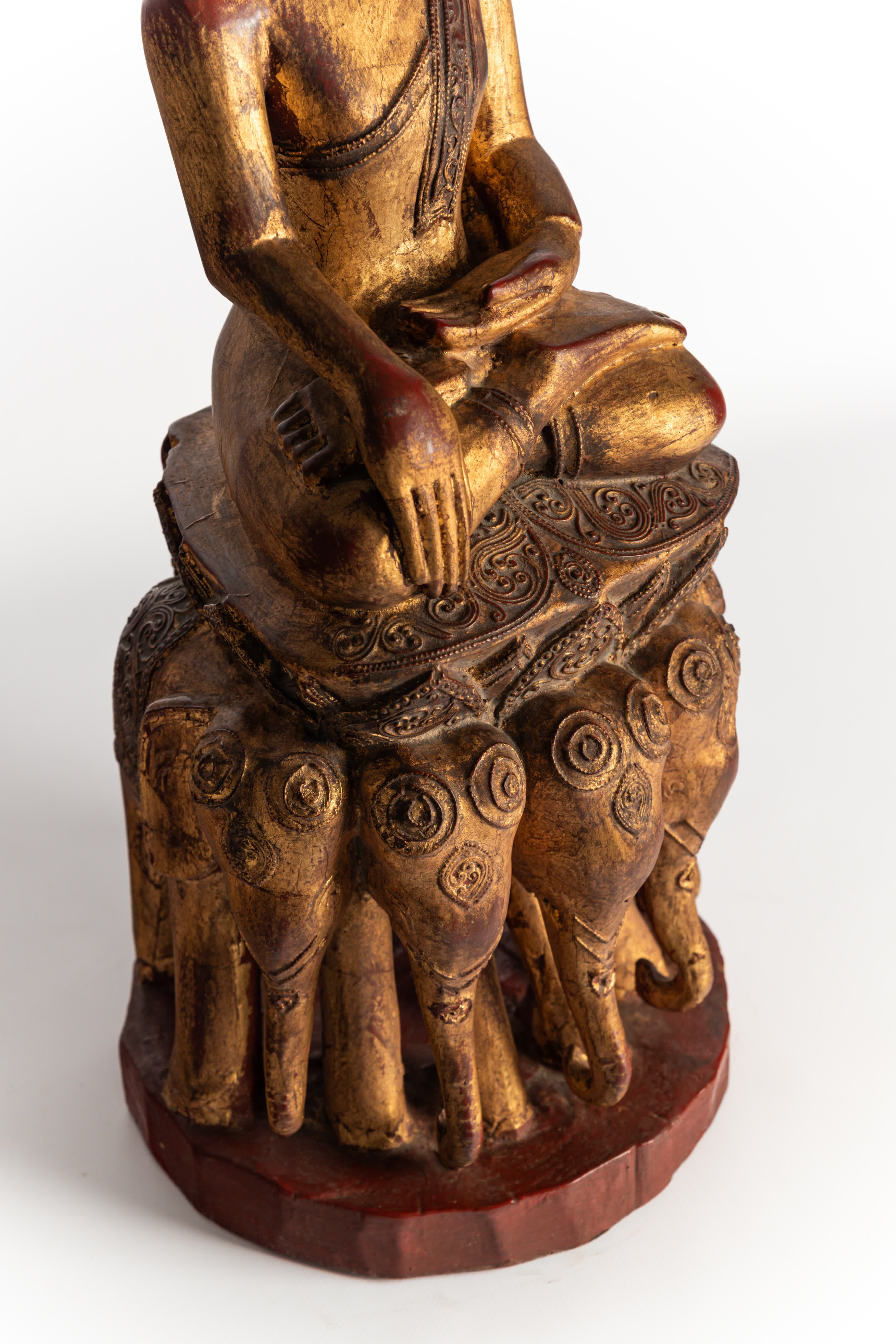
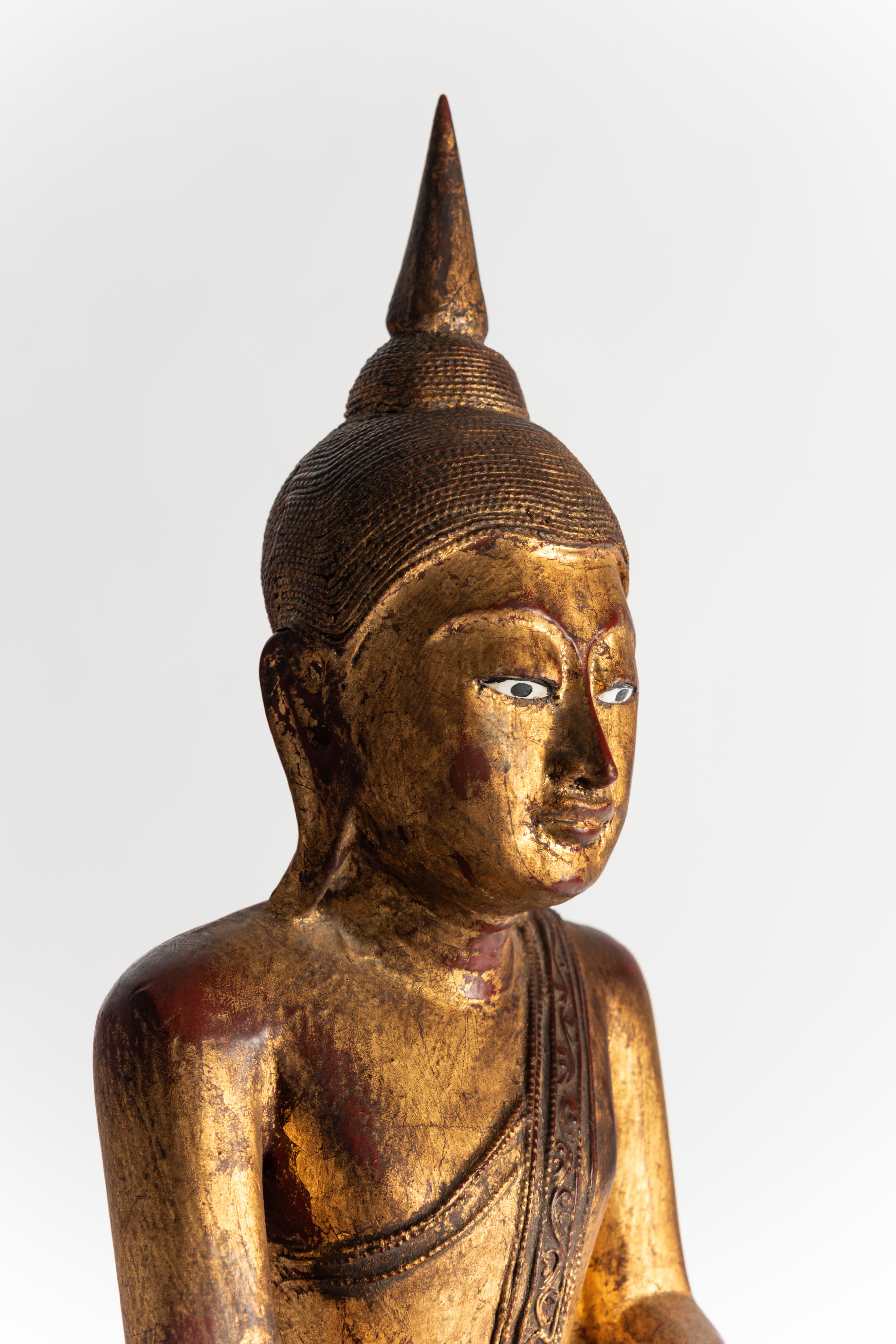
Carved in teak, the Buddha is seated in the Maravichai (earth-touching) posture, held within a stable and centred vertical axis. The right hand descends toward the knee with fingers extended, while the left rests in the lap. The asymmetry of gesture is contained within a fully balanced composition.
The face is smooth and generalised, with inlaid eyes set beneath gently defined brows. The ushnisha rises into a tapering flame, completing the upward movement of the form with a controlled vertical emphasis.
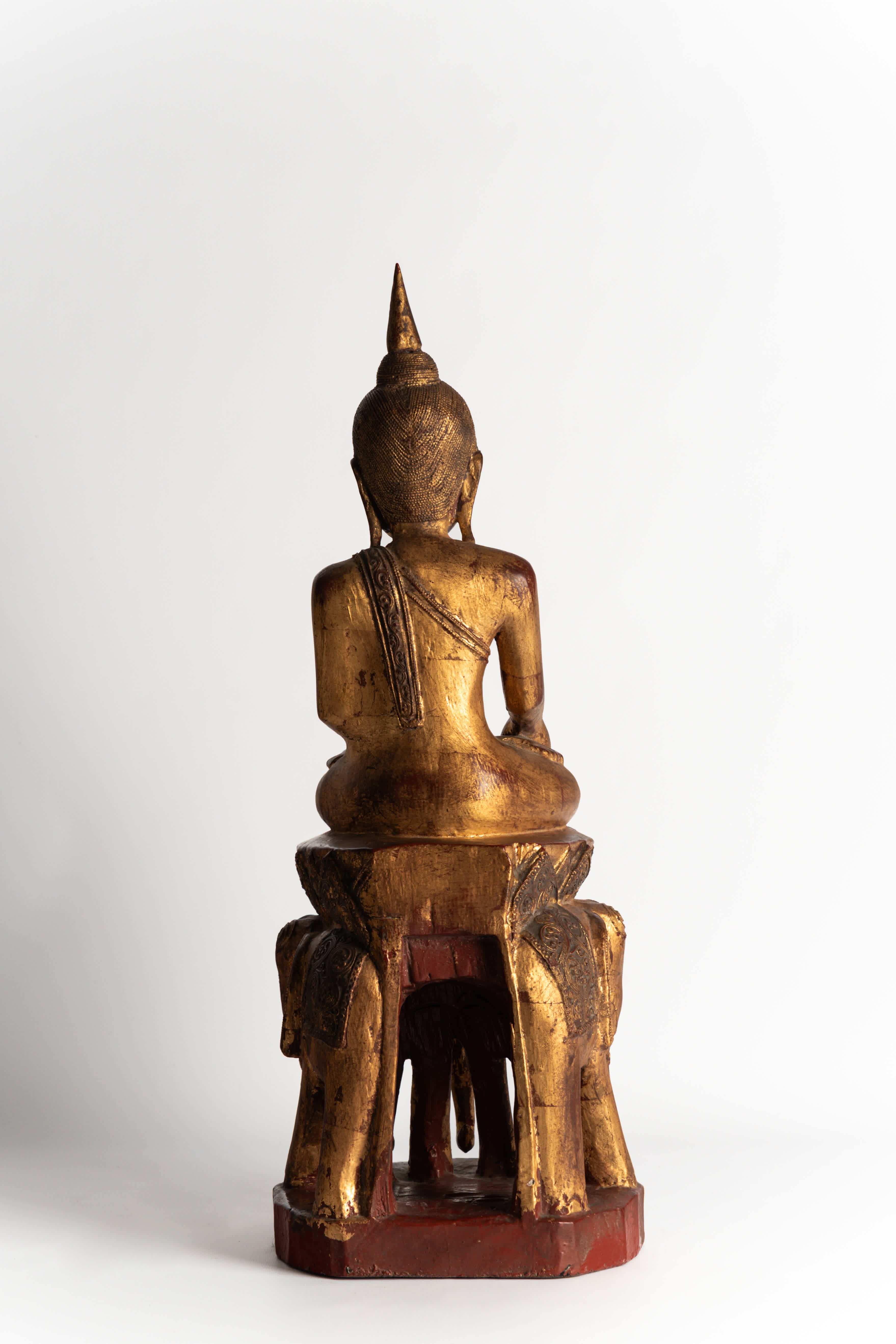
Below, five elephants form a continuous circular base. Their bodies are compact and rhythmically repeated, heads aligned forward, creating a dense structural ring rather than an open support. The repetition establishes both visual continuity and physical grounding.
Between base and figure, a carved platform introduces a transitional register, articulated with floral and geometric motifs. This element mediates the ascent from the compressed lower structure to the seated figure above, maintaining clarity between the two while preserving overall unity.
The surface retains extensive gilding over a red lacquer ground. Wear is concentrated along projecting elements, where abrasion reveals underlying layers. The resulting stratification records prolonged devotional handling, integrating use into the material presence of the object.
Context
Within Thai Buddhist sculpture of the Sukhothai–Ayutthaya periods, emphasis is placed on composure, clarity of gesture, and controlled stylisation.
The Maravichai posture represents the moment of calling the earth to witness, expressed through a minimal yet decisive gesture. The figure’s stillness contrasts with the rhythmic repetition of the elephants below, establishing a relationship between centred presence and structured support.
The worn gilded surface reflects sustained ritual engagement, where material transformation becomes part of the object’s history.
Provenance
From the Felice Maffei Collection
Acquired in Thailand, 1983
Available on private enquiry.
Choose options
Interested or have questions about this piece? contact us
We are happy to walk you through the details, you can ask any question about provenance, context and authenticity.
We will get back to you in less than a day.

Protected Purchase