
Iran, 1962: Where the Collection Began
Before Africa, before the masks and the figures, there was a gorge in south-western Iran, a wall of concrete rising inside it, and a young Italian civil engineer.
The gorge
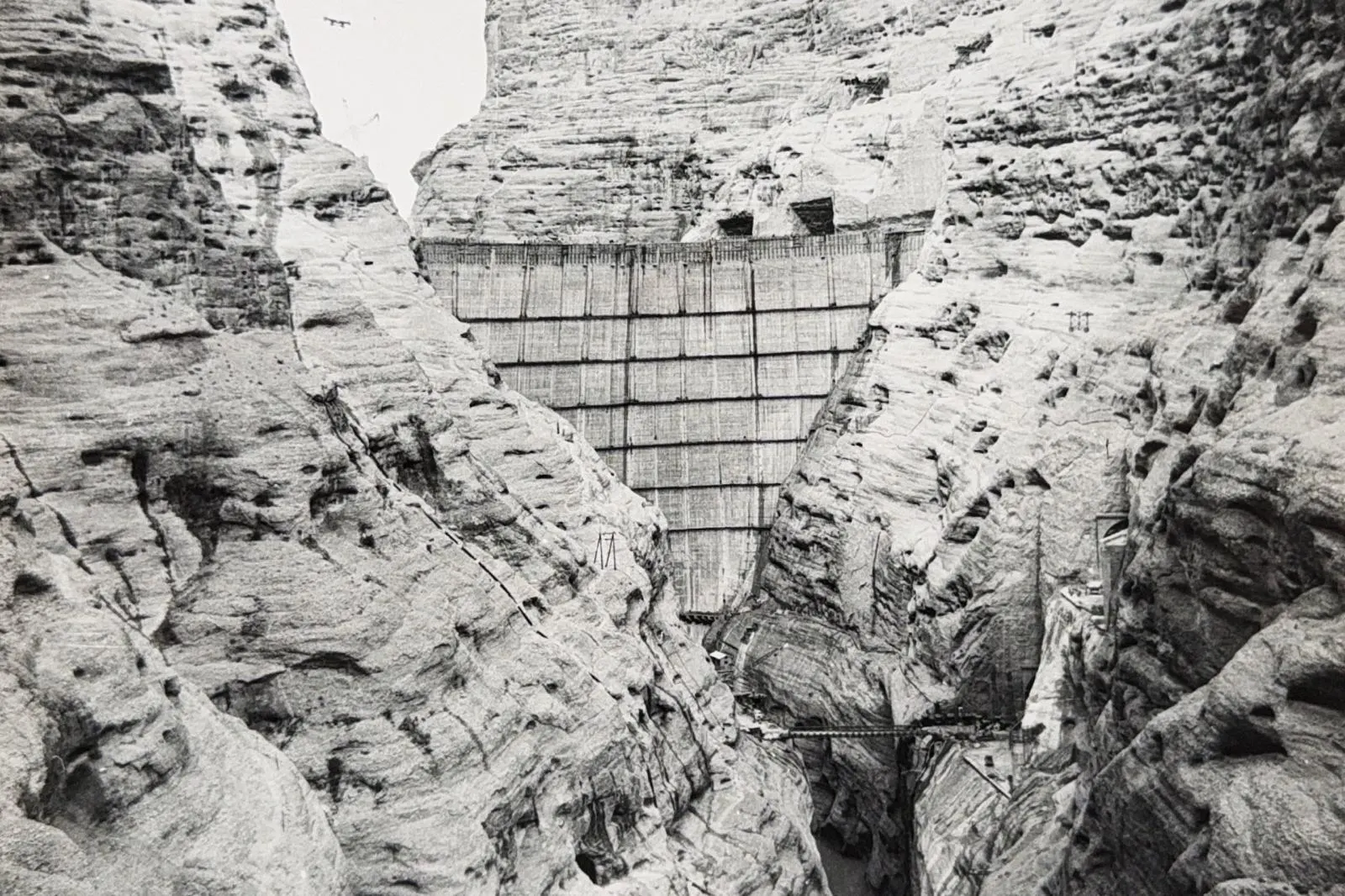
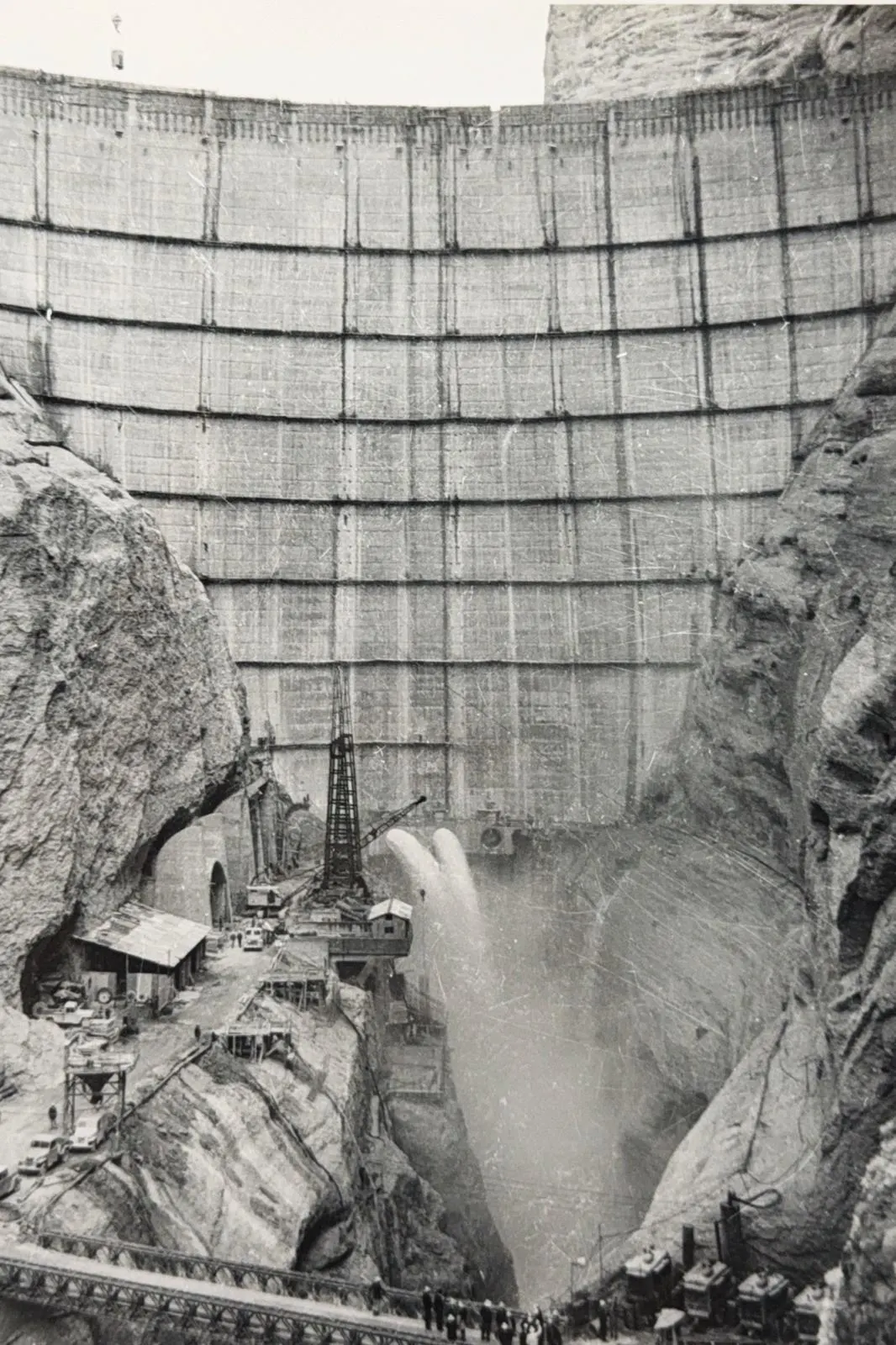
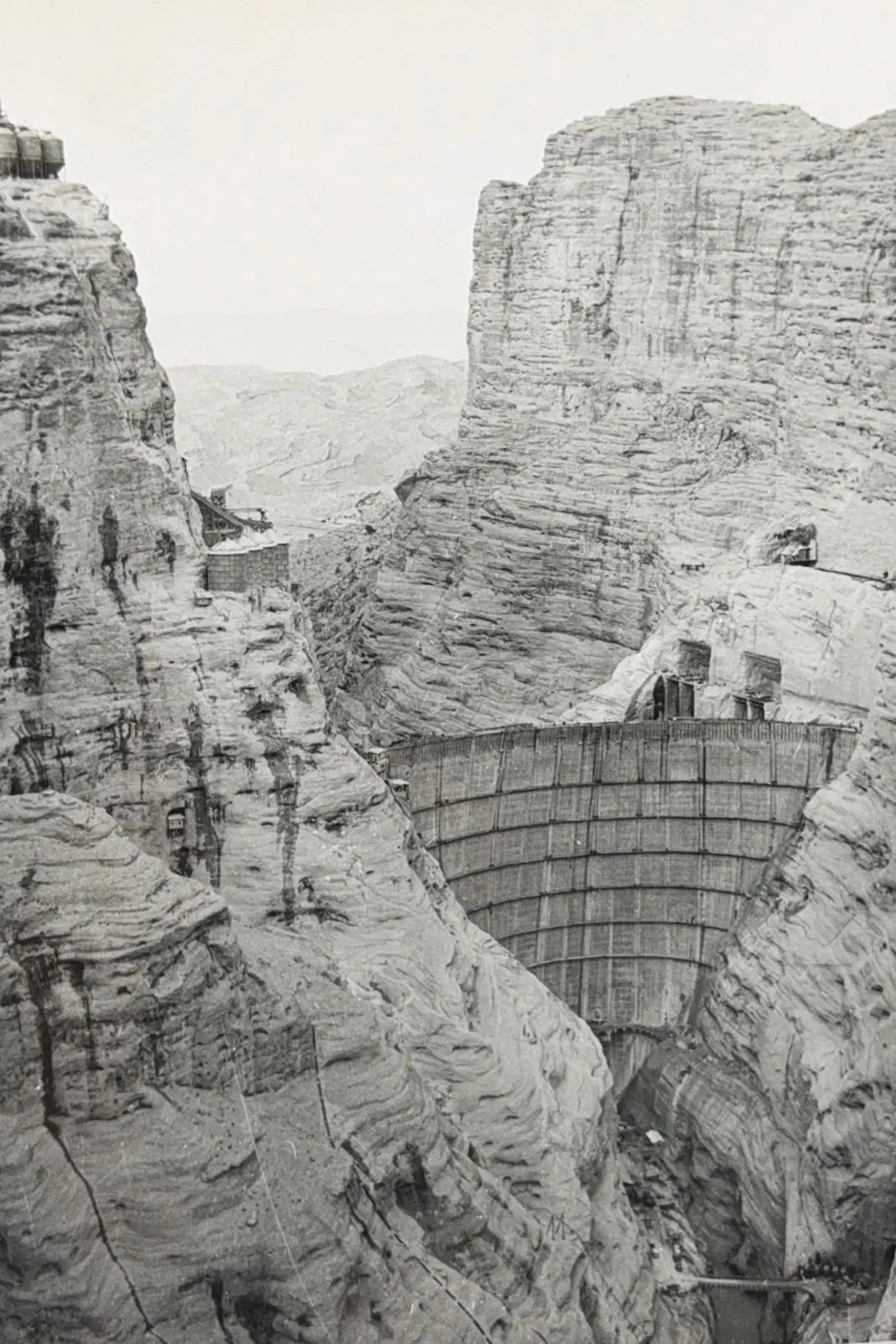
In 1962 Felice Maffei, then twenty years old, arrived in Iran as a civil engineer. His first project there was a hydroelectric dam on the Dez River, in the province of Khuzestan, where the river cuts a deep and narrow gorge through layered rock.
The photographs on this page come from his own archive. They show the work as he saw it in 1962 and 1963: a curved wall of concrete climbing in horizontal bands between the cliffs, site buildings and cranes fixed to the rock, water released at the foot of the arch. When it was completed in 1963, the Dez Dam stood 203 metres high. It was built by an Italian consortium.
Living in a place
Work of this kind did not allow a visitor’s view of a country. It meant months at a time on construction sites, in regional towns and in rural areas: living in a place rather than passing through it.
It was during this period that the first objects entered the collection. They were not bought as art. They were met through local craftsmen, merchants and families, as objects whose history was still visible in their surfaces.
Every collection has a first place. For this one, it was a gorge in Khuzestan.
A method, not a moment
What began in Iran became the way the collection would grow for decades: direct encounter, sustained presence, and the attention that comes from living alongside the people who made and used these objects.
Africa followed from 1964. Between the 1960s and the 1980s, his work took him across West, Central and East Africa, and the collection grew by the same method. He also returned to Iran: the Persian metalwork in the collection today, from Safavid vessels to a Qajar mirror case, entered it as a single group in 1968.
Objects and images
The photographs belong to the same record as the objects. Engineering works, landscapes, communities and journeys sit alongside the masks, figures and vessels, and together they tell how the collection was formed: not through galleries or auction houses, but directly, in the places where they were made and used, from the people who held them.
Sources: Encyclopaedia Britannica (Dez Dam); Structurae (Dez Dam).