
Ghana, 1964–65: Akosombo
Two years after Iran, the journey reached Africa: a great dam on the Volta River, a working life shared with Ghanaian colleagues, and a carved panel that became the first African work in the collection.
THE RIVER
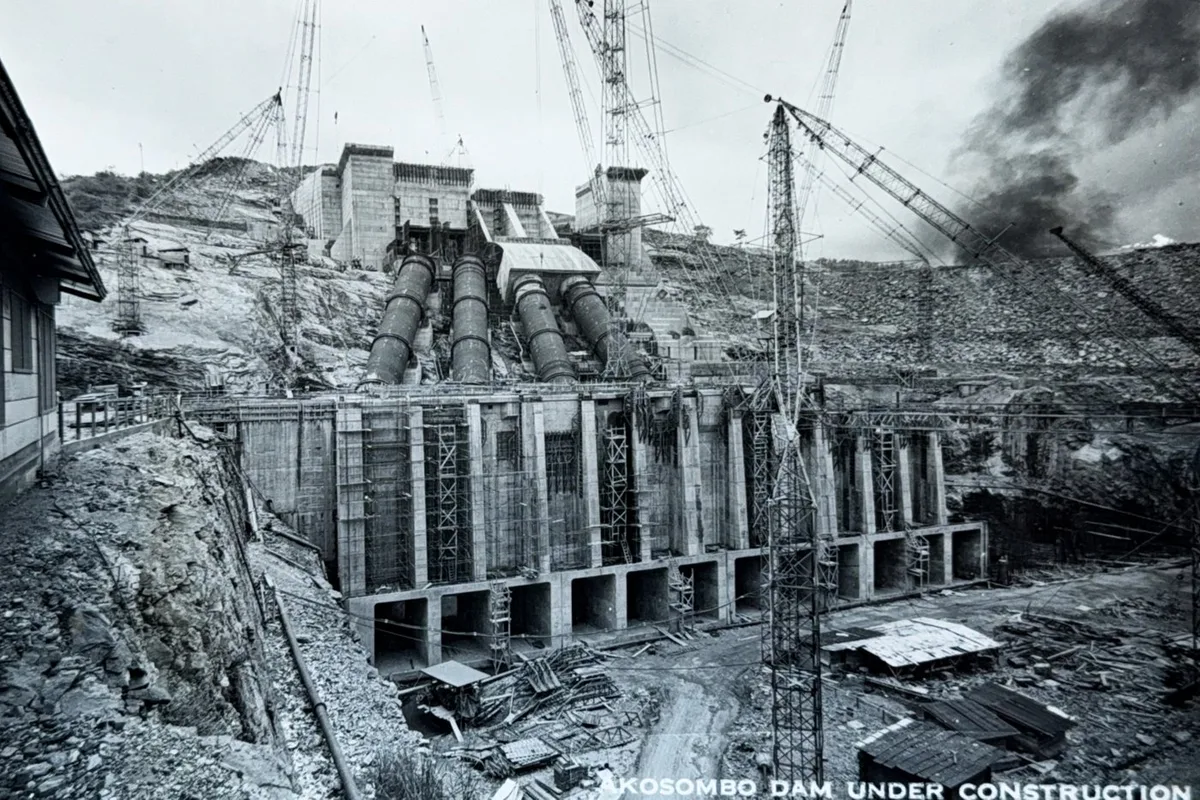
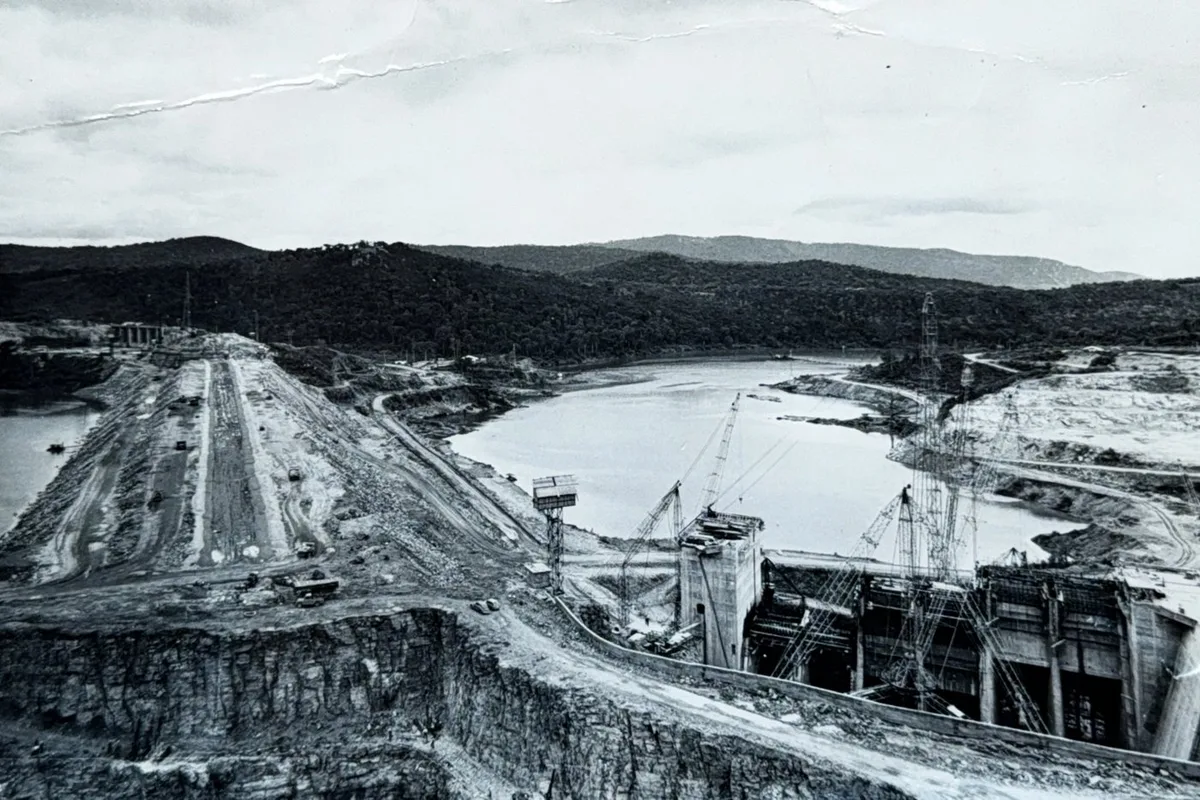
In 1964 Felice Maffei arrived in Ghana as a site engineer on the Akosombo hydroelectric project, where the Volta River passes through a gorge in the south-east of the country.
The dam was built between 1961 and 1965 by the Italian firm Impregilo for Ghana's Volta River Authority. Behind it formed Lake Volta, the largest artificial lake in the world by surface area.
THE WORK
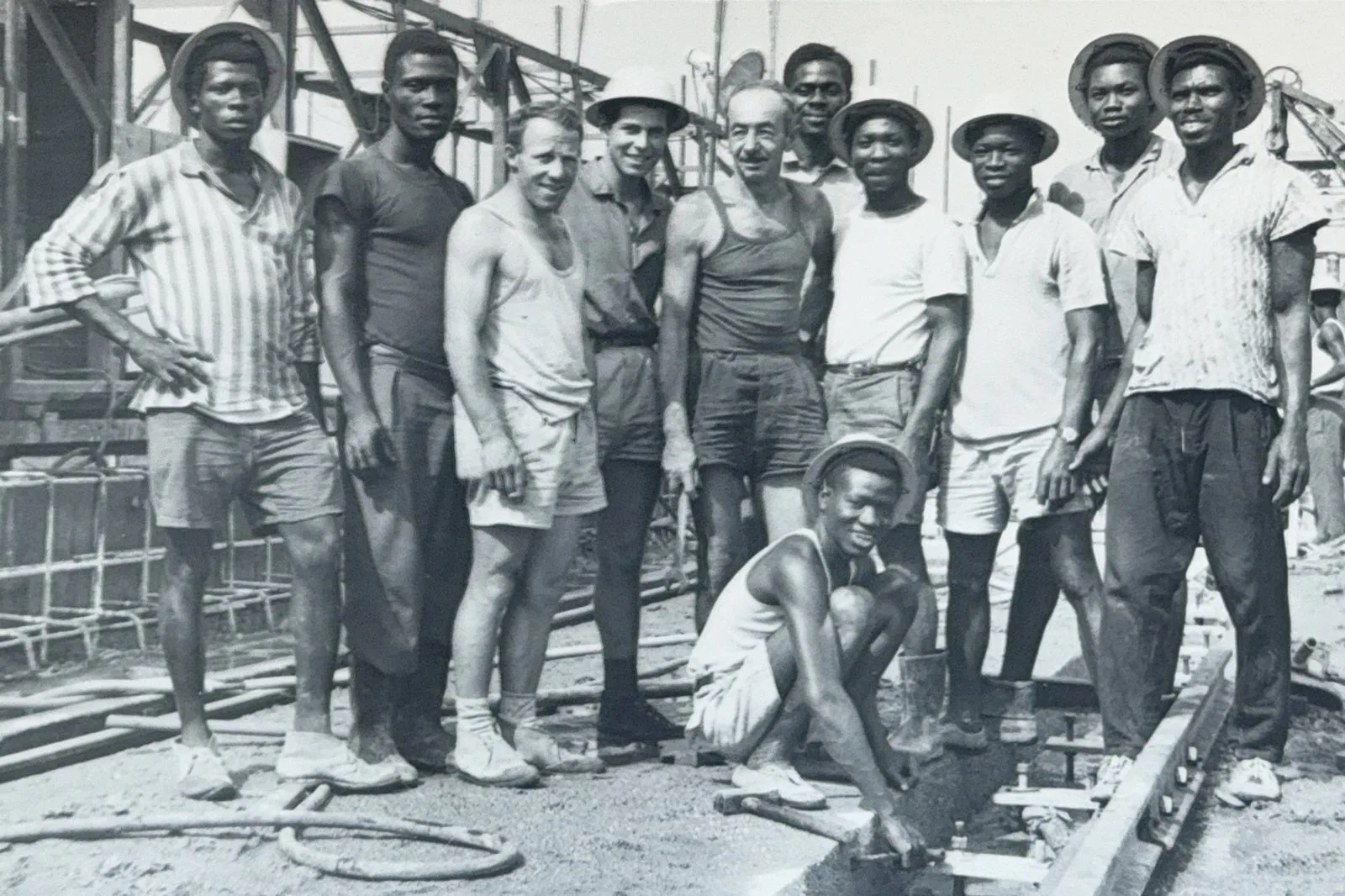
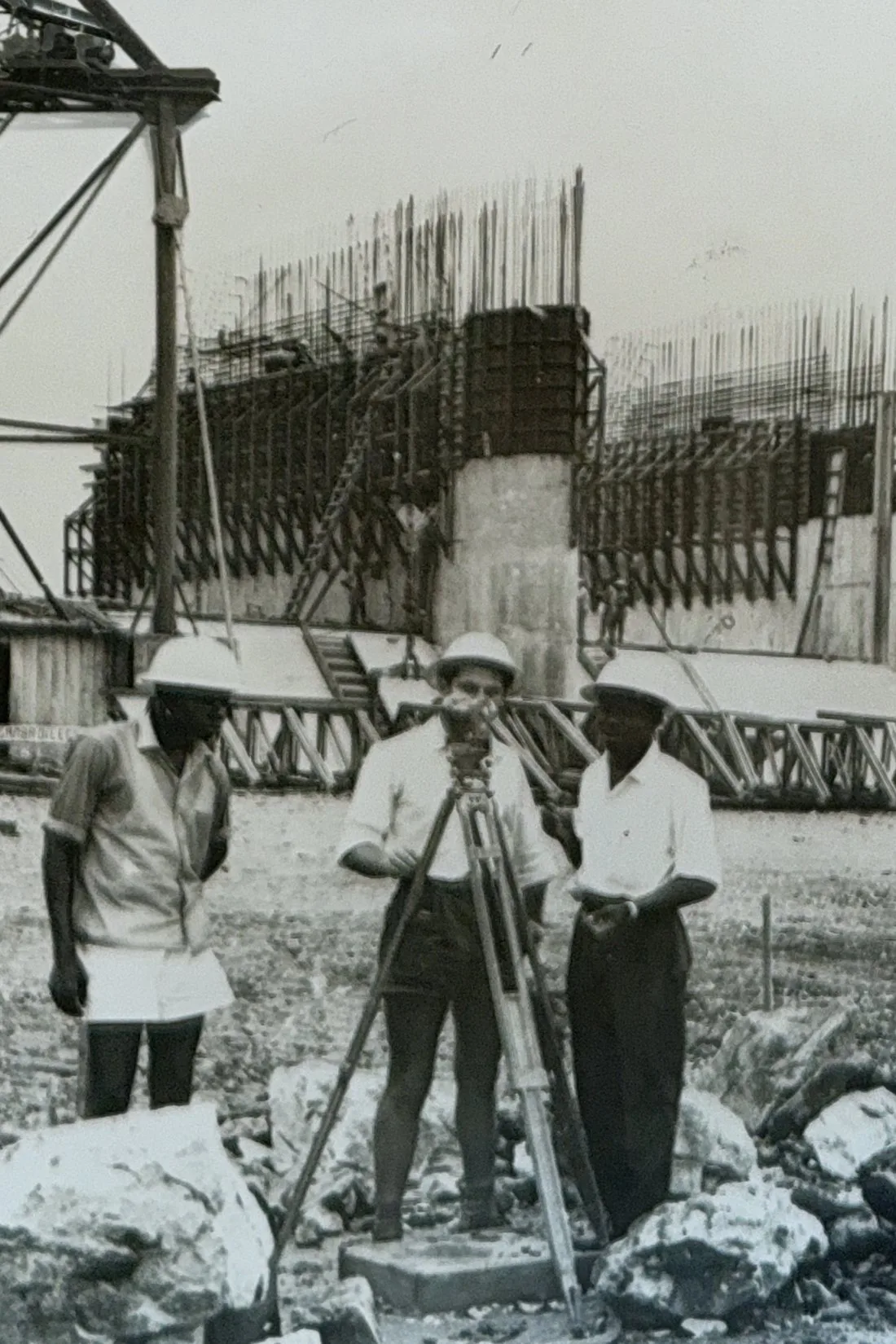
Italian engineers worked alongside Ghanaian surveyors, assistants and labourers. Felice's own photographs record that shared work: the team gathered on the works, the theodolite set up on the rock, the colleagues who stood beside him.
BEYOND THE SITE
Sundays took him beyond the works: to the local communities near the site, to the cocoa plantations around it, and to the coast.
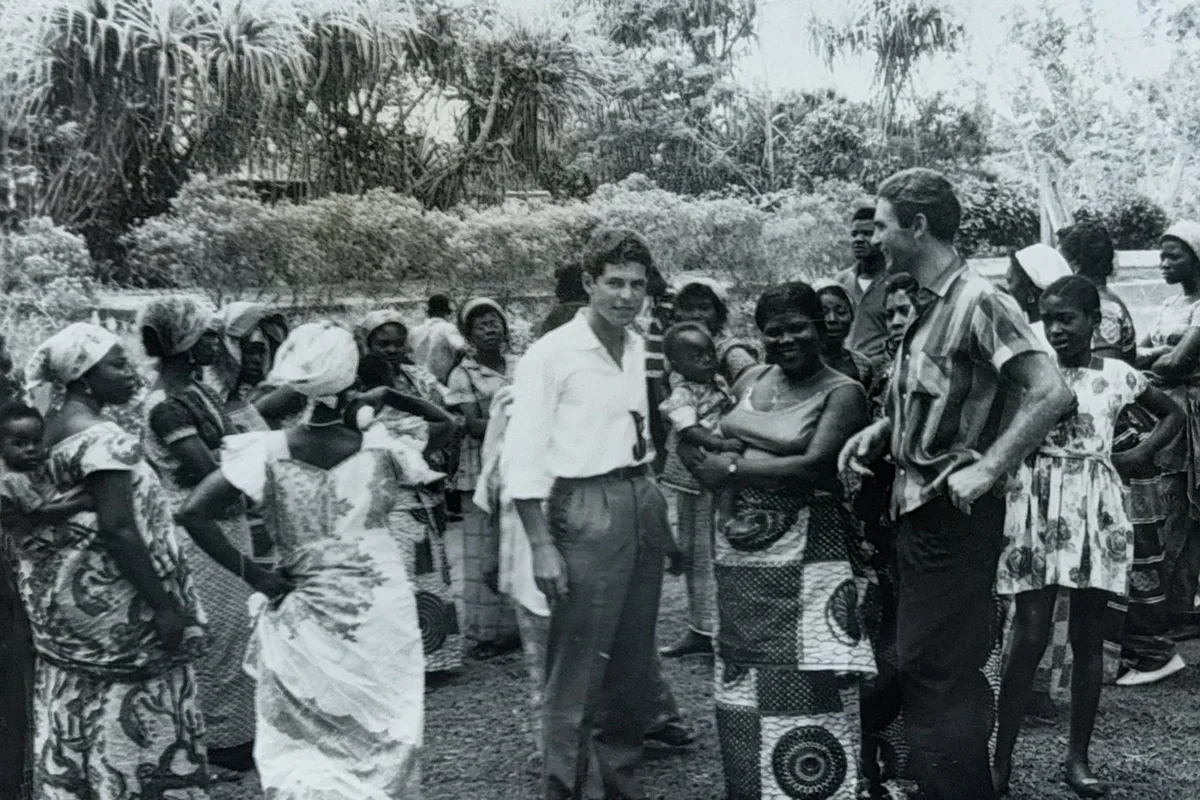
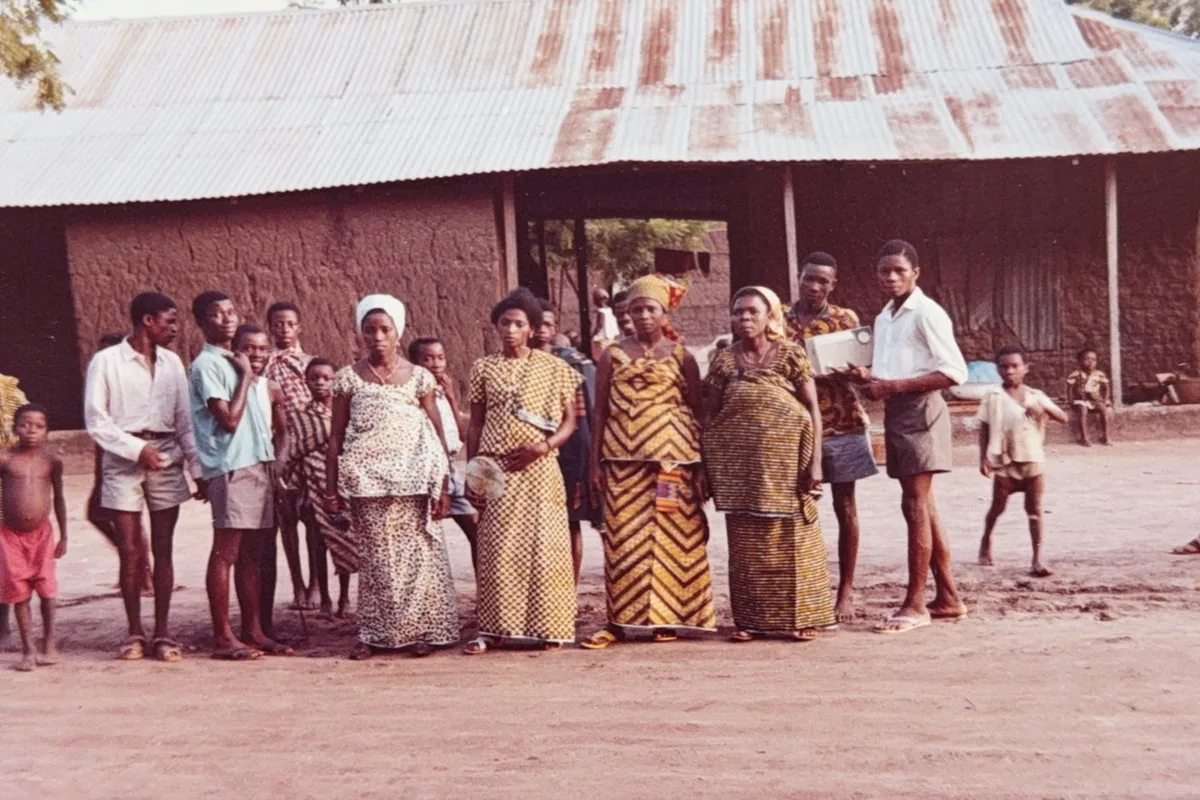
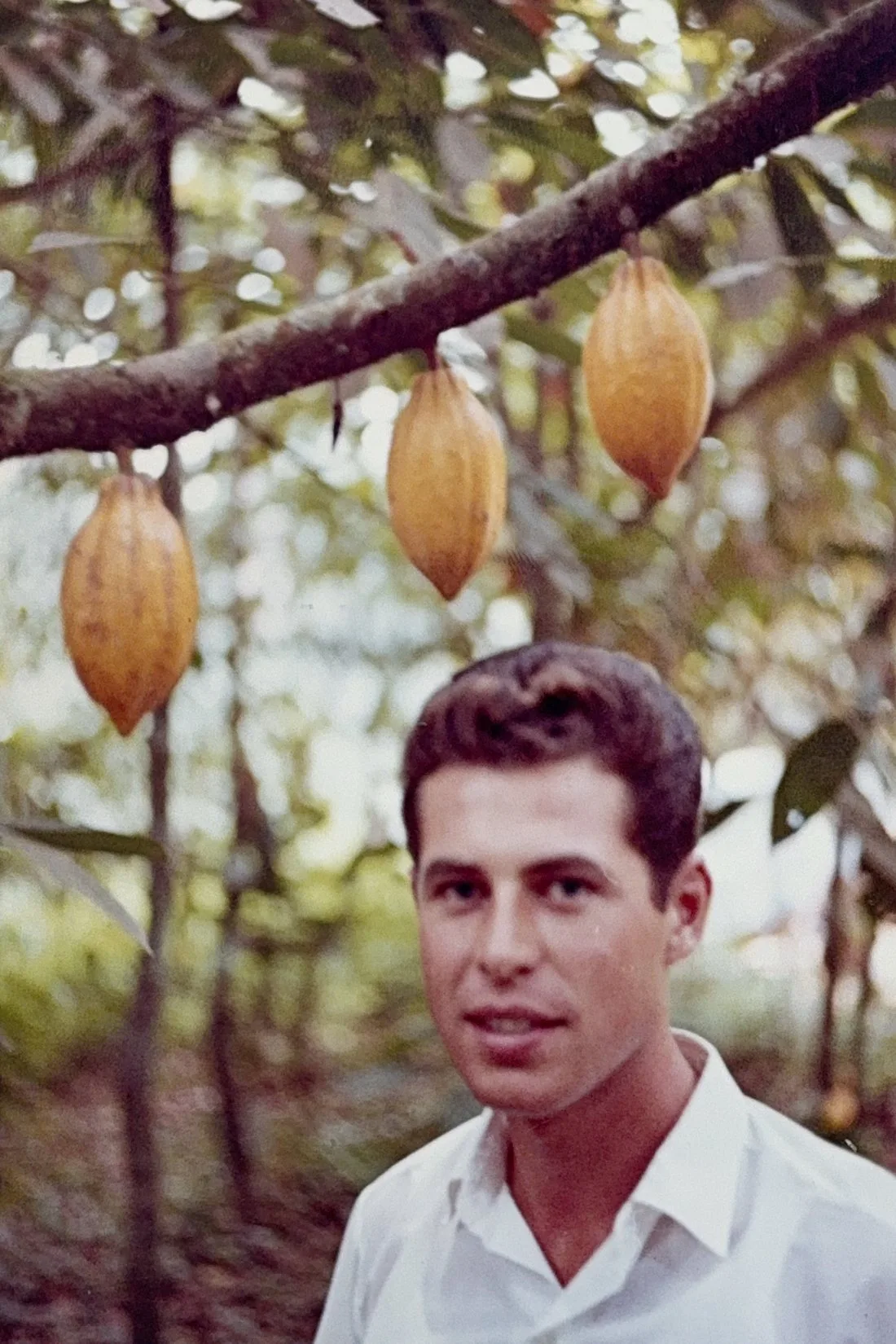
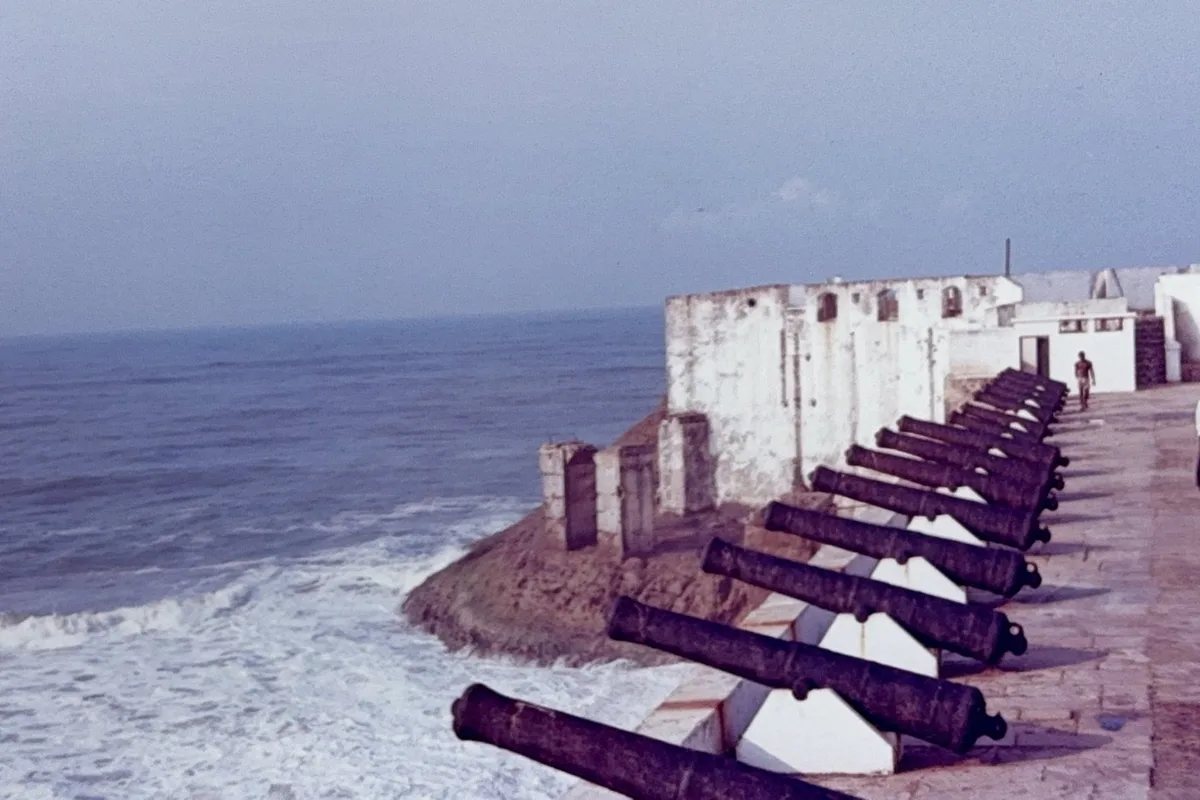
He also went to Cape Coast Castle, one of the historic forts and castles on the Gold Coast shoreline now listed by UNESCO as a World Heritage Site. Built for the gold trade, the castle later became a centre of the transatlantic slave trade. He went because of that history, and he kept the photograph.
THE FIRST AFRICAN WORK
It was here, in 1964, that the first African work entered the collection: a carved panel acquired from a local carver near Akosombo.
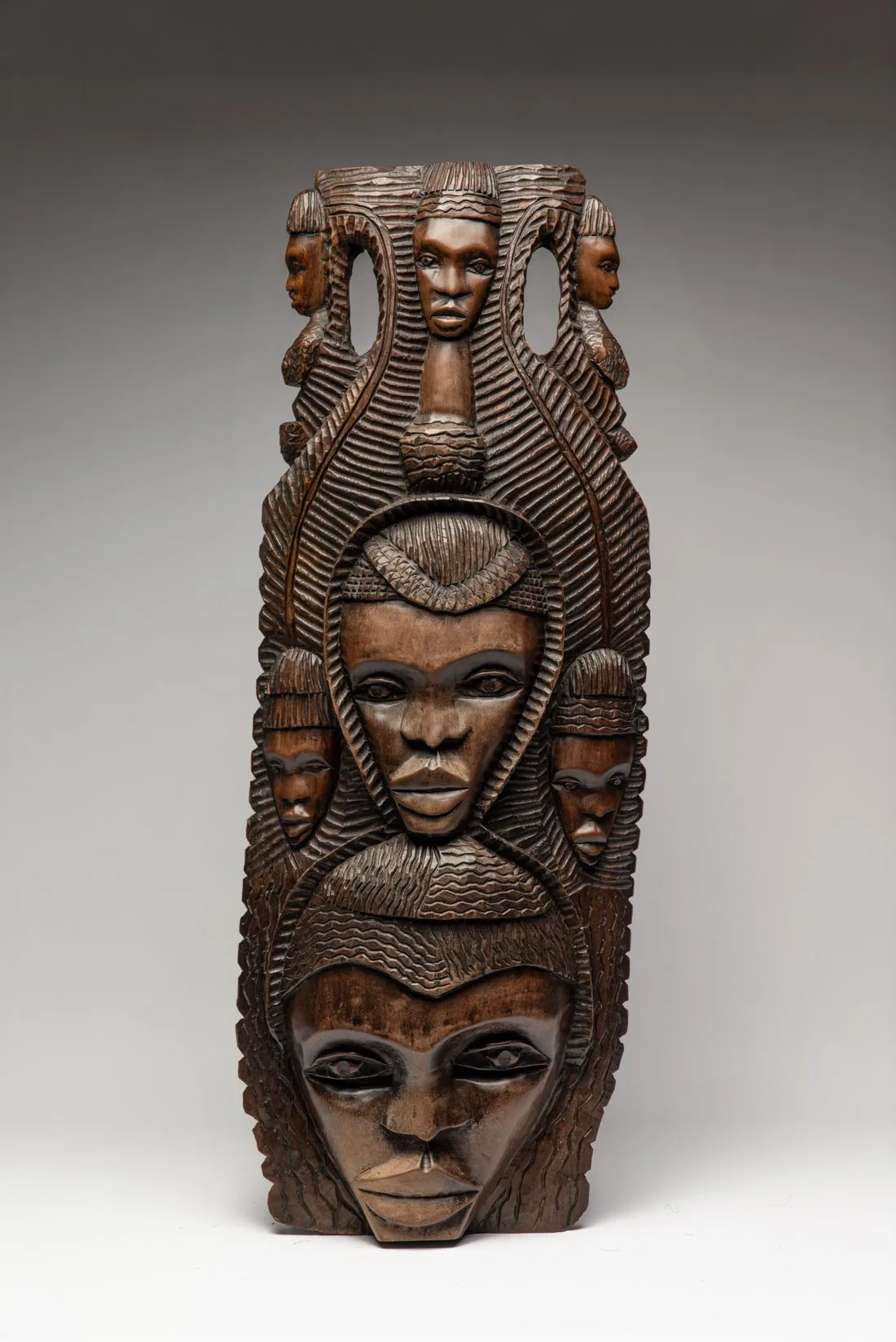
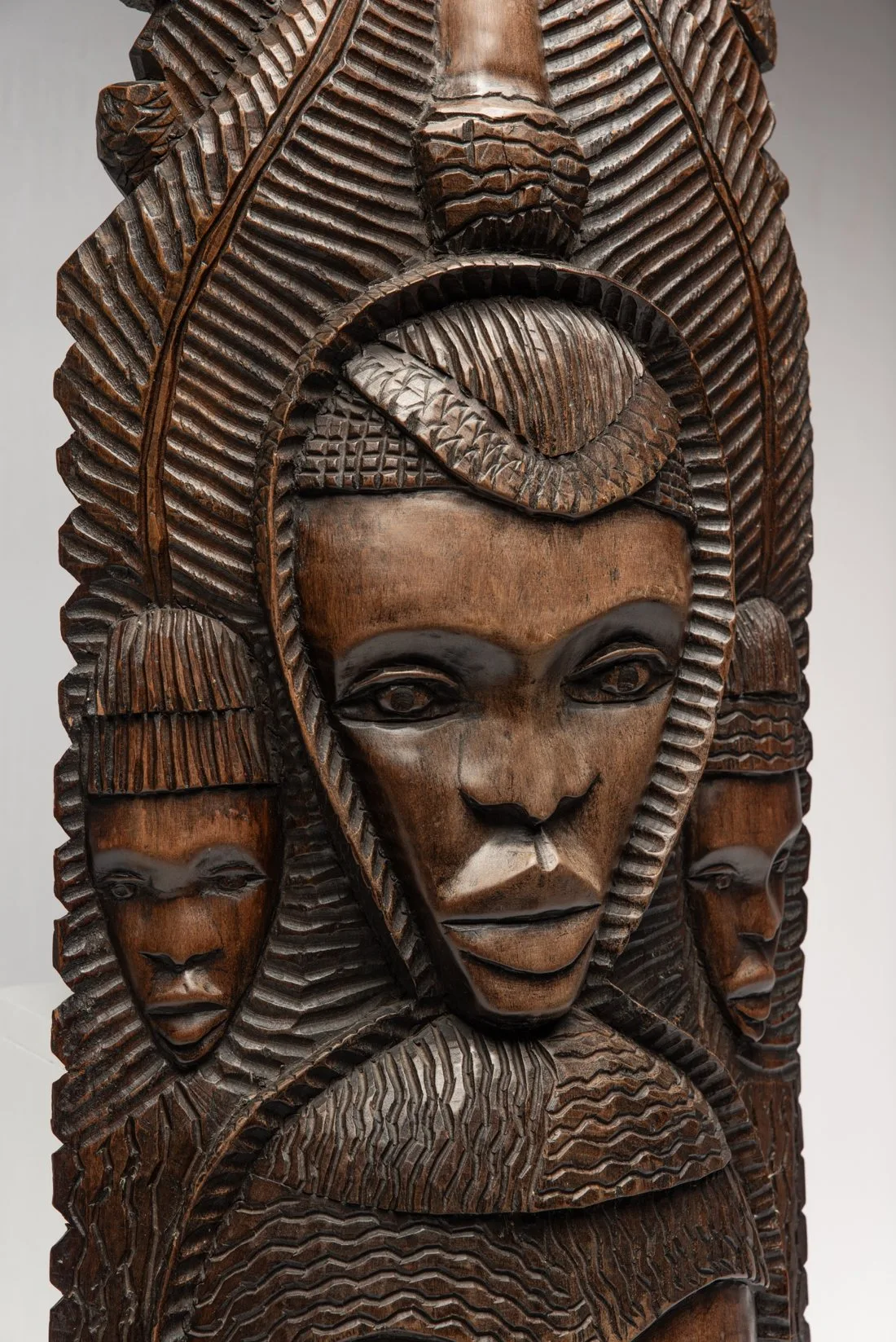
The panel is carved from a single block of hardwood and built as a vertical sequence of faces. A large face fills the lower register; a second face rises above it, framed by a hood of carved bands; two smaller faces sit at either side. At the top, a crowning head on a long neck is flanked by two heads in profile and two openwork apertures. Combed and zigzag striations cover the surface around the faces. The reverse is hollowed, with broad gouge marks left visible.
Hardwood. H 76 cm · W 28 cm. Acquired in Ghana, 1964. It remains with the family as a record of the journey and is not offered for sale.
Iran gave the collection its beginning. Ghana gave it Africa.
WHAT FOLLOWED
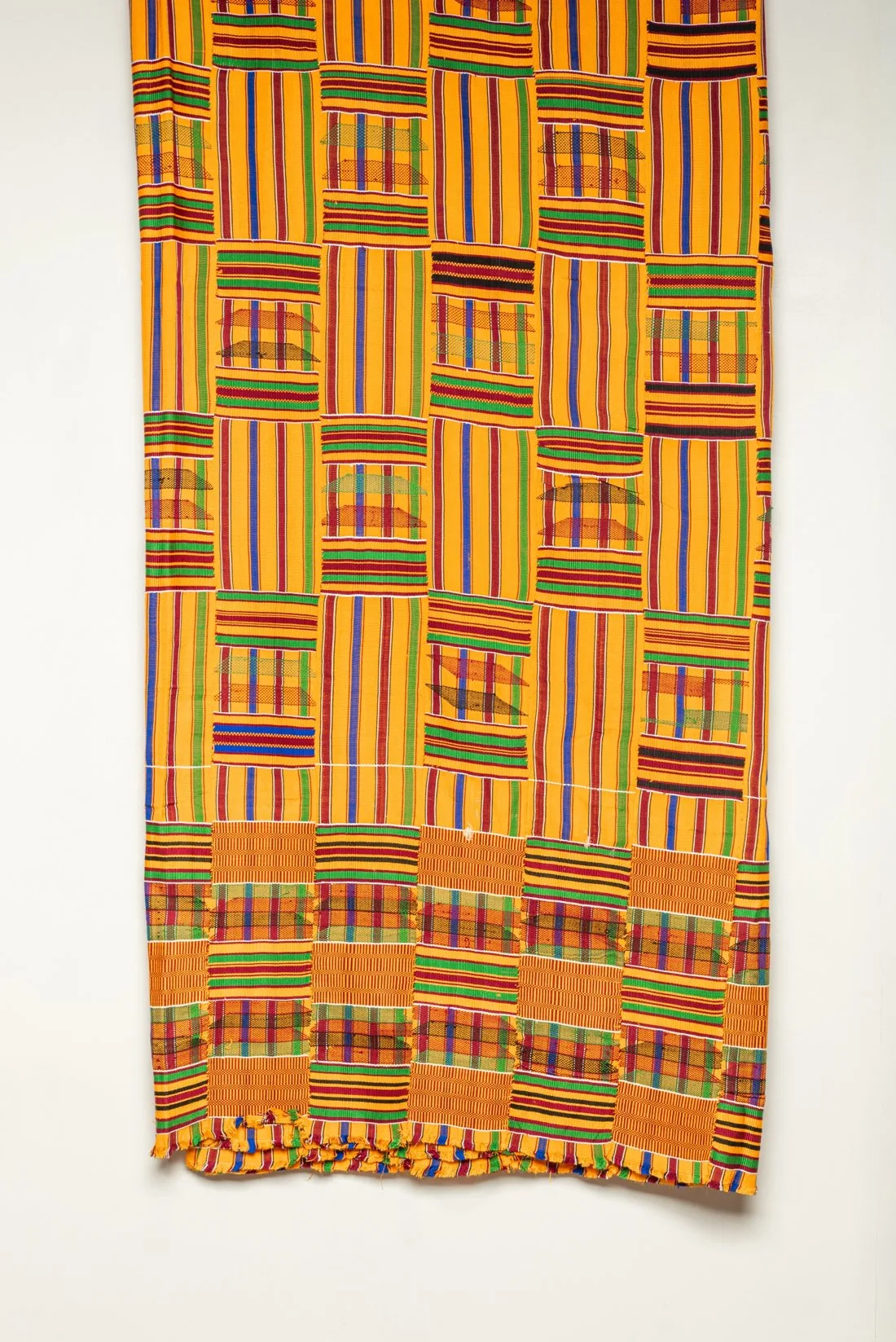
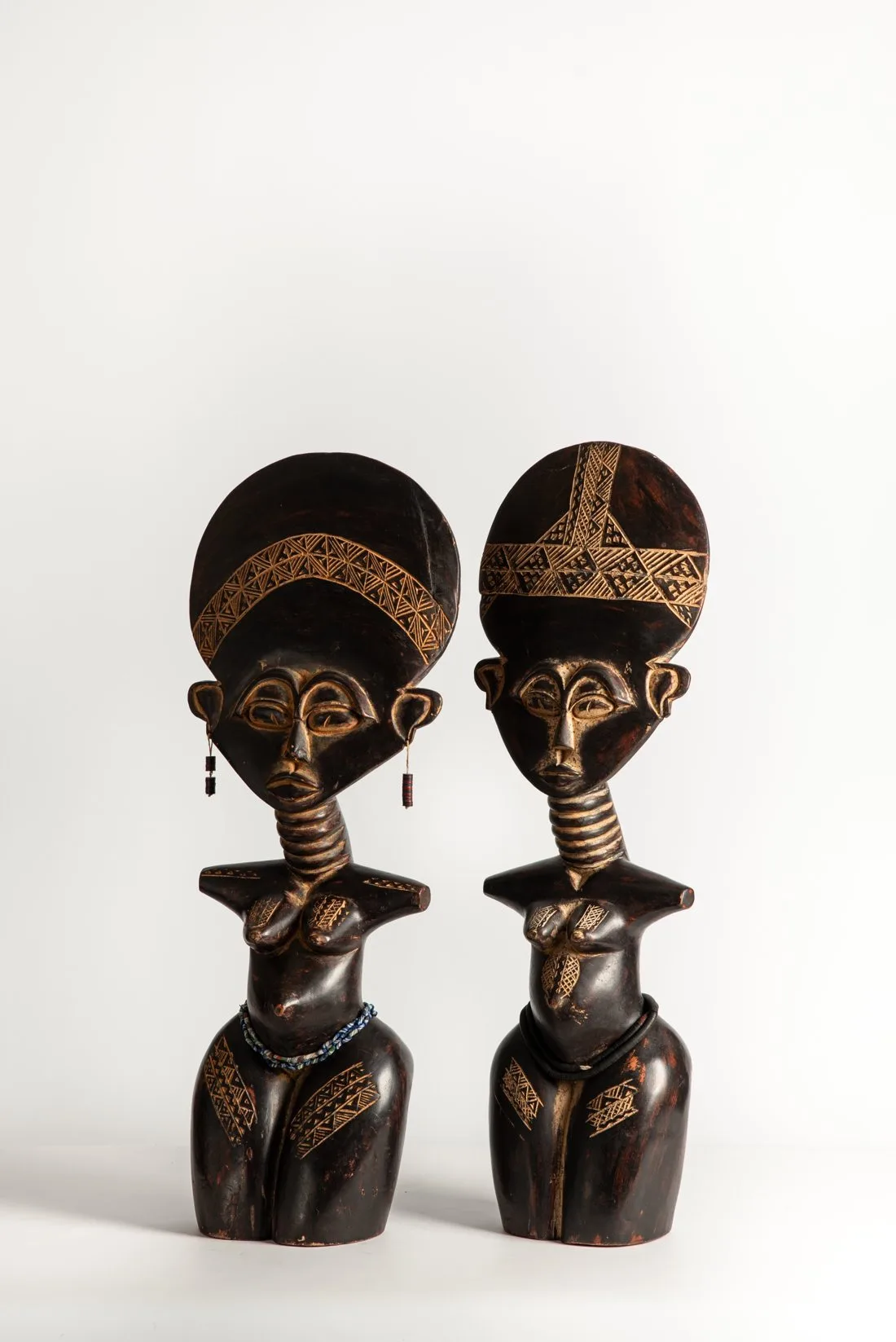
Ghana also gave the collection its first catalogued African works: the Ashanti Kente Textile, acquired in 1964, and the Ashanti Figures, acquired in 1965. The Kente is woven from narrow cotton strips joined edge to edge; textiles of this type belonged to ceremonial and royal display.
Between the 1960s and the 1980s, Felice's work took him across West, Central and East Africa, and the collection grew by the same method that began in Iran: direct encounter and sustained presence.
Sources: Institution of Civil Engineers (Akosombo Dam); UNESCO World Heritage List (Forts and Castles of Ghana).