
Ivory Coast, 1971–72: Among the Villages
In 1971, Felice Maffei arrived in Ivory Coast to work on the Bandama River Project. He first served as site engineer assistant for the turbine installation and the spillway and intake gates. He then became site project manager for two 90 kV transmission lines: Kossou to Bouaké, 153 km, and the ring of Abidjan, 95 km.
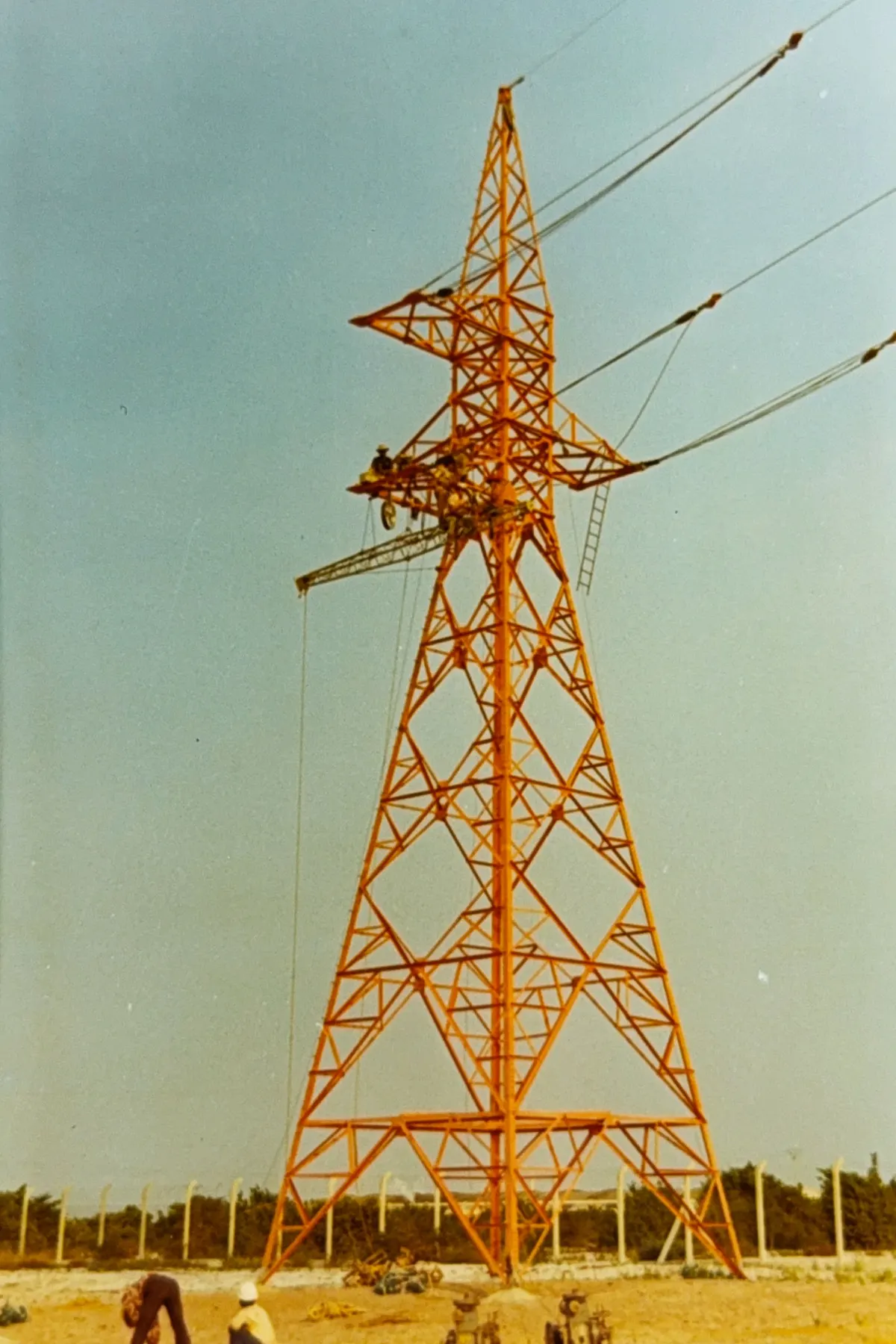
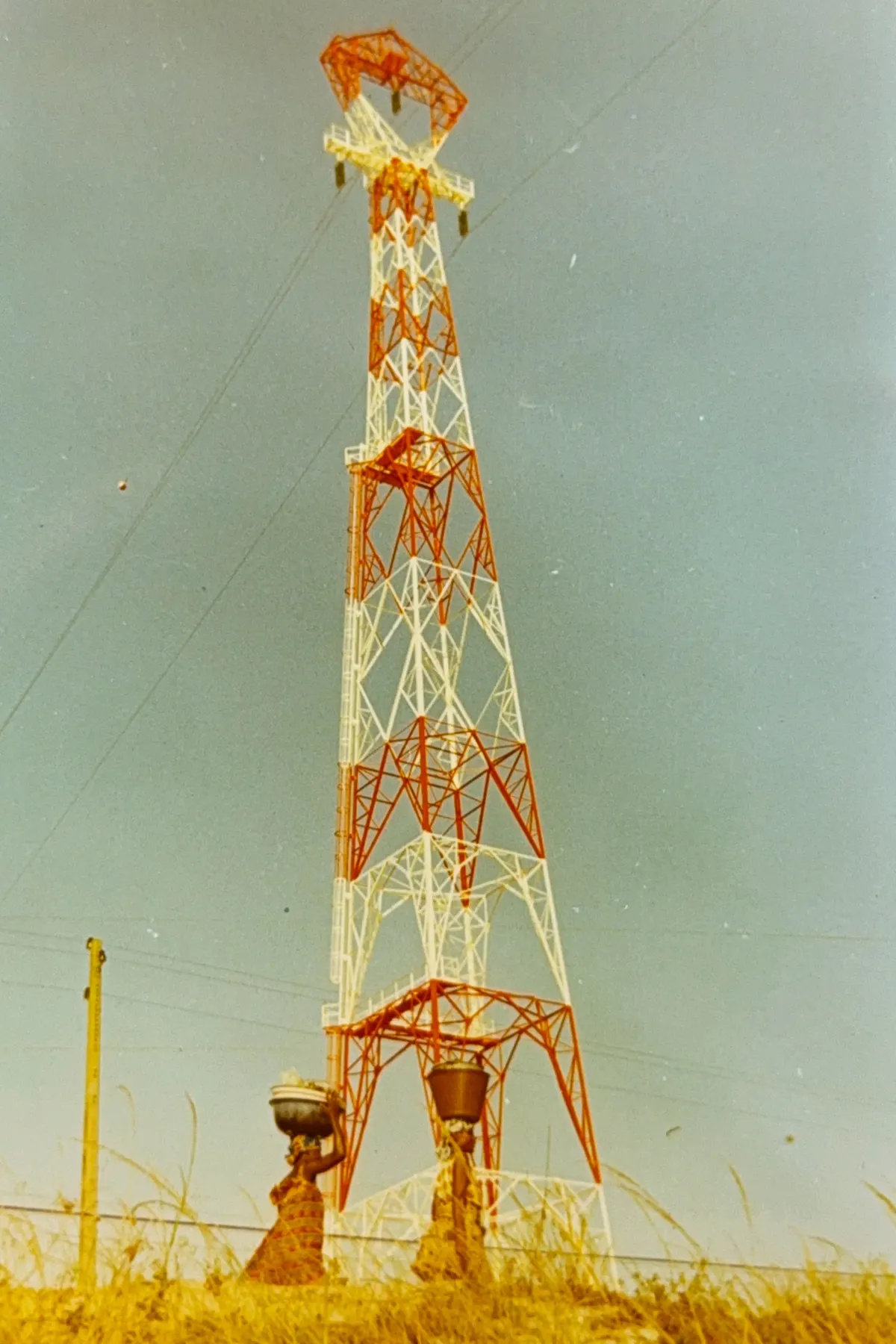
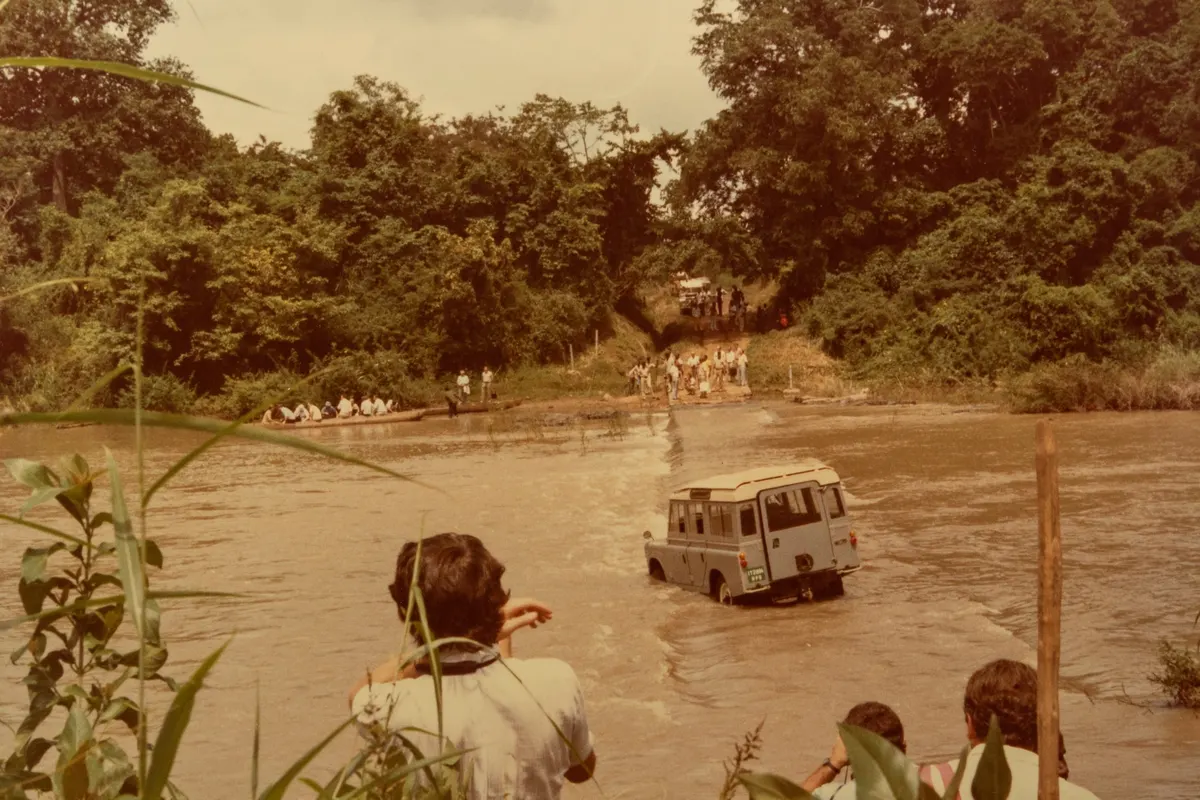
The work moved between three places, Kossou, Bouaké and Abidjan, and Felice lived in all three. The roads between them were not always easy.
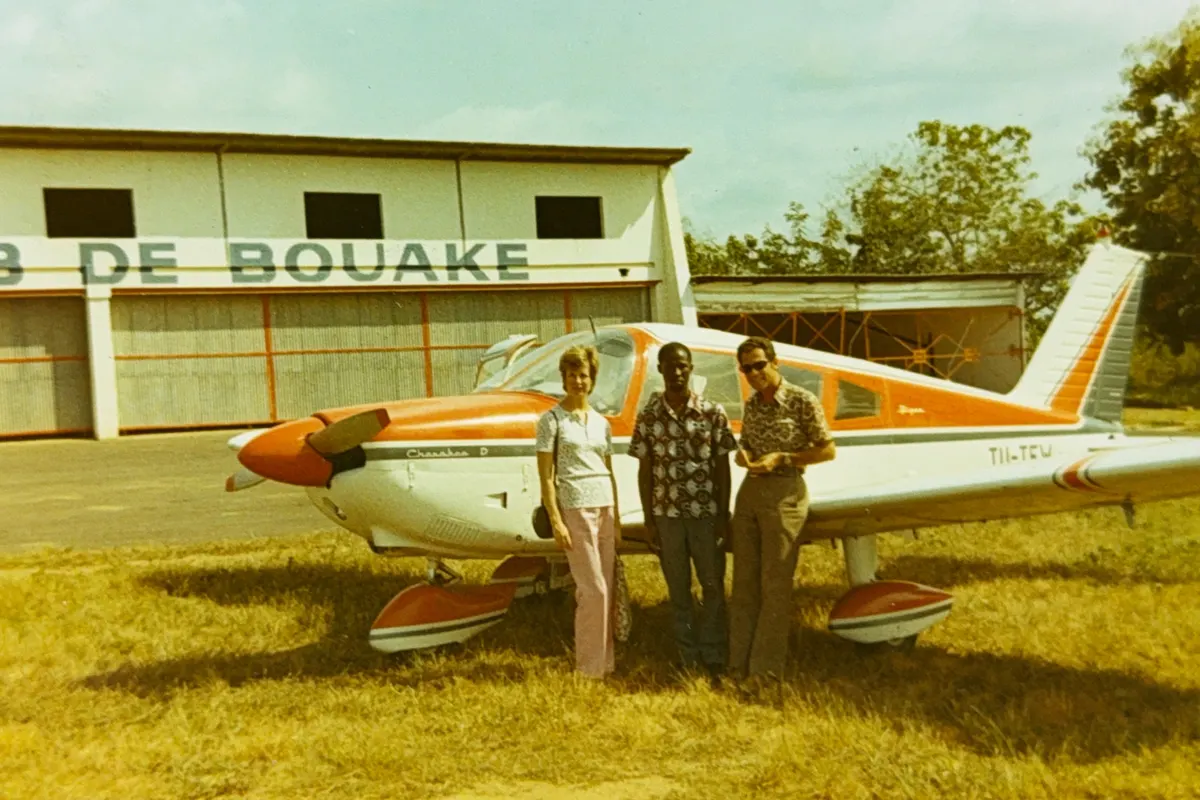
He joined the flying clubs of Bouaké and Abidjan and obtained his private pilot licence in 1971. From then on, he often made the journey between Bouaké and Abidjan by air rather than by road, in single-engine aeroplanes such as the Piper Cherokee and the Cessna 172.
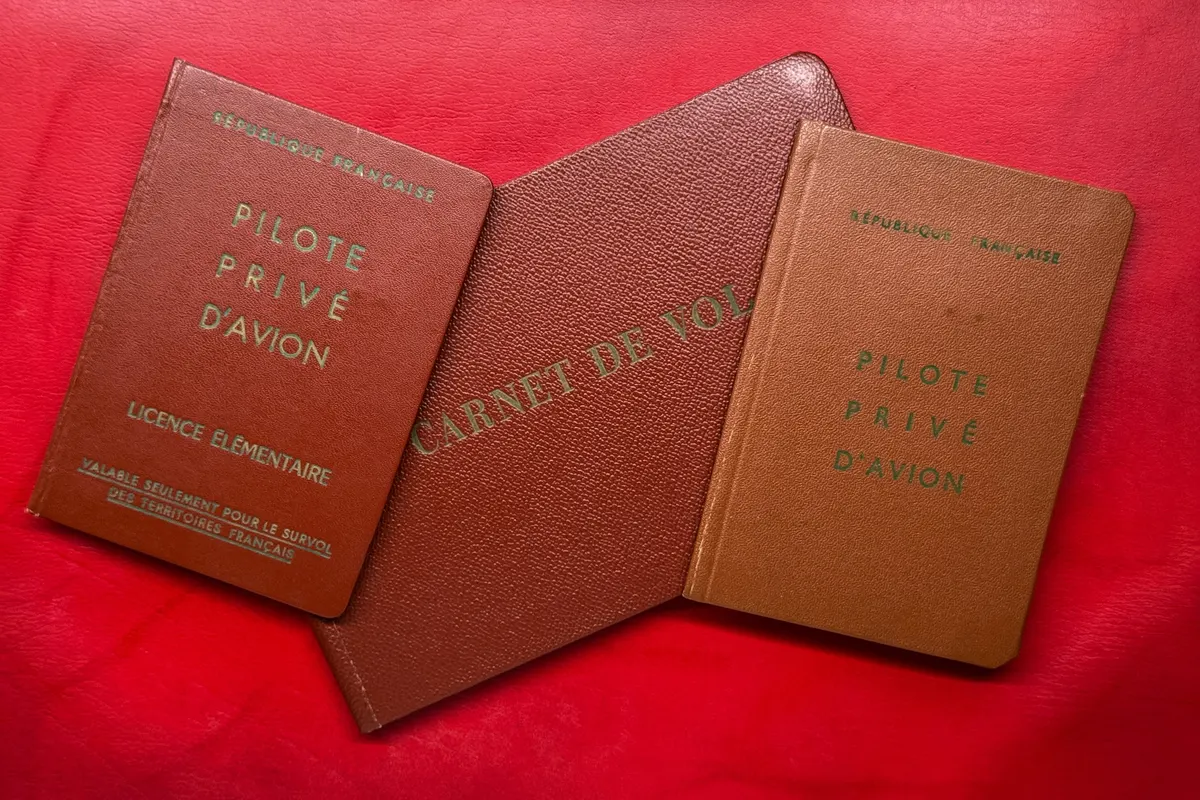
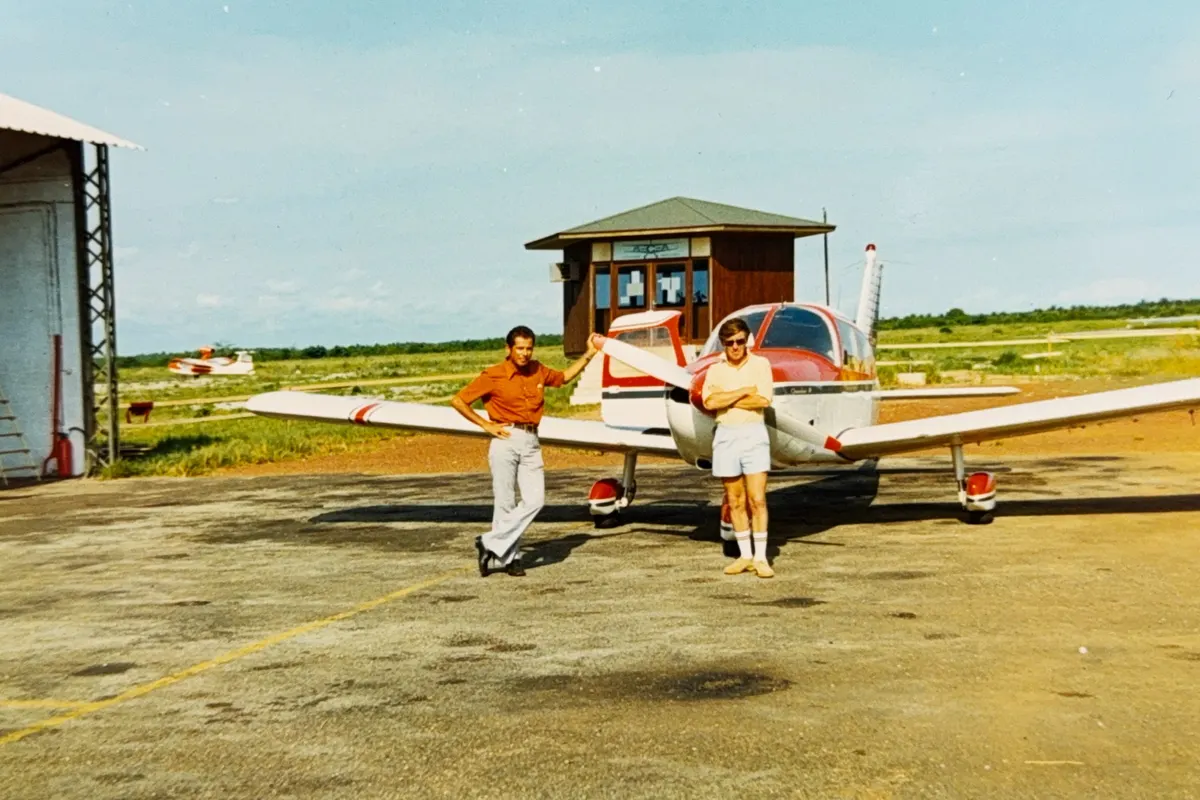
Sundays in the villages
On Sundays, accompanied by his local driver, Felice visited the villages and communities of the region. He went to observe and learn: their habits, their living conditions and their cultural events. He shared their food, and he was always warmly welcomed by the village chiefs.
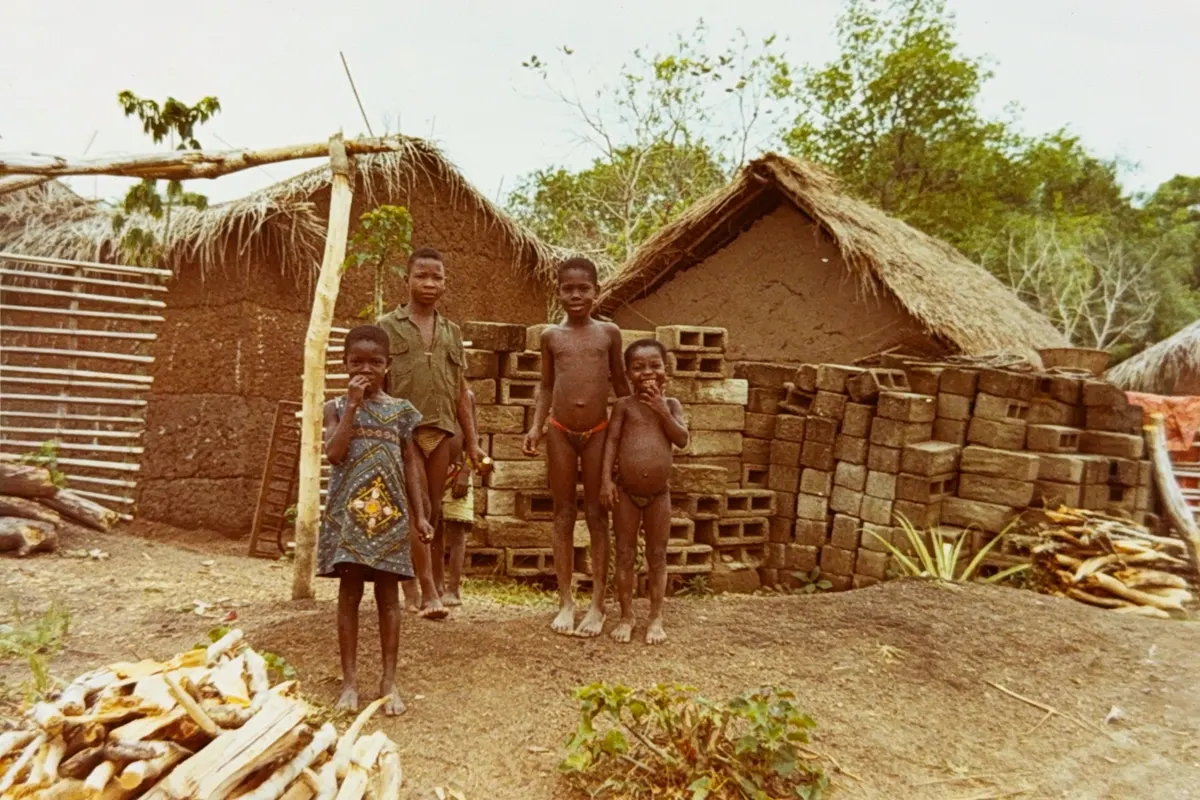
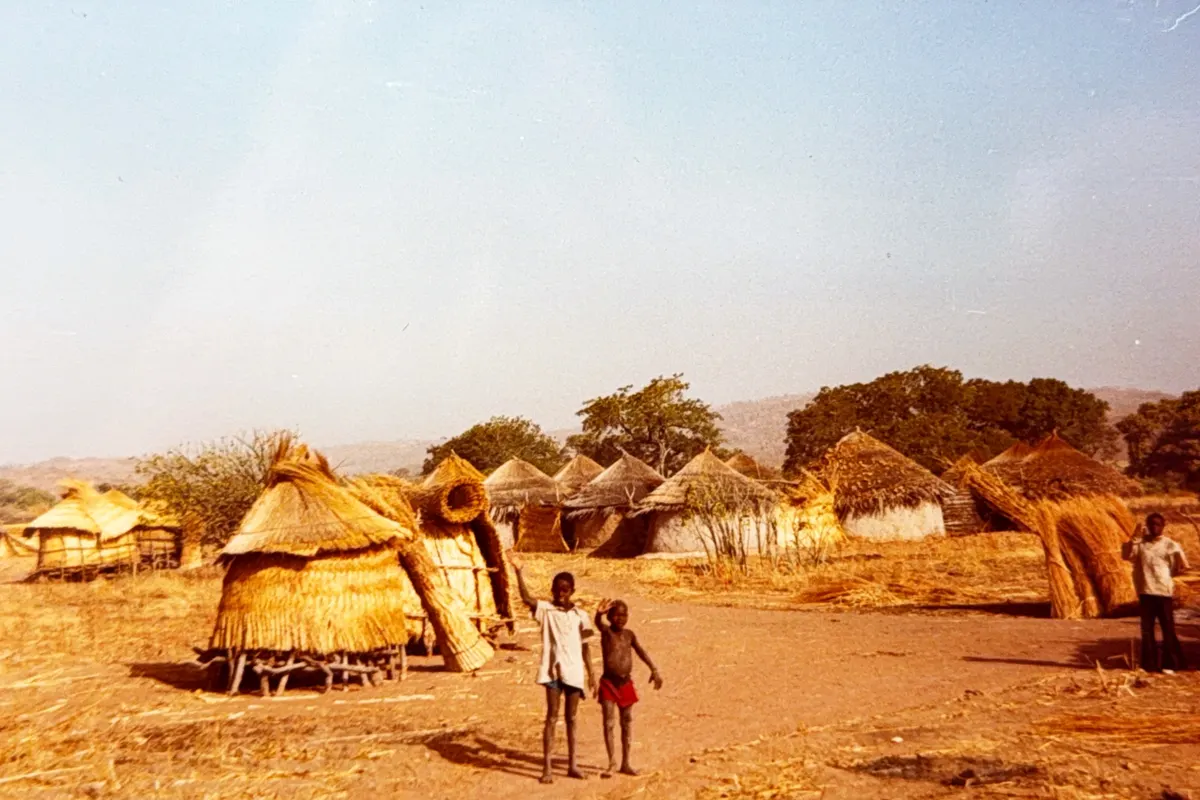
In the Bouaké region, communities held their own festivals, with mask dances, traditional ceremonies, and craftsmen showing and selling their work. Felice attended them whenever he could. His preference was always the same: not the new pieces made for sale, but the objects that had been danced and used, acquired once the performance was over.
A love for the local culture
These years gave Felice a lasting love for the local culture, and in particular for the arts of its peoples, among them the Baule, Senufo, Dan and Lobi. His collection of masks, statues, wood carvings and bronzes came from remote villages, as well as from renowned local artisan markets.
The weaver
In 1971, Felice visited a weaver and photographed him at work at his loom. Narrow strips are woven one at a time on a loom of this kind, then joined edge to edge to form a large cloth.
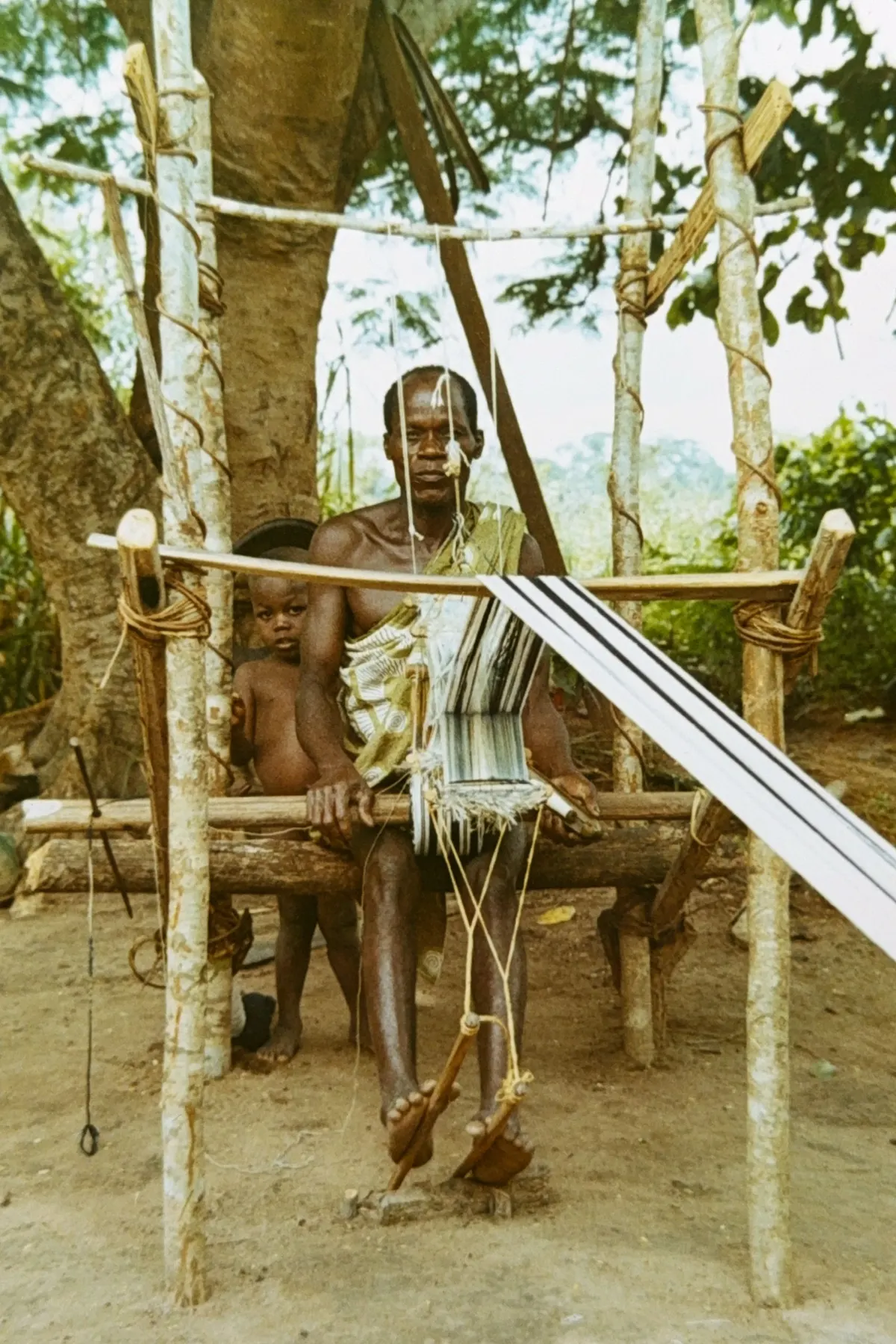
From the same weaver, Felice acquired a finished cloth: the Baule Textile now in the collection. He chose it for its central panel in the colours of the Ivory Coast flag, and for the woven motifs that read like the letter E across its dark bands. It is built in this way: nine narrow hand-woven cotton strips joined by continuous seams across a dark woven ground. One strip, woven in solid orange, white and green, runs through it as a vertical accent panel, set with raised looped and tufted yarn.
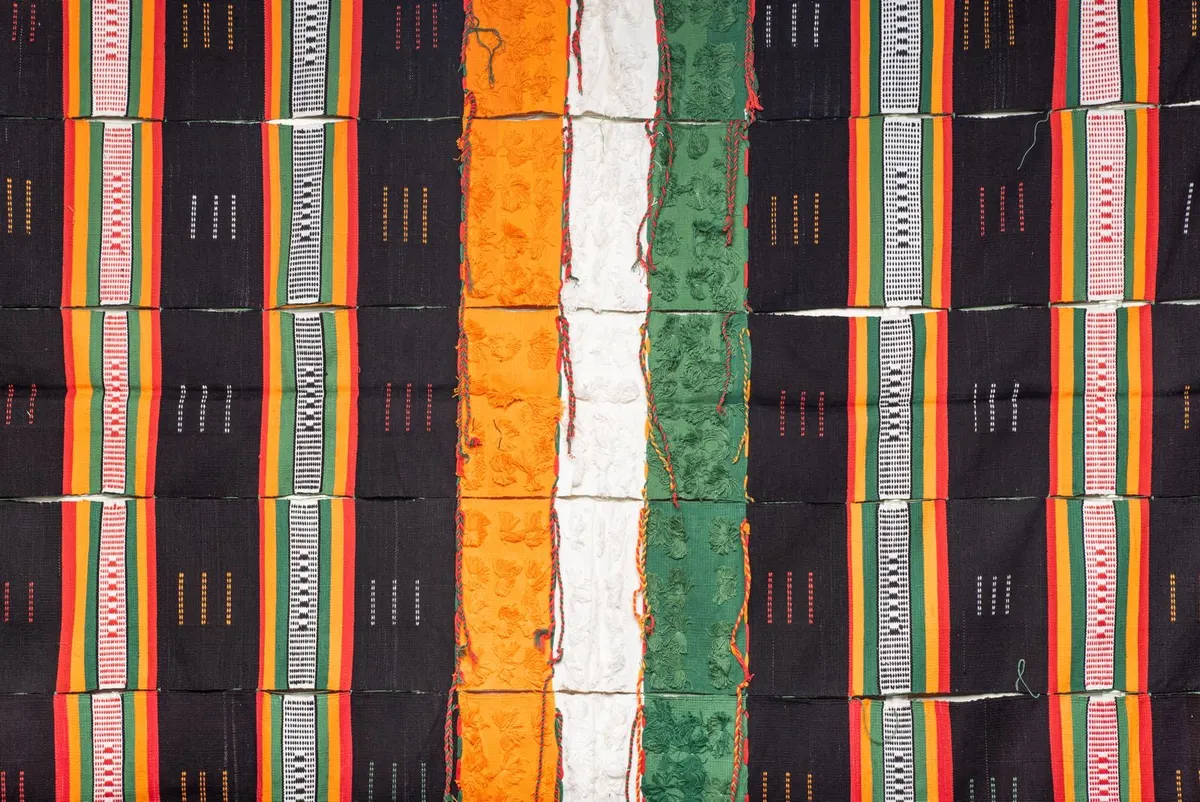
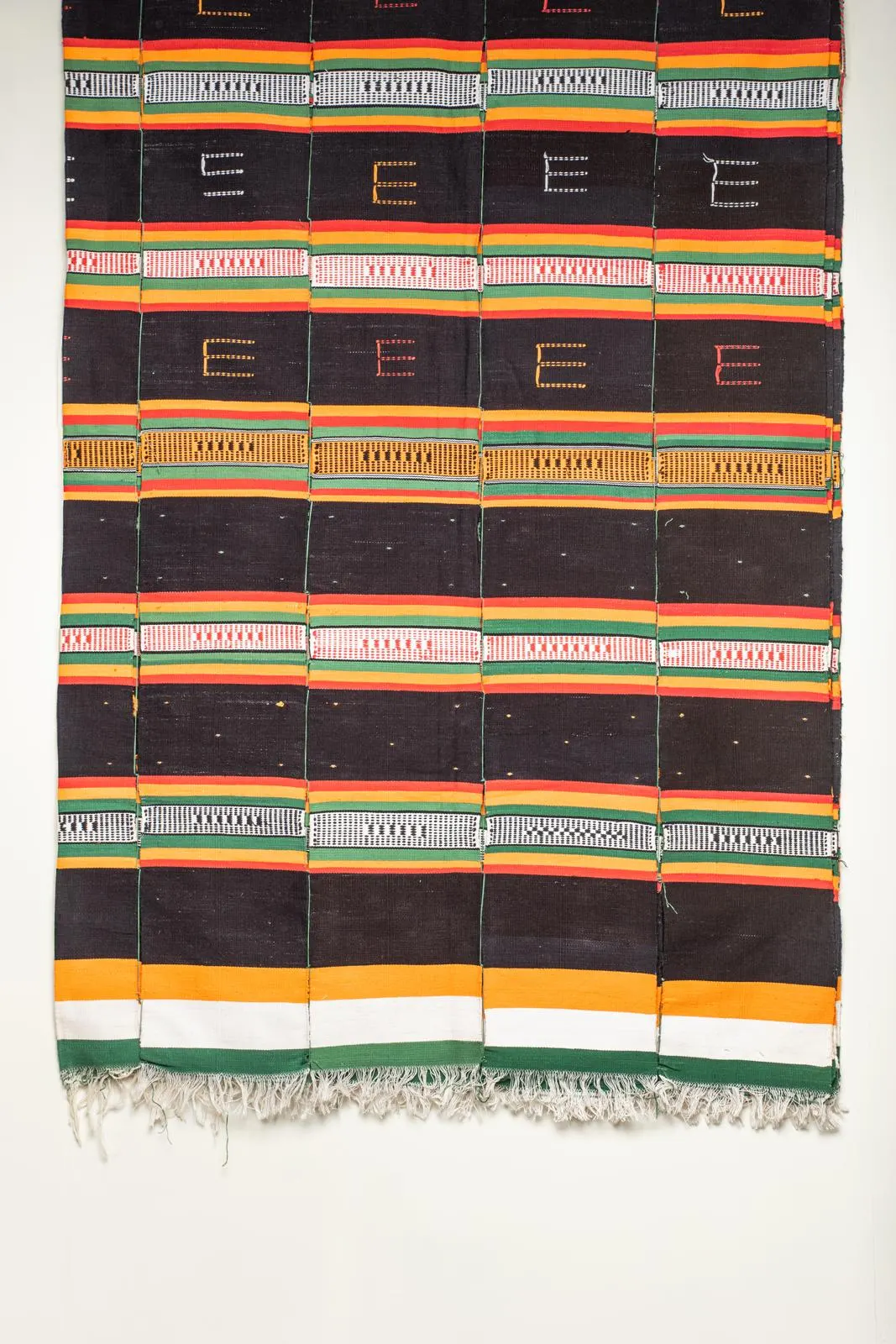
originaltribalarts.com/products/baule-textile/
Works from these years
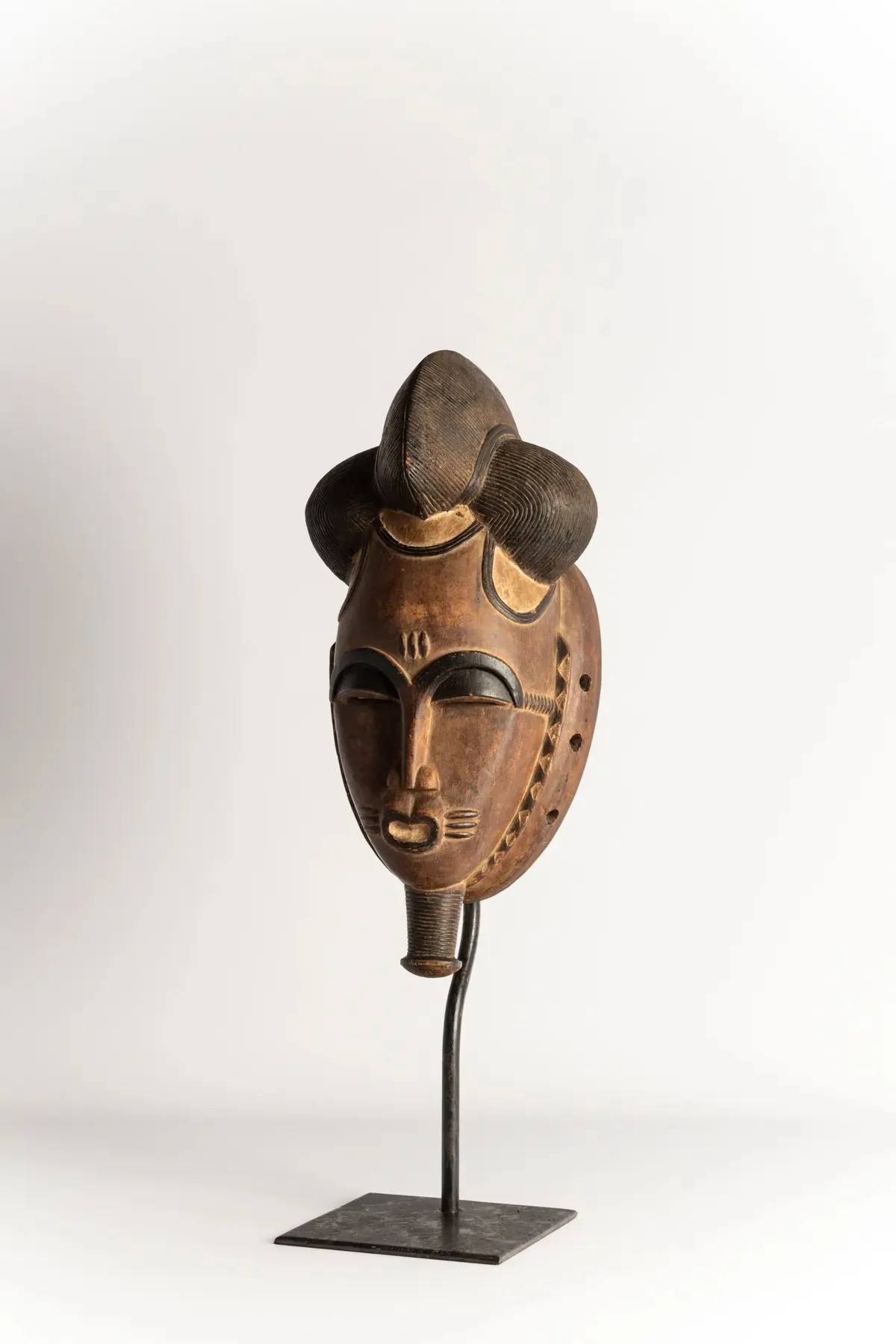
originaltribalarts.com/products/baule-mask/
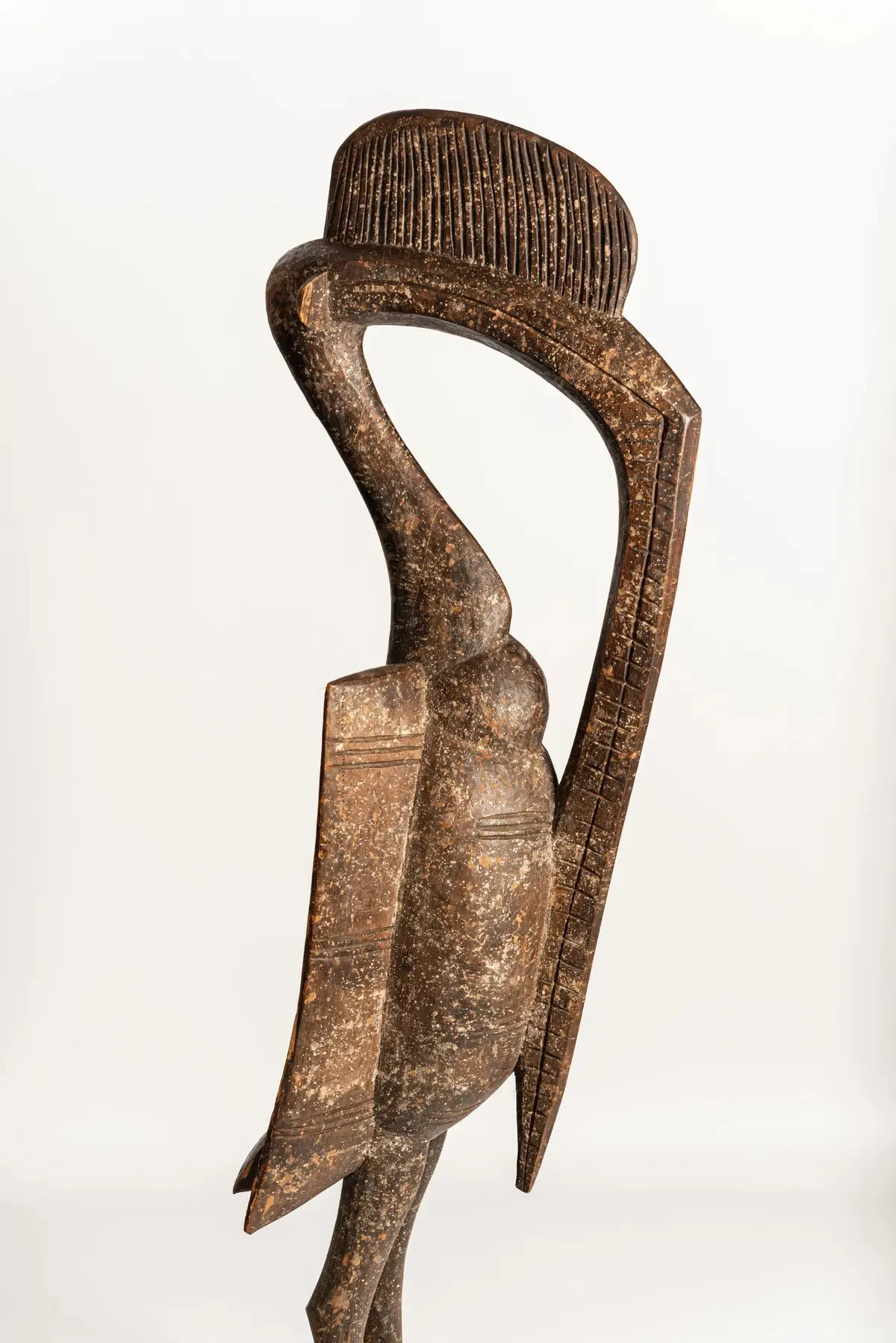
originaltribalarts.com/products/bird-sejen-statue/
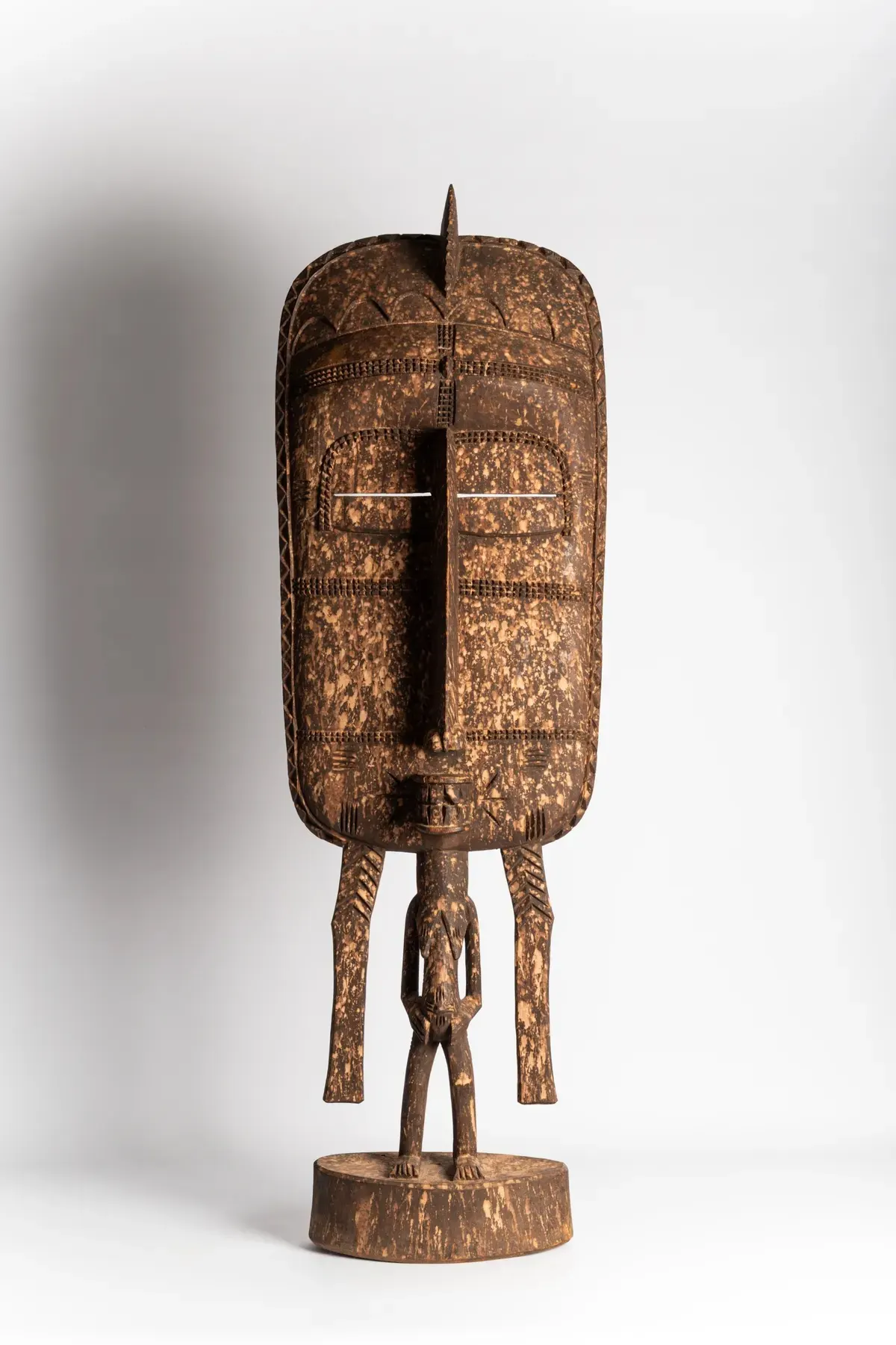
originaltribalarts.com/products/kpelie-mask/
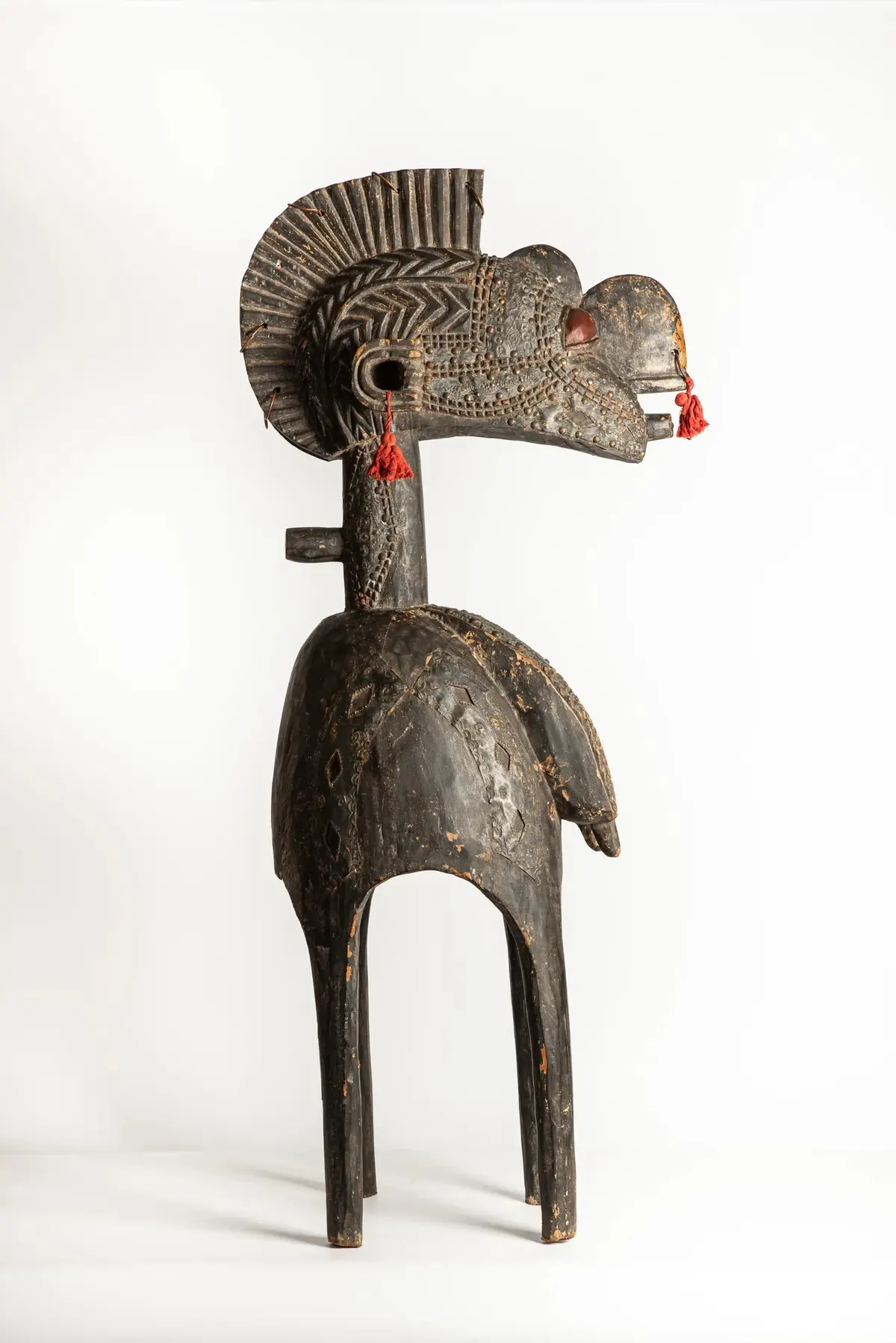
originaltribalarts.com/products/baga-nimba-mask/
From Ivory Coast, 1971–72
Among the works in the Felice Maffei Collection acquired in Ivory Coast during these years:
- Baule Mask
- Baule Textile
- Senufo Kpelie Mask
- Senufo Wanyugo Helmet Mask
- Senufo Bird Statue (Sejen)
- Senufo Figures (paired)
- Punu Mask, acquired during the tribal art festivals
- Baga Nimba Mask
- Baga Ceremonial Drum
- Guro (Yaoure) Mask, 1972
- Senufo Twin Figures, 1972
The archive does not reconstruct. It records.
© Original Tribal Arts. The Felice Maffei Collection. All Rights Reserved.