Traditional African masks and their meaning
African masks were made to be worn, by a dancer in costume and with music. This guide covers the main types, how masks were made and worn, what they meant, and how to read one, with works from the Felice Maffei Collection.
African masks in performance
Traditional African masks were made to be seen in movement. The Art Institute of Chicago records that Bwa masks from Burkina Faso were worn with a costume of long raffia fibres, and Princeton University Art Museum describes Bwa and Wé masks performed by costumed dancers accompanied by musicians. A mask in a collection is the carved part of that whole.
The masks named in this guide belong to the Felice Maffei Collection. Felice Maffei acquired them in Africa between 1971 and 1985, and each catalogue entry records where and when. All the masks in the collection are in Ritual Masks.
African mask types
African mask types are named for the way a mask sits on the body. The names describe position and construction, not culture.
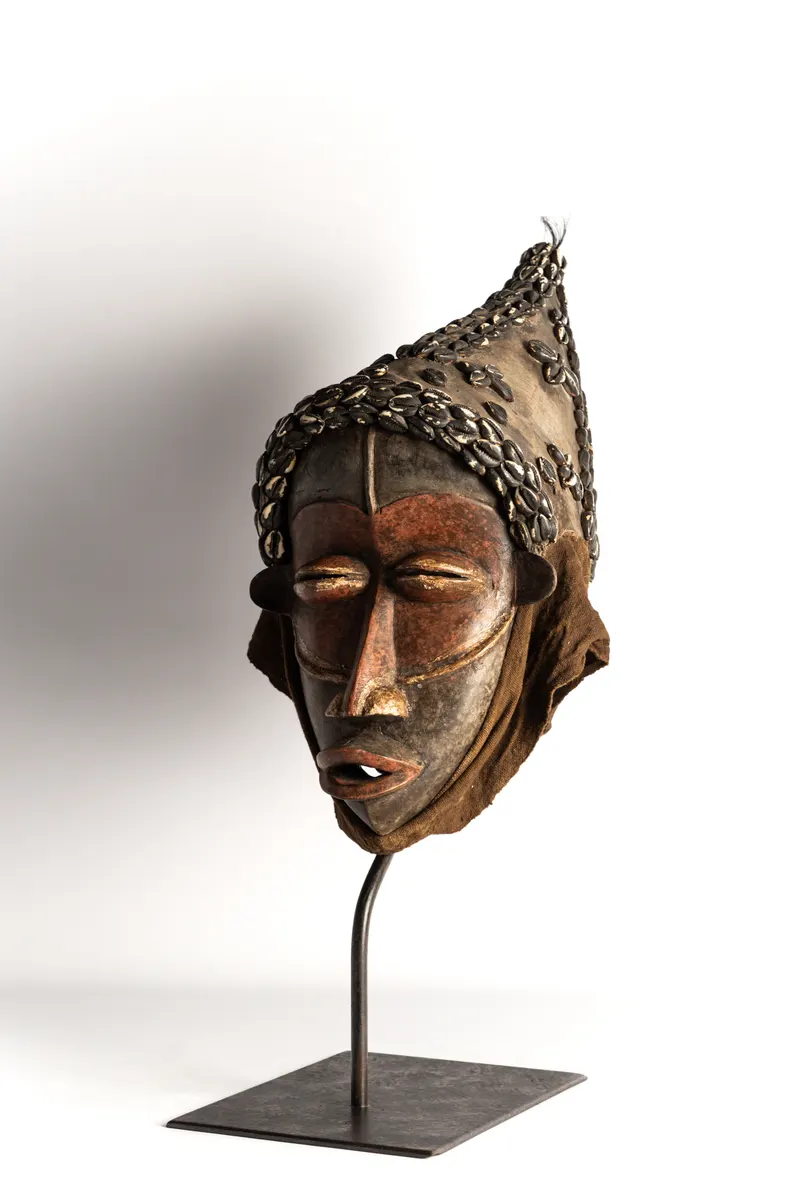
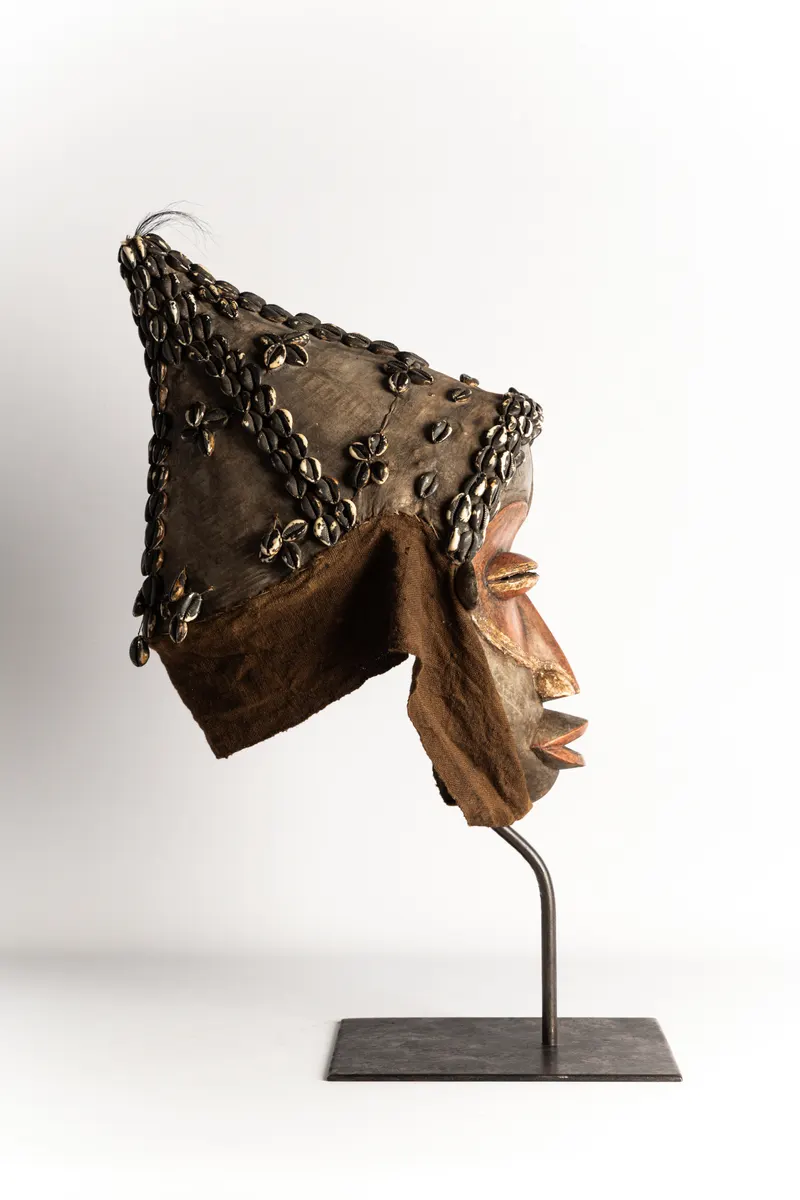
A face mask covers the face. The Dan Mask, from Liberia and Ivory Coast, has narrow half-closed eyes beneath a continuous brow band and a triangular coiffure encased in textile and set with cowrie shells. A textile element falls behind it from the lower edge.
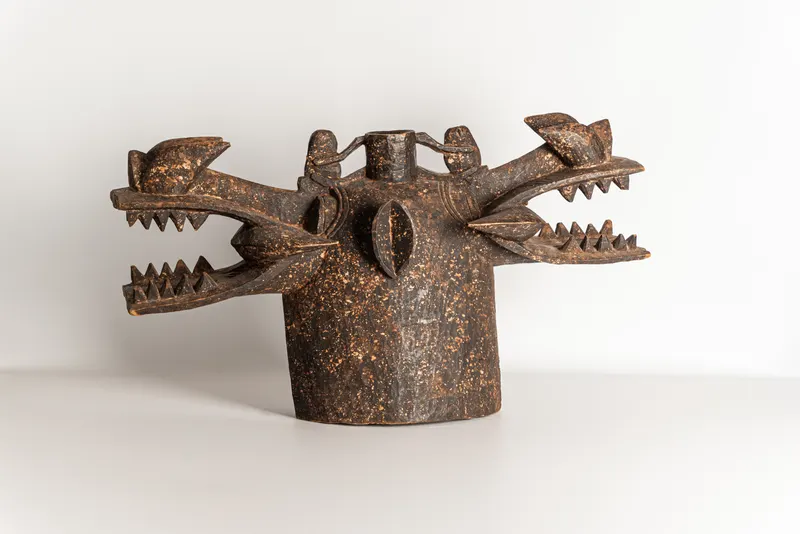
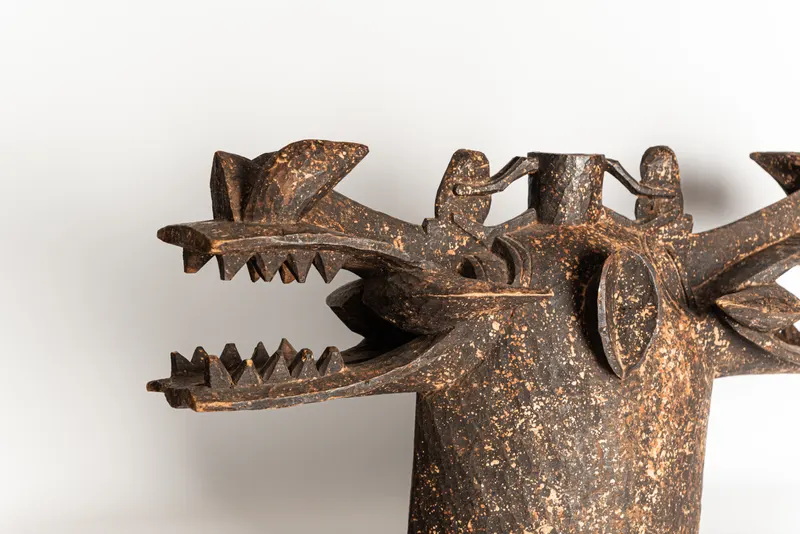
A helmet mask encloses the head. The Senufo Wanyugo Helmet Mask has a columnar core hollowed to receive the wearer's head, with a warthog head projecting to either side and two chameleons above.
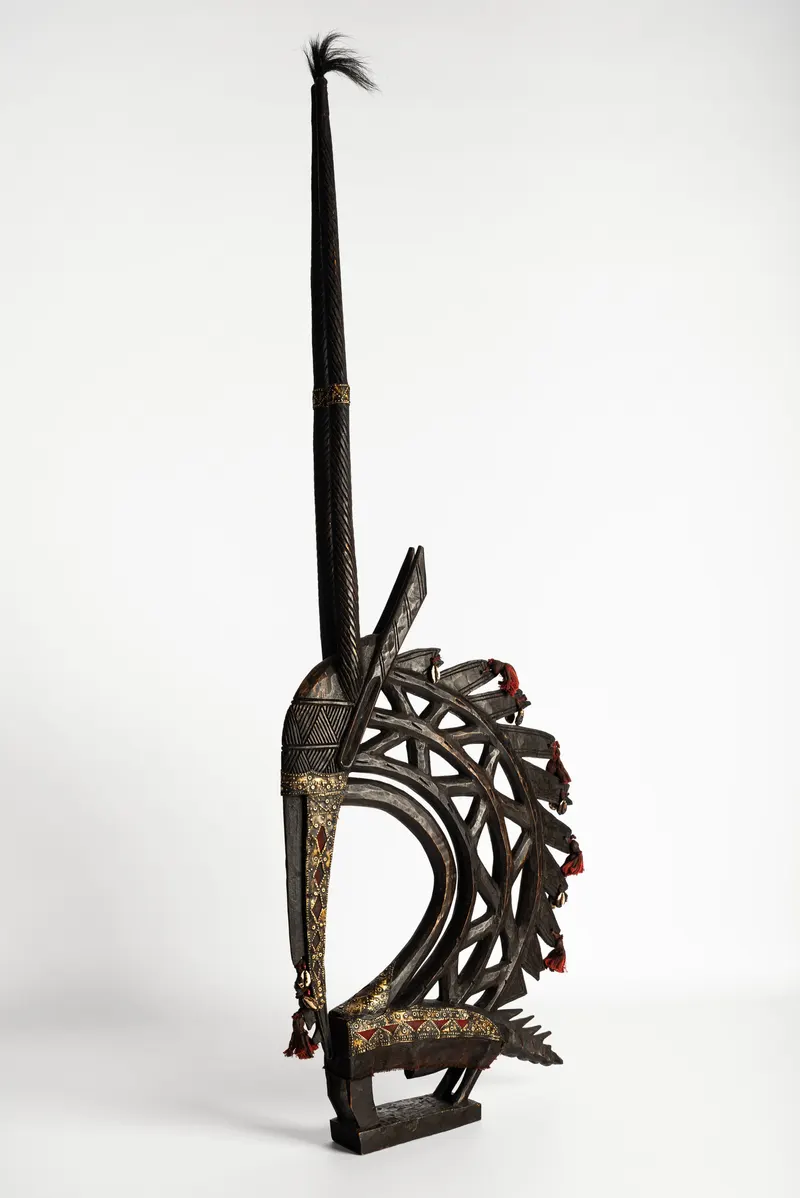
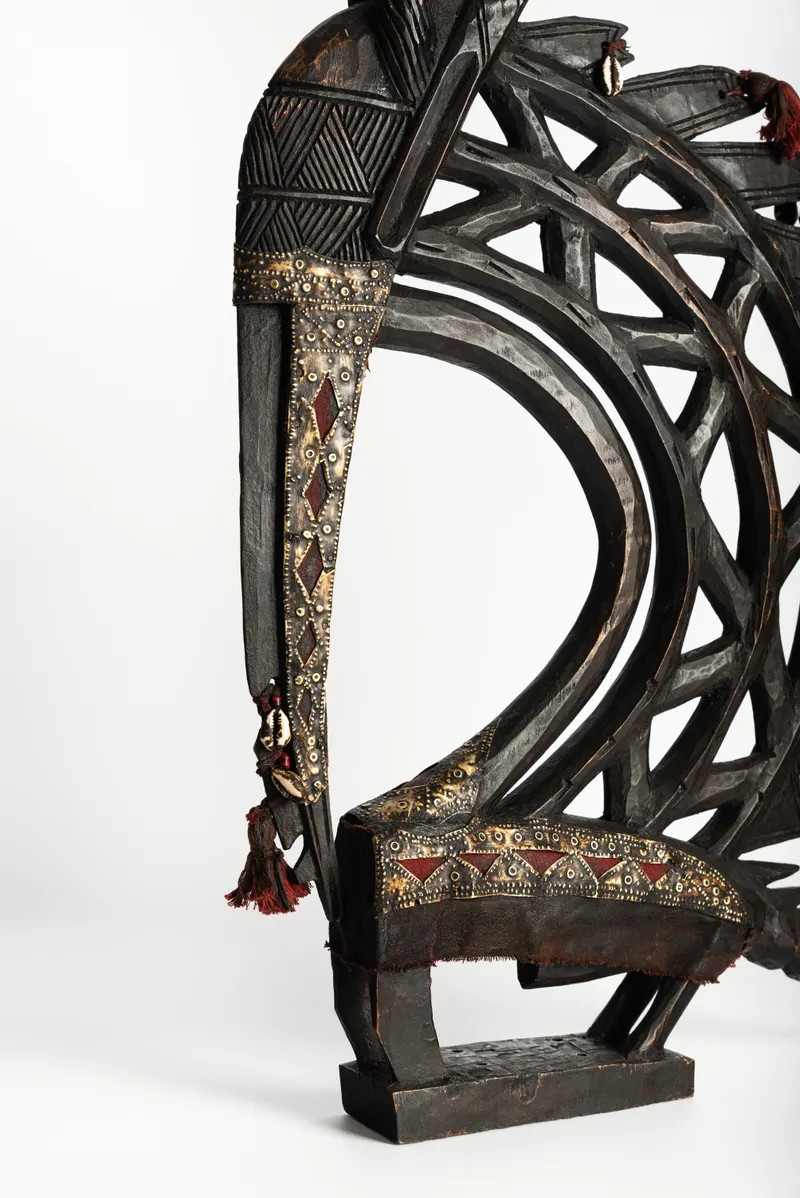
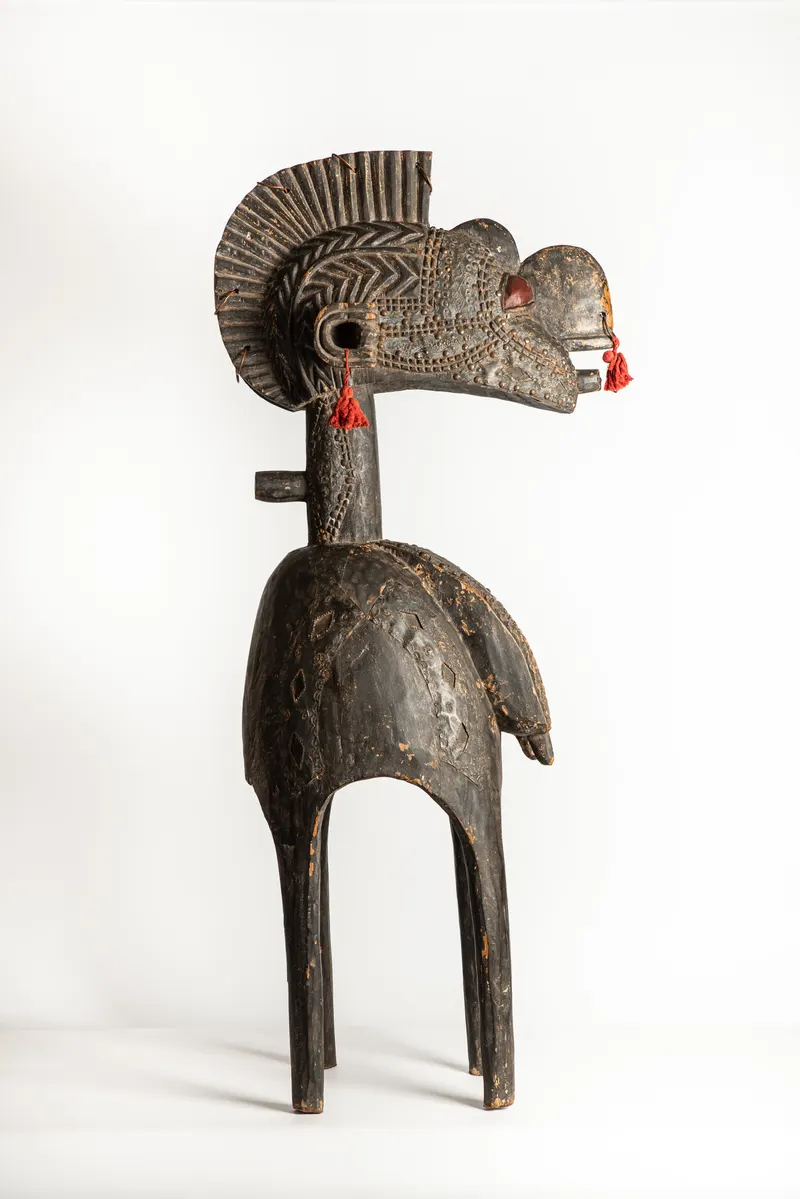
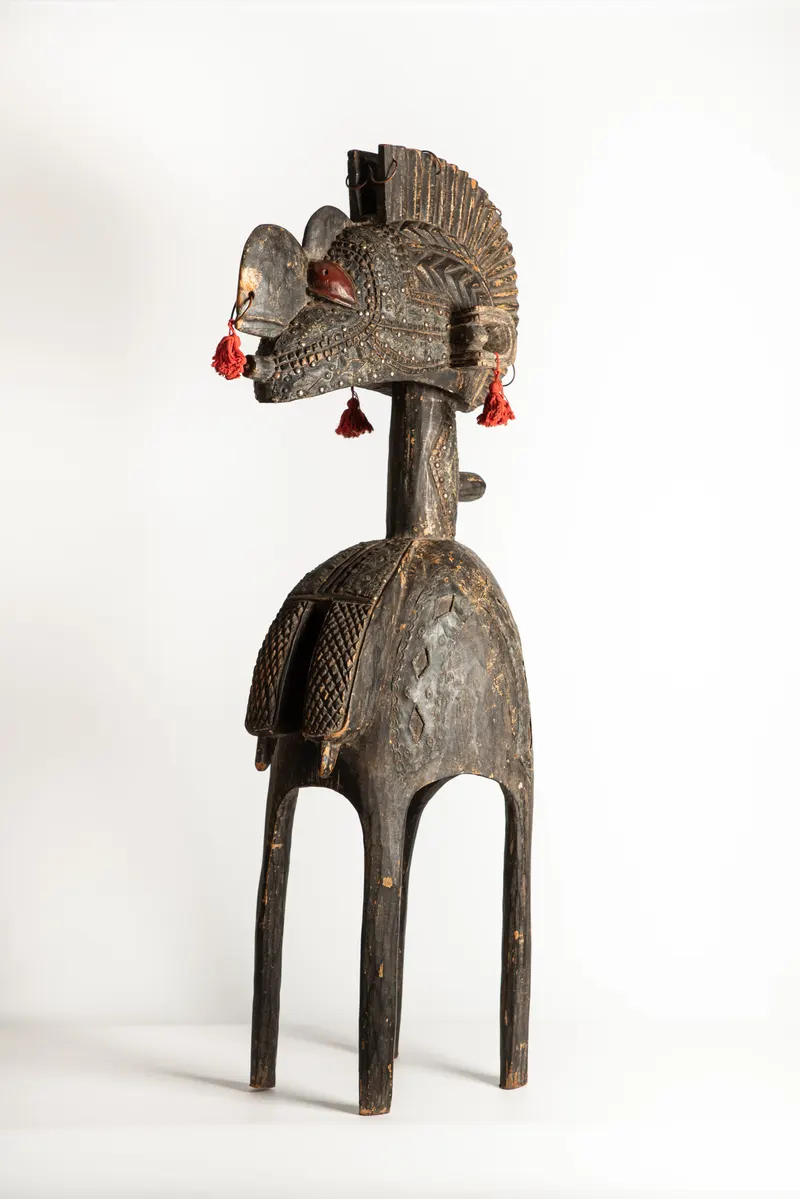
A headdress rises above the head of the wearer. The Bambara Antelope Headdress (Chiwara), 124 cm high, rises from a low base as an openwork structure of horns, ears and concentric arcs, fitted with sheet brass, cowrie shells, beads and red textile tassels.
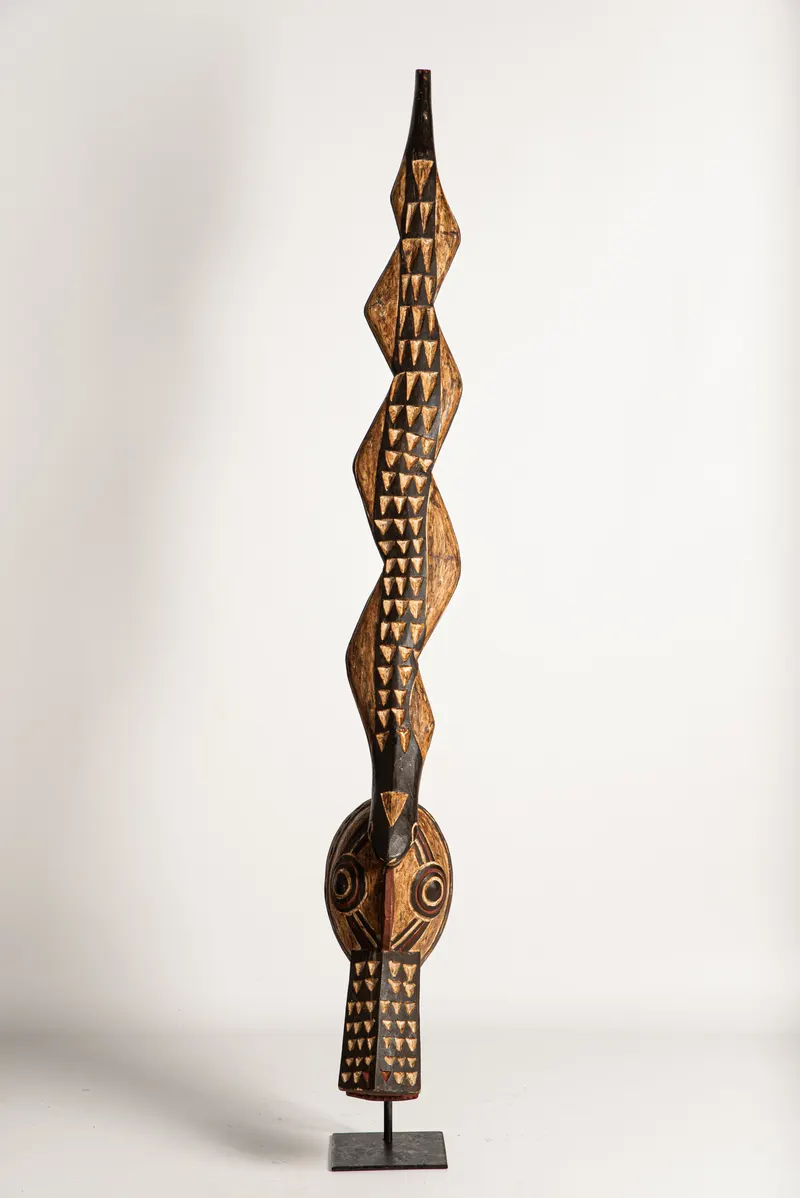
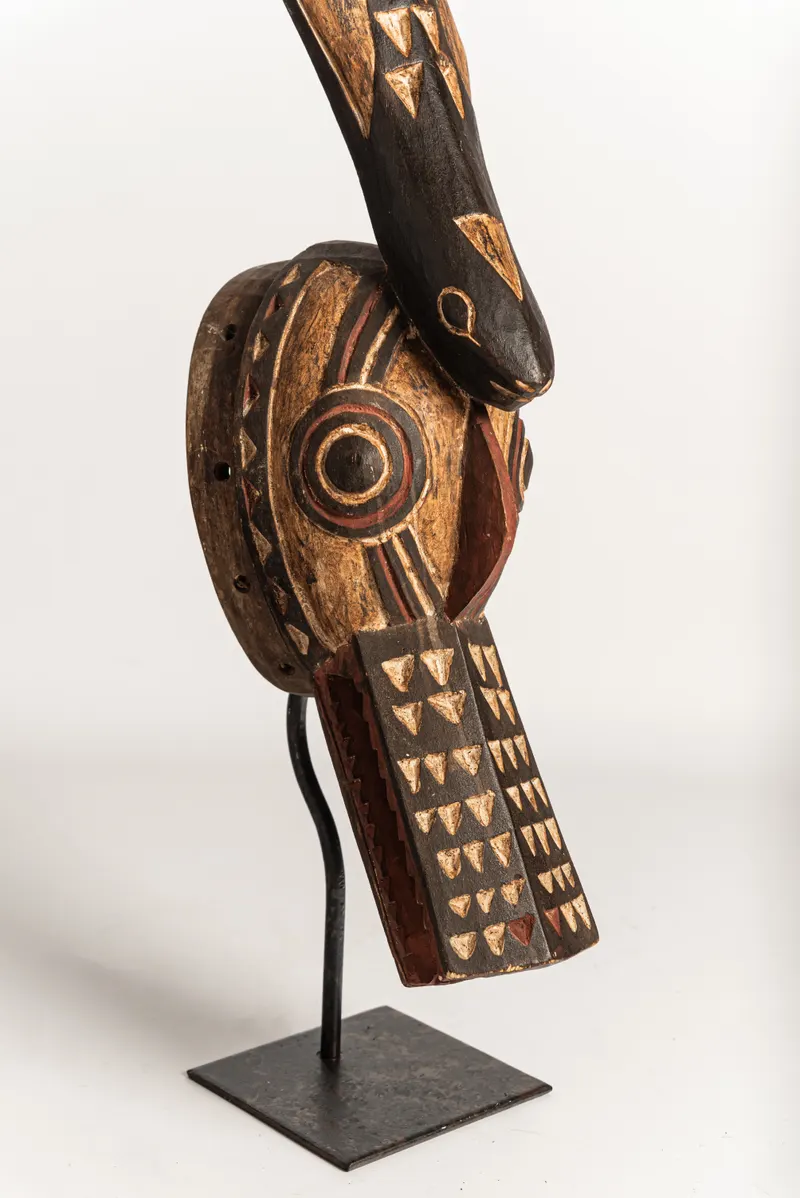
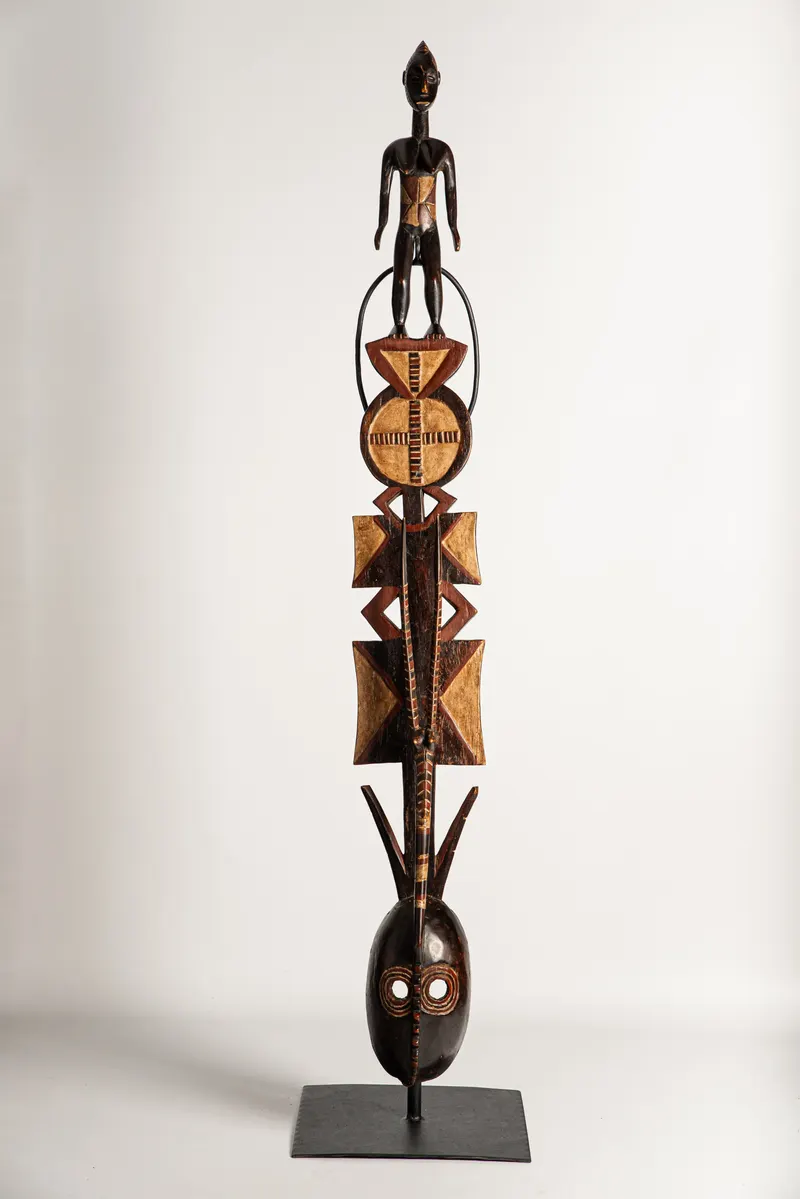
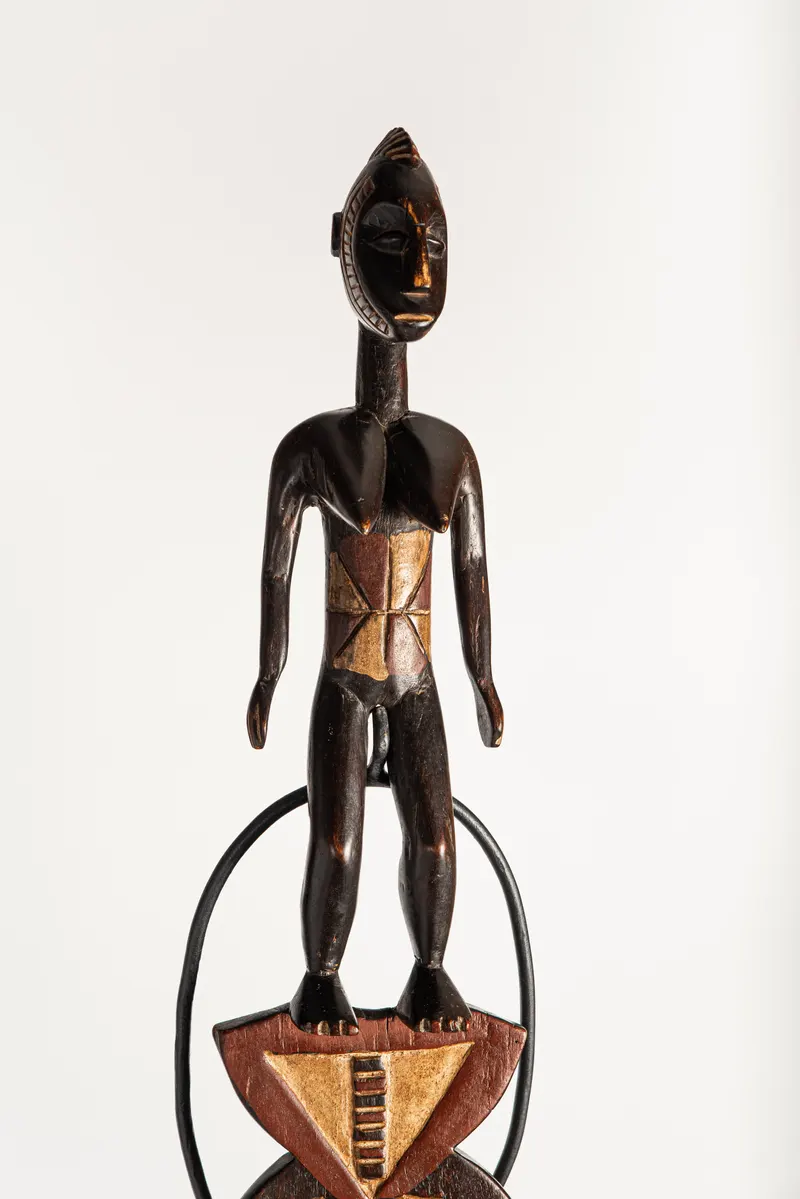
A plank mask extends a small face into a tall carved board. The Bwa Mask, 149 cm high, sets a circular face at the midpoint of a zigzag shaft topped by an animal head. The Mossi Mask, 156 cm high, rises from an oval face to a standing figure at the top. Writing about a Bwa plank mask, the Art Institute of Chicago notes that its size and weight required great strength and skill from the performer.
A shoulder mask rests on the dancer's shoulders. The Baga Nimba Mask, 125 cm high, has a head projecting forward from a domed body, and its catalogue entry notes that the carved volume conceals the dancer beneath. Yale University Art Gallery records a Baga D'mba mask of 37 kg whose wearer places his head inside the hollow shoulders and looks out through two small holes between the breasts. The dancer is a young man chosen for strength and agility.
How masks were made and worn
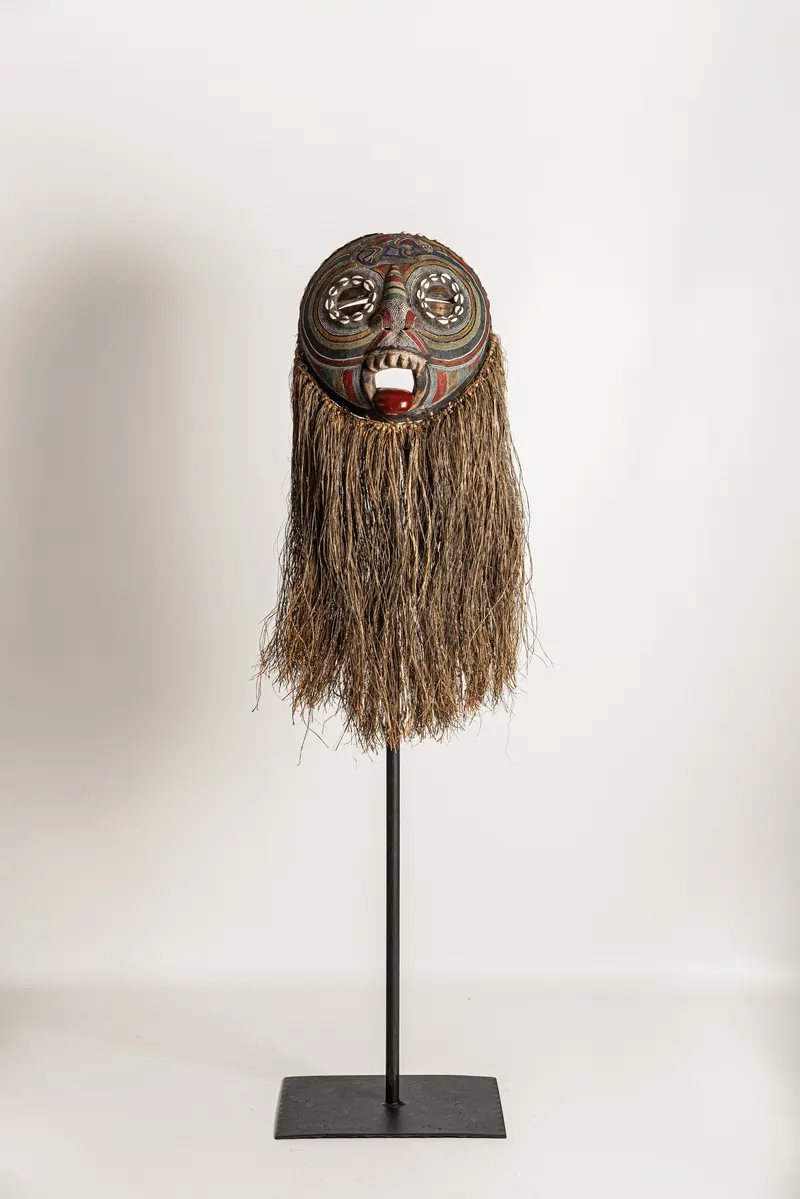
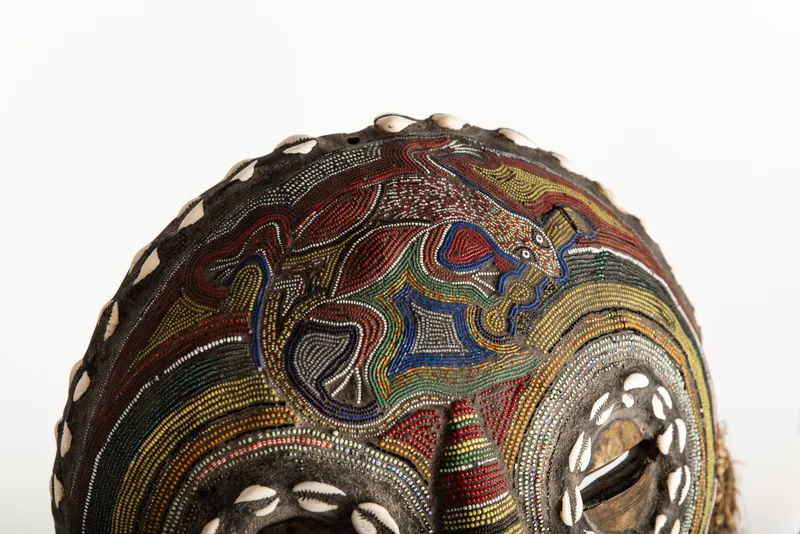
Colour and applied materials came next. Princeton University Art Museum names deeply incised wood with black, red and white colouring as typical of Bwa masks. Other masks carry metal and shells. The Luba Beaded Mask has its face encased in beadwork, with rings of cowrie shells around the eyes and a fibre fringe along the lower edge. The Baga Nimba Mask is studded with brass tacks.
A mask was often the work of several people. For a Yoruba Egungun costume, the Art Institute of Chicago lists a tailor, sometimes a sculptor for the wooden mask, a diviner, an herbalist who makes packets of protective medicines attached to the costume, and the leader of the Egungun society, who sanctifies the costume and selects the young man who will wear it.
The mask was then joined to the costume. On the Egungun mask in Chicago, a thin cord passes through holes around the edge to connect it to the fabric costume. The same museum records that Chiwara headdresses were worn by men in male and female pairs.
African mask meaning and history
The meaning of an African mask depends on the people who made it and the occasion it served. The catalogue gives the context for each type in the collection.
Some masks belong to farming. Among the Bambara, Chiwara headdresses are worn in agricultural ceremonies marking planting and harvest cycles. The Art Institute of Chicago describes Chiwara performances as celebrating a mythical farming beast that introduced agriculture, and says the rituals motivated young men to work hard.
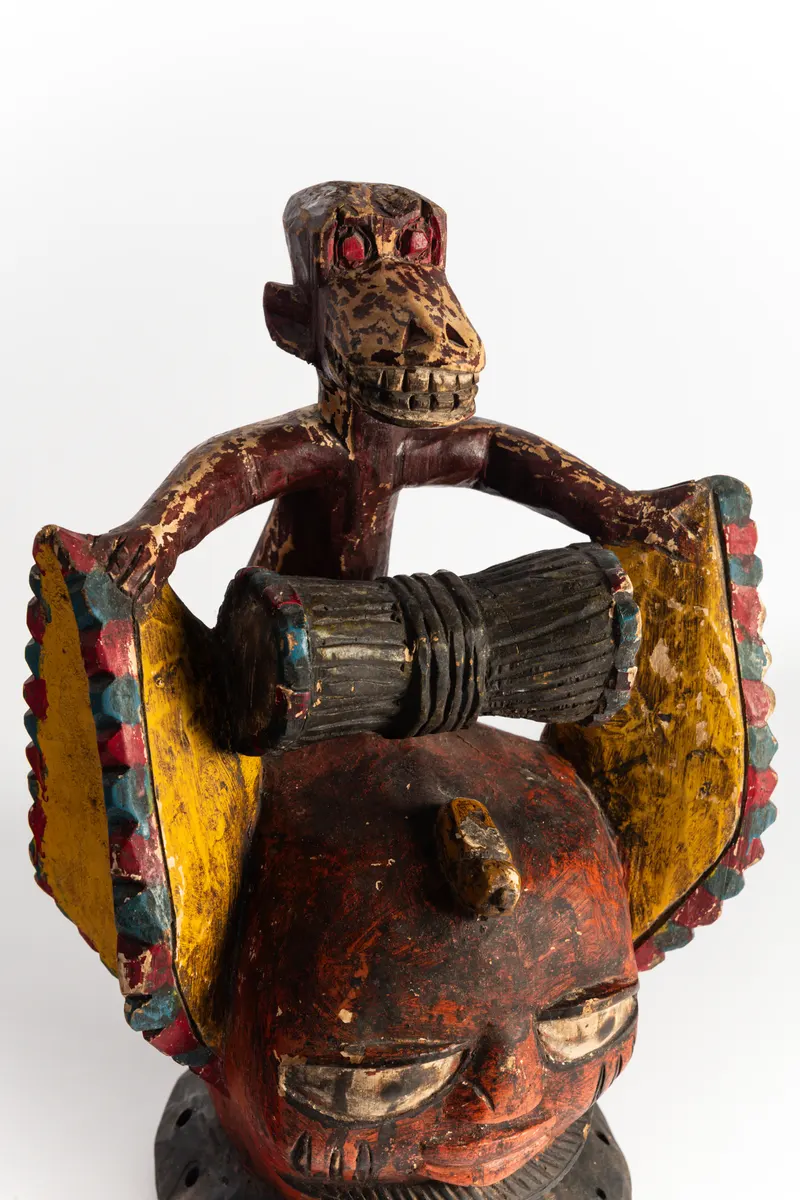
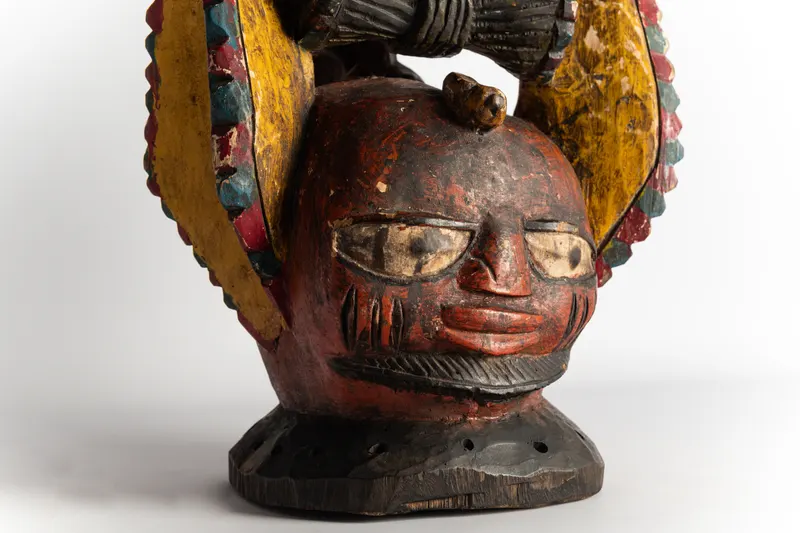
Some honour ancestors. The catalogue places masks like the Yoruba Mask within Yoruba masquerade associated with ancestral and ceremonial structures. The Art Institute of Chicago translates the Yoruba word egungun as "powers concealed" and notes that it refers to any masked performer or masquerade. The Egungun masquerade, staged to honour ancestors, began in the Yoruba kingdom of Oyo, perhaps as early as the 17th century.
Others mark funerals, initiation and authority. Among the Senufo, Wanyugo helmet masks appear in Poro society performances associated with funerary ceremonies and the protection of the community. Among the Mossi, plank masks like the Mossi Mask are used in funeral and ancestral ceremony. Among the Dan, masks like the Dan Mask appear in masquerade with social and judicial functions. Within Luba tradition, the Luba Beaded Mask belongs to royal ceremonial structures associated with chiefly authority. In the Benin Kingdom, carvers worked within court-controlled guilds, and the Benin masks in the collection follow a fixed visual structure linked to rank.
A mask can also carry more than one reading. Princeton University Art Museum describes Bwa and Wé masks as links between the worlds of the spirits and the living. On a Bwa plank mask in Chicago, the concentric circles can be read as eyes or as pools of water, depending on the viewer's knowledge.
How to read an African mask
Start with the form. A hollowed interior, a base, a flange or a long board shows how the mask sat on the body and so which type it is. Then look at the face. On the Baule Mask and on Benin Mask II, incised scarification marks cross the forehead. The Art Institute of Chicago reads similar lines on an Egungun mask as identification marks linking it to a lineage.
Next, the materials. Each catalogue entry lists them under Medium: wood and pigment for most masks, with sheet brass, cowrie shells, beads, fibre, textile or hair on others.
Last, the marks of wearing. Holes around the edge can show where a costume was attached, as on the Egungun mask in Chicago. The Yoruba Mask has a series of suspension holes along its lower edge. Viewing slits show where the wearer looked out, as on the Luba Beaded Mask, where each eye is pierced by a horizontal slit. The catalogue also records wear on the surface, such as exposure at raised elements or a textile wrap frayed at its lower edge.